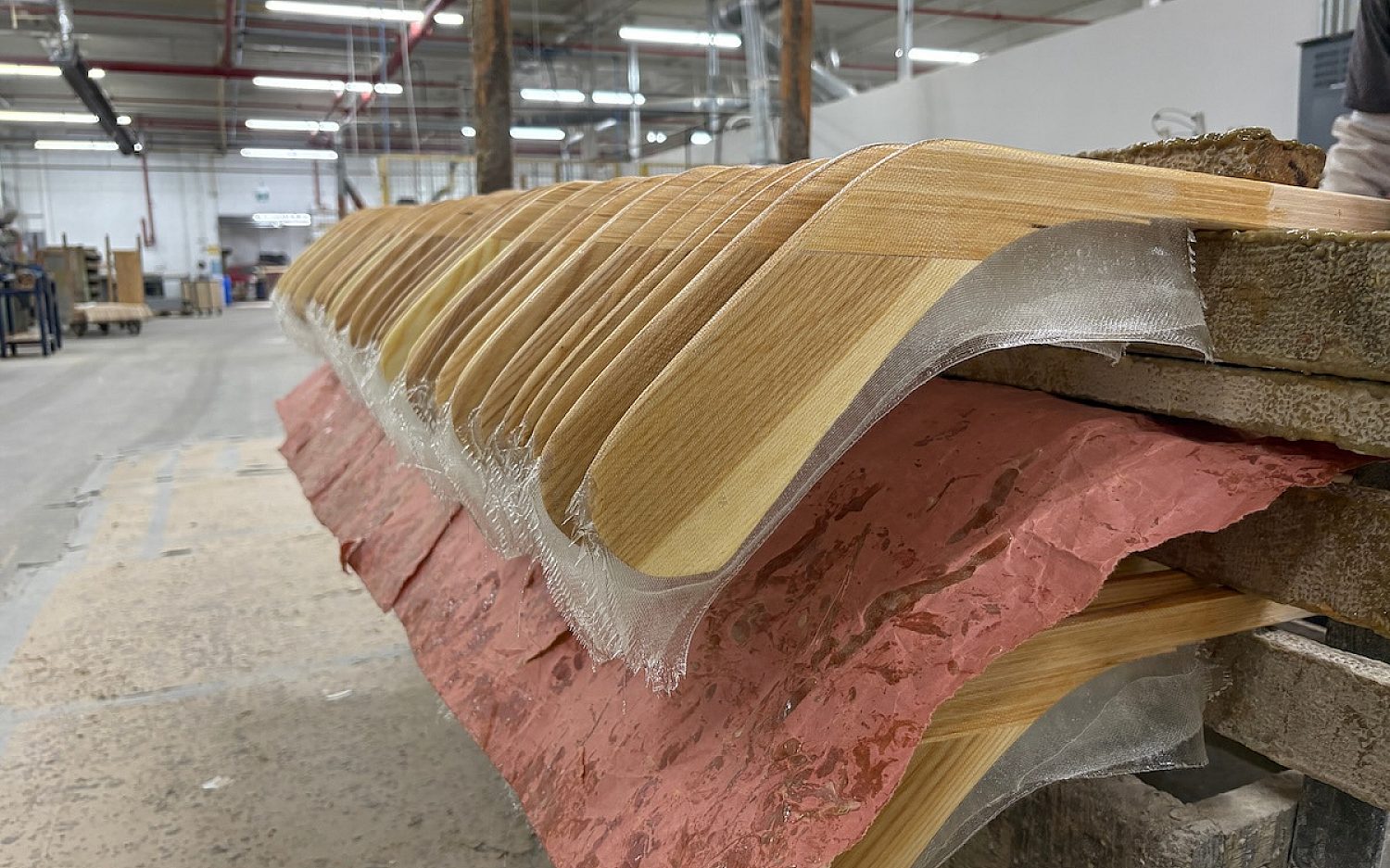
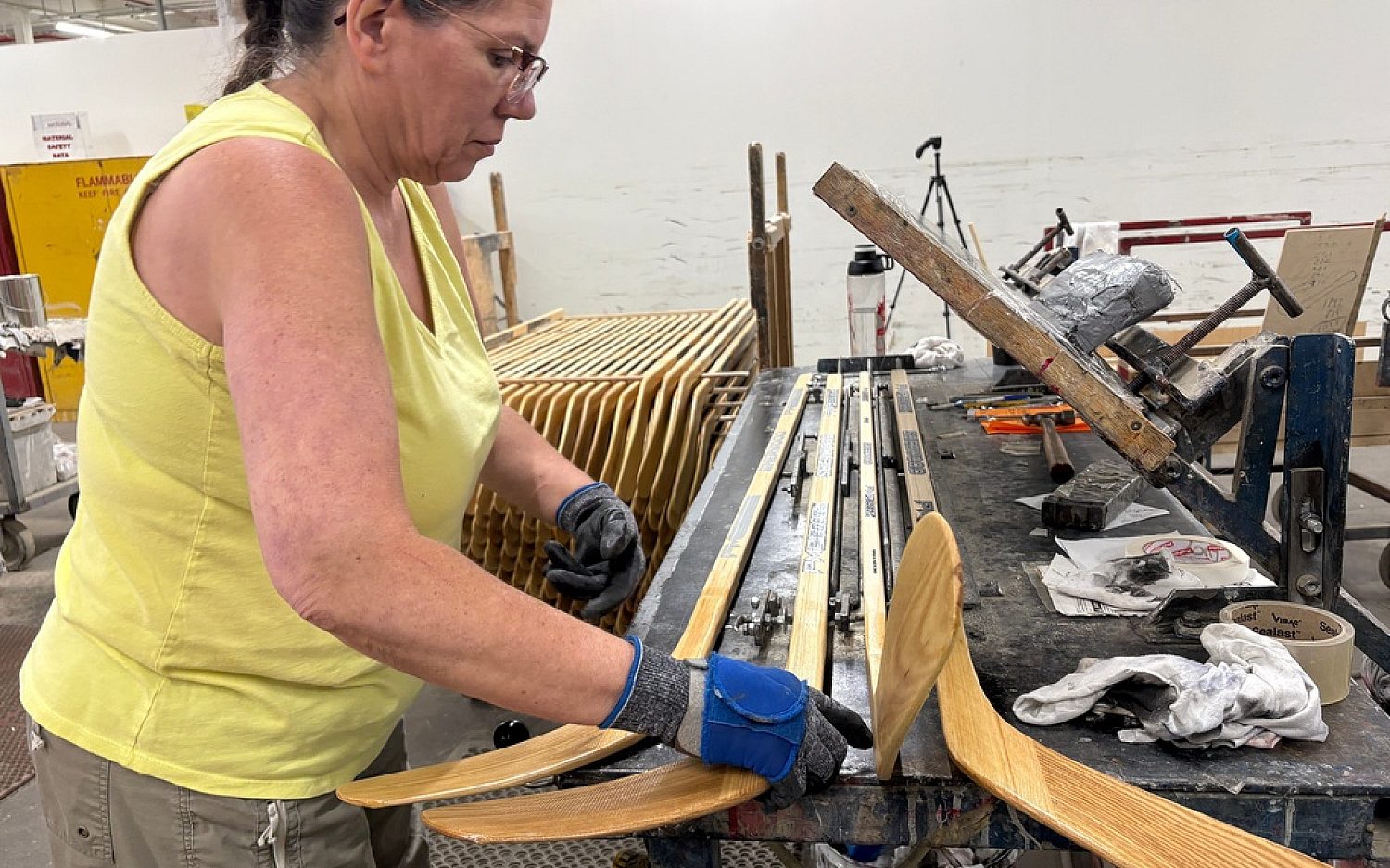

Roustan Hockey is the last North American commercial maker of traditional wooden hockey sticks. The company plans to keep producing “twigs” even as trade wars with the United States rage. Workers at Roustan do more than make sports gear: They’re crafting a Canadian national symbol.
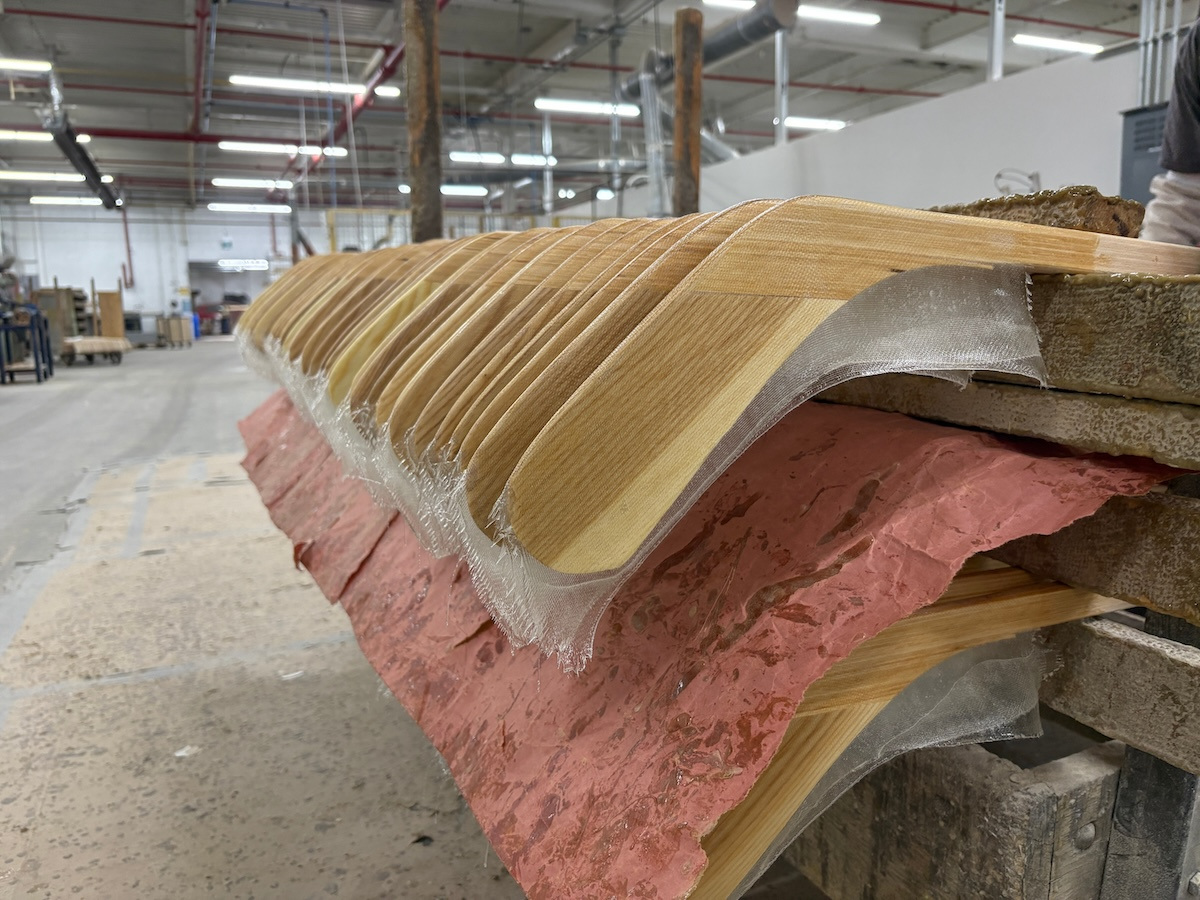
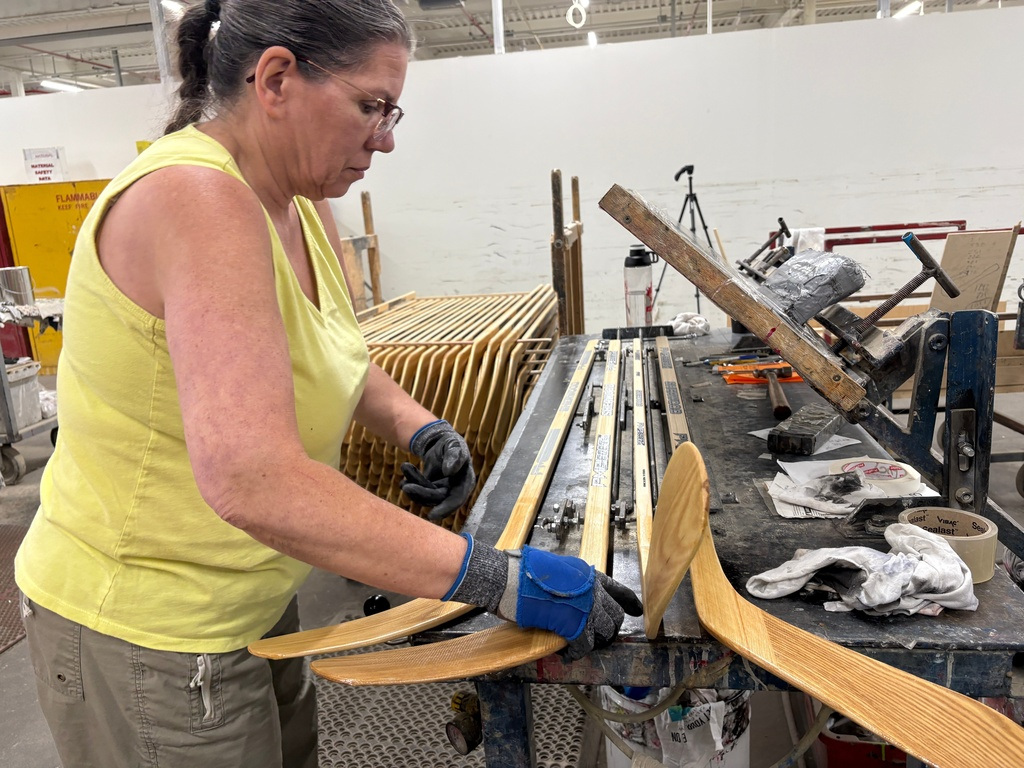
It’s a typical day on the job for the 15 workers at the factory, 60 miles from Toronto. The manufacturing process is low-tech and artisanal. Wearing protective gloves and earplugs, a worker feeds wood into a cutting machine. An earsplitting whine begins as the machine saws a groove in the end of each piece. Nearby, stacks of wooden wedges wait to be slotted into the grooves. The two pieces will form the beginnings of a hockey stick, aka “twig.” Other workers shape, trim, sand, and paint.
Worldwide production amounts to about five million hockey sticks per year. Wood makes up only about a tenth of those. No NHL player has regularly used a wooden stick in well over a decade. The fact underlines the sport’s embrace of newer tech.
Modern composite sticks are made of carbon fiber and other lightweight materials. They’re also pricier because of the advanced manufacturing processes involved. Still, both amateurs and pros prefer composite sticks.
Nevertheless, Roustan Hockey churns out about 400,000 wooden twigs annually. About 100,000 get exported to the United States. The company also makes plastic-bladed road hockey sticks and foam-core goalie sticks.
President Donald Trump has repeatedly threatened to impose tariffs on Canadian imports. But many goods have remained exempt because they’re covered by the U.S.-Mexico-Canada Agreement of the president’s first term.
Roustan Hockey has spent months dealing with U.S. customer worries and navigating the trade challenges. Factory general manager Bo Crawford says shipments to the United States have recently been held up for inspections at the border. They’ve also been hit with surprise tariffs. So far, the company’s customs broker has managed to get fees waived.
“You just have to roll with it,” says Crawford.
In late August, the Trump administration eliminated a widely used customs exemption for international shipments worth $800 or less. That resulted in new uncertainty over cross-border trade. Owner and CEO Graeme Roustan says, “The jury is still out on how that’s going to impact business.”
The Roustan company started in 1847 as an agricultural workshop. That was 70 years before the National Hockey League came to be.
The business thrived during the golden era of North American wooden hockey stick manufacturing of the 1970s and ’80s. At that time, there were numerous workshops in Ontario and Quebec. U.S. production was centered in Minnesota.
Roustan acknowledges that the wooden hockey stick market is not a growth industry. At best, production will hold steady. “Kids that are growing up today, they are all about composite,” he says. “It’s a shrinking market for sure.”
But the factory’s story is not just about evolving trade agreements and modern sports equipment. It’s also about the place that the national winter sport has in Canada, Roustan insists.
“It’s important to any country to have a manufacturing base of products that you consume on a regular basis,” says Roustan. “Having a factory that makes hockey sticks in Canada really serves two purposes. One, it contributes to the manufacturing base. But two, [it] has the legacy and the tug of the heartstrings of the game that we all love in Canada.”
Can you think of a product that tugs at American heartstrings? Or at the heartstrings of your native country?
Whatever your hand finds to do, do it with your might. — Ecclesiastes 9:10