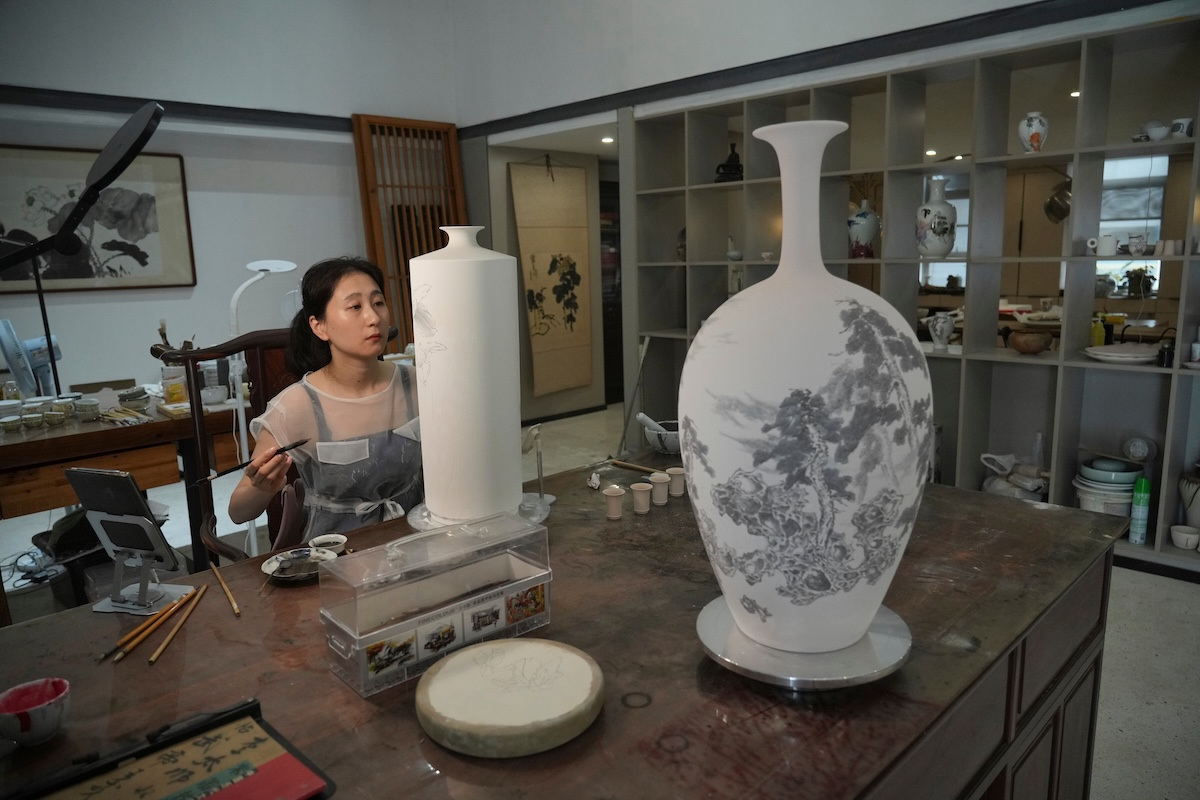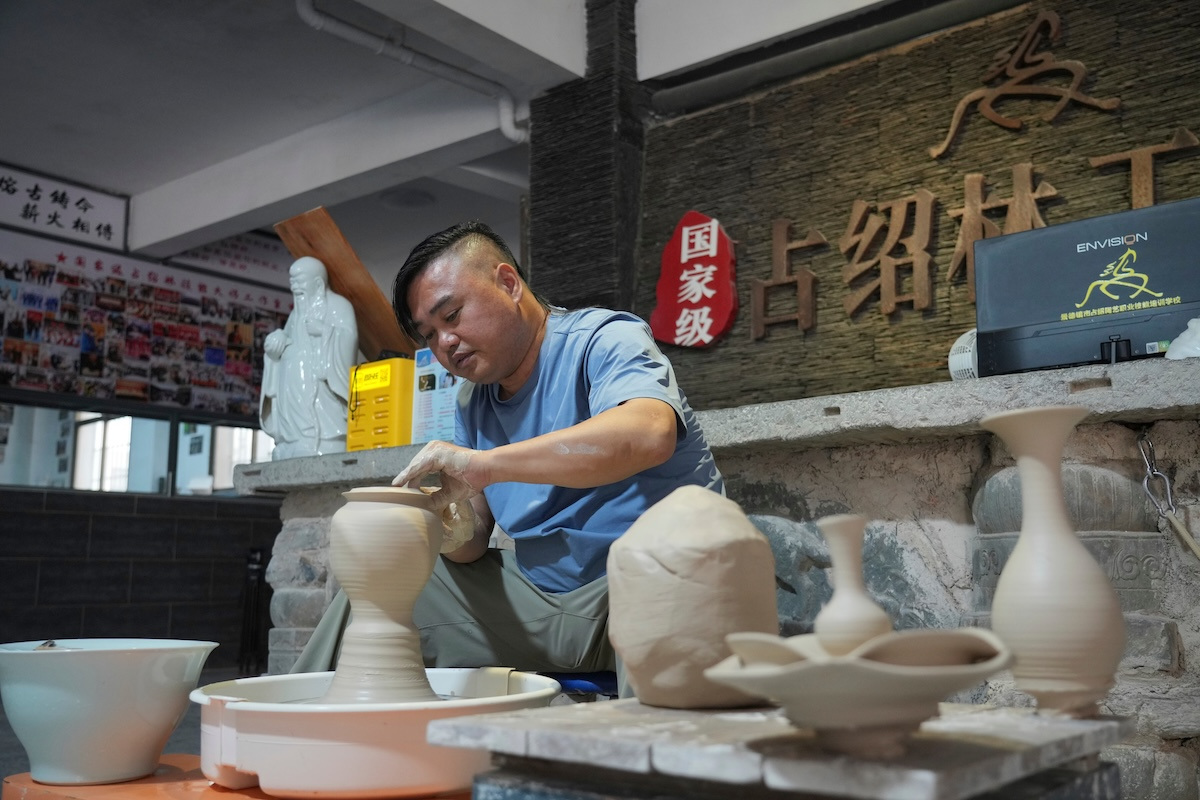

Chinese porcelain artist Chen Qing remembers the day her grandfather wrote down a family formula. It was for a distinct red pigment used in the creation of fine porcelain. He asked her mother to memorize it. Minutes later, he burned the evidence. The secret recipe continues to pass orally from one generation to the next.
“My mother did not reveal the formula to me until I was over 30,” Chen says.
Chen’s family has practiced the art of porcelain creation since 1860 in Jingdezhen, the city known as China’s “Porcelain Capital.” Jingdezhen’s pottery history started during the Han Dynasty, which dates to 206 B.C.
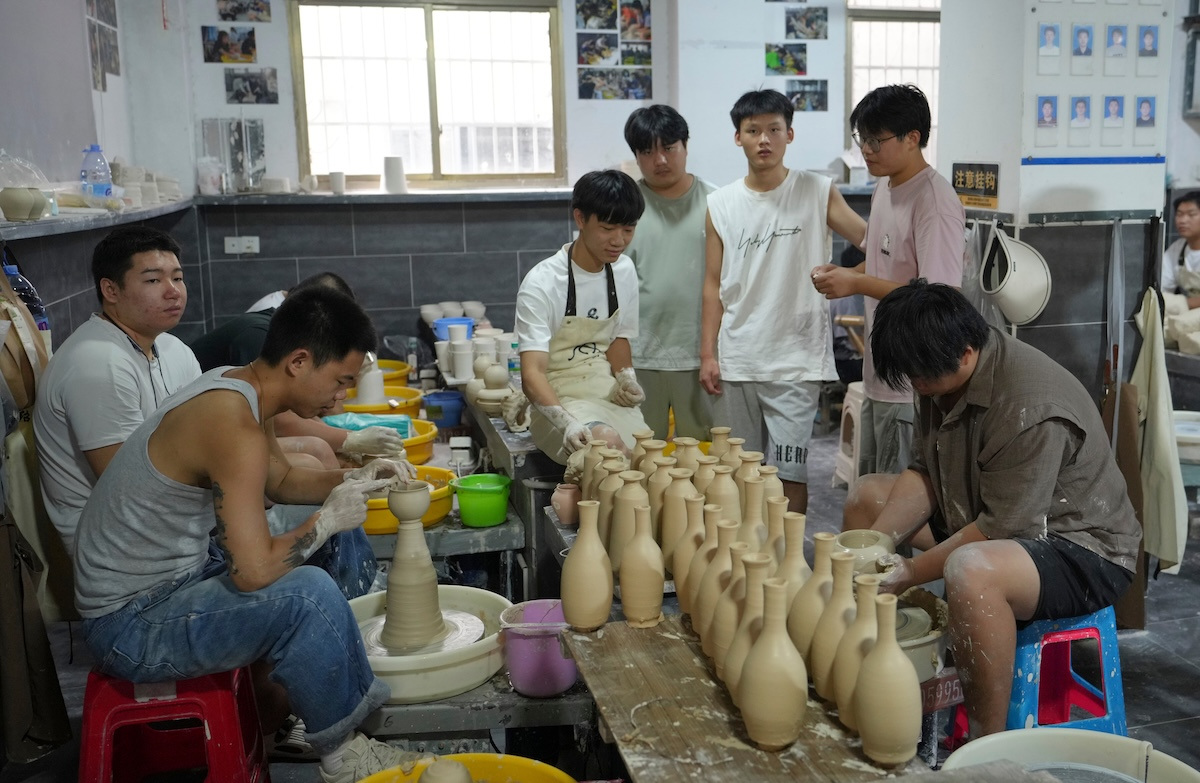
Jingdezhen’s craftspeople keep ancient techniques alive. Their methods were used to make porcelain for the imperial court. That knowledge later spread to private artisans.
“The craft is very difficult for an outsider to master,” Chen says. “A family might spend nearly a century developing a single technique.”
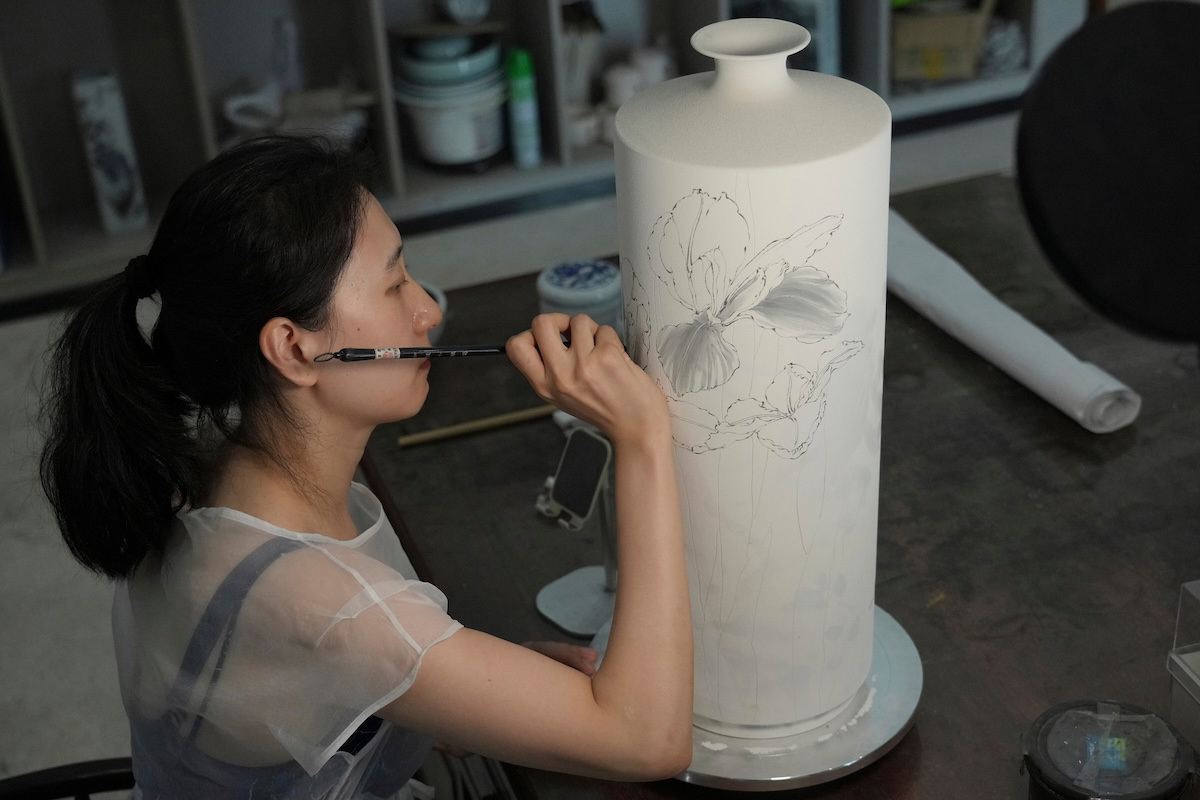
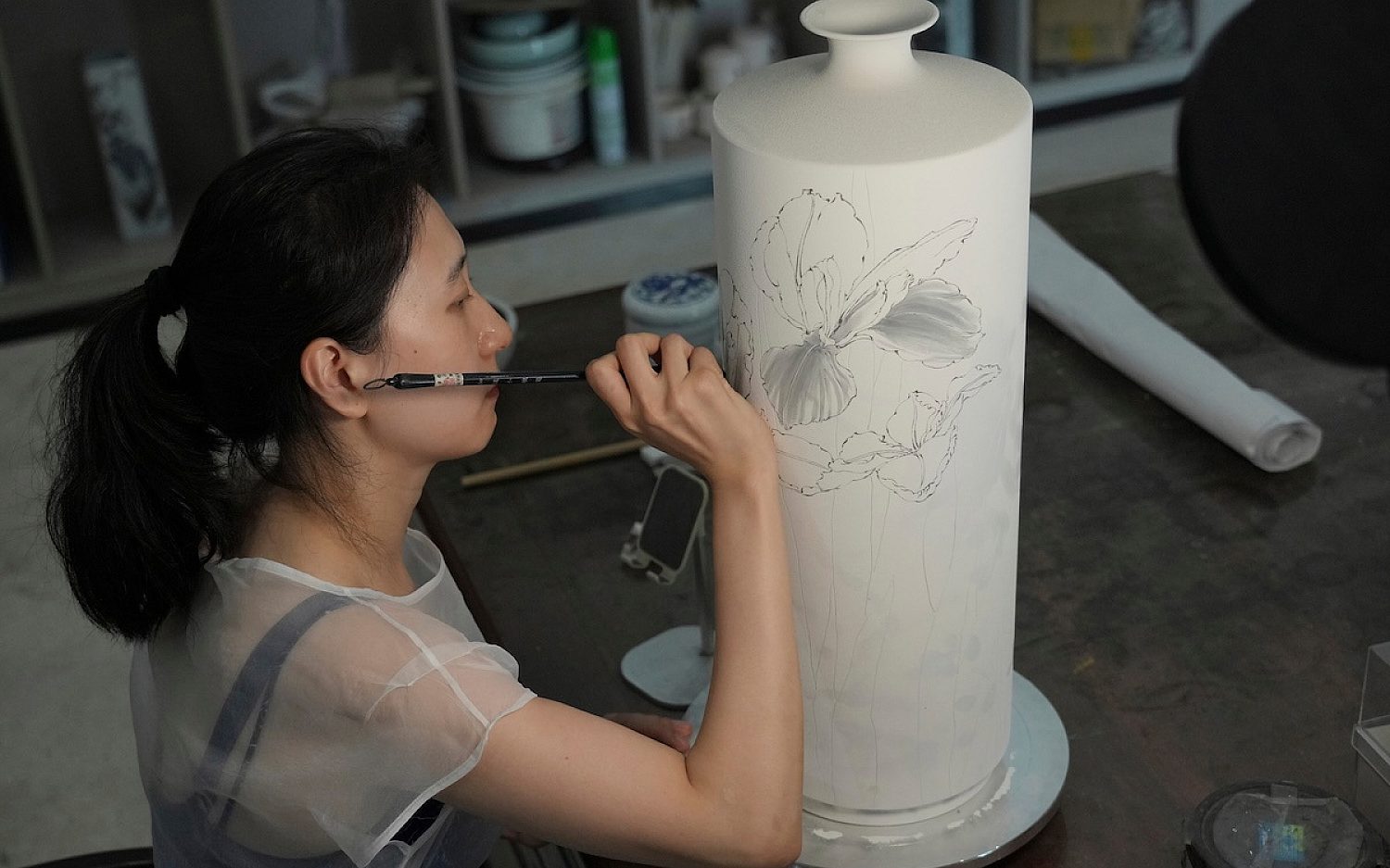
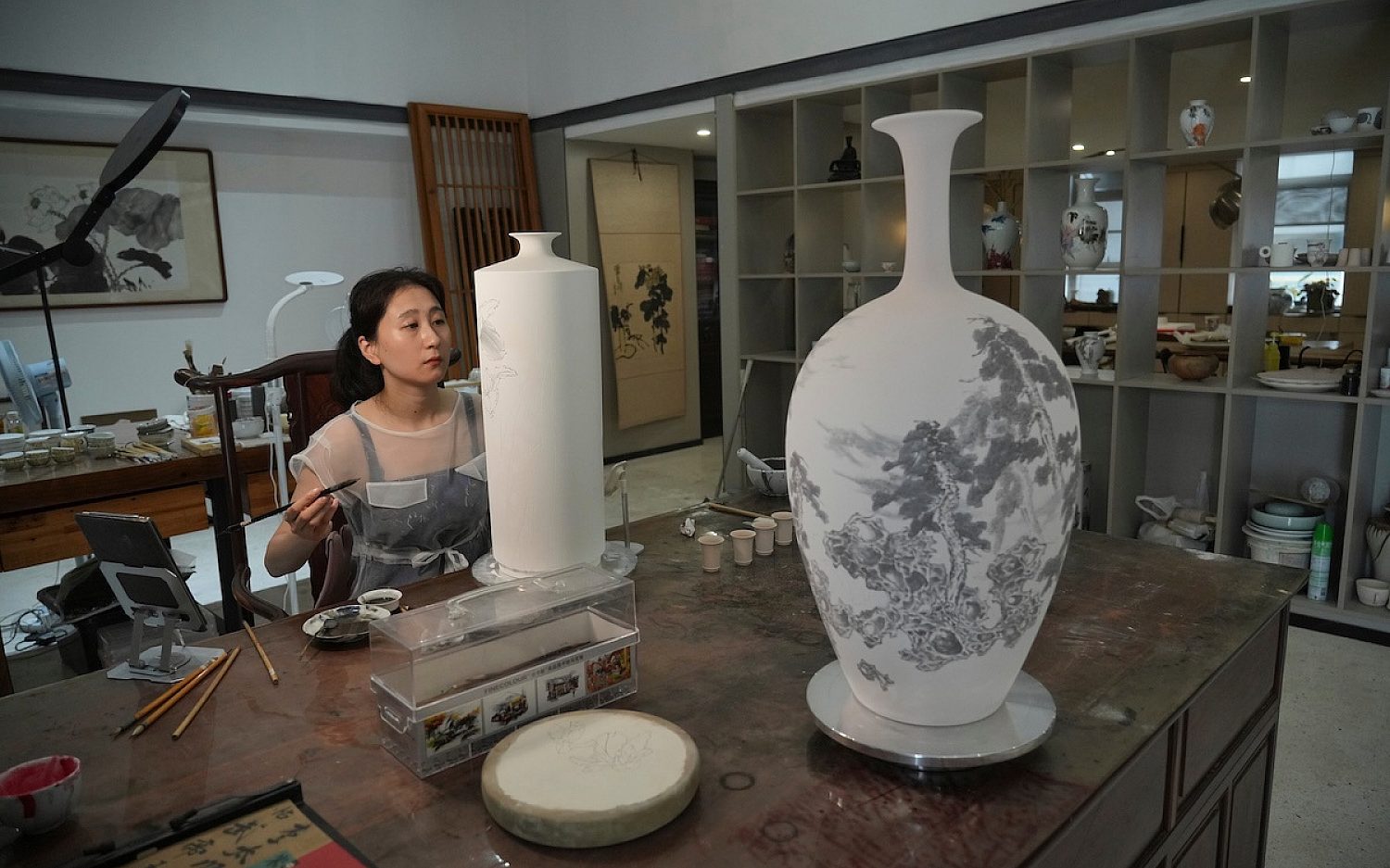
Painting a porcelain teacup can take days to complete. A single dust mote or sweat drop can ruin a piece. That means starting over.
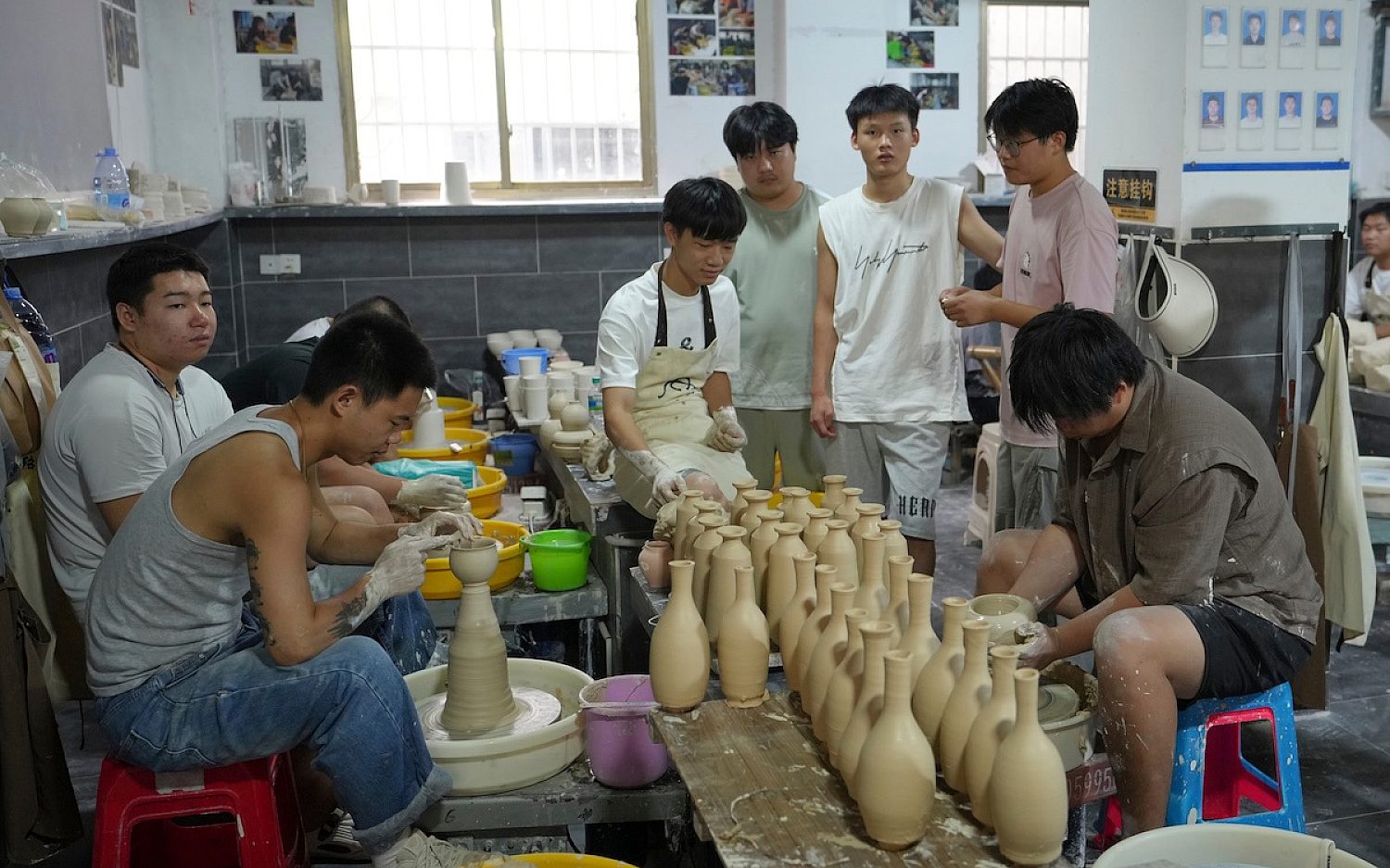
“Few people are willing to spend more than 10 years learning such a painstaking craft,” Chen observes.
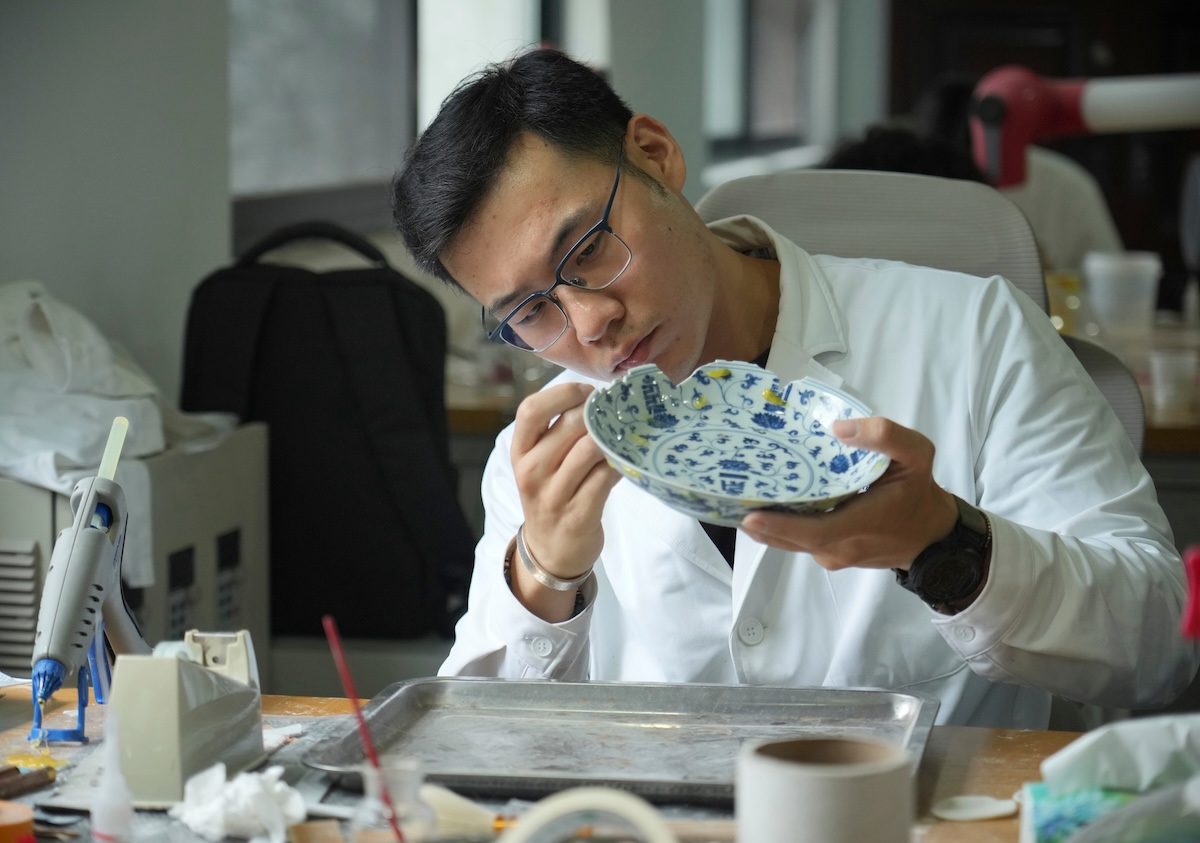
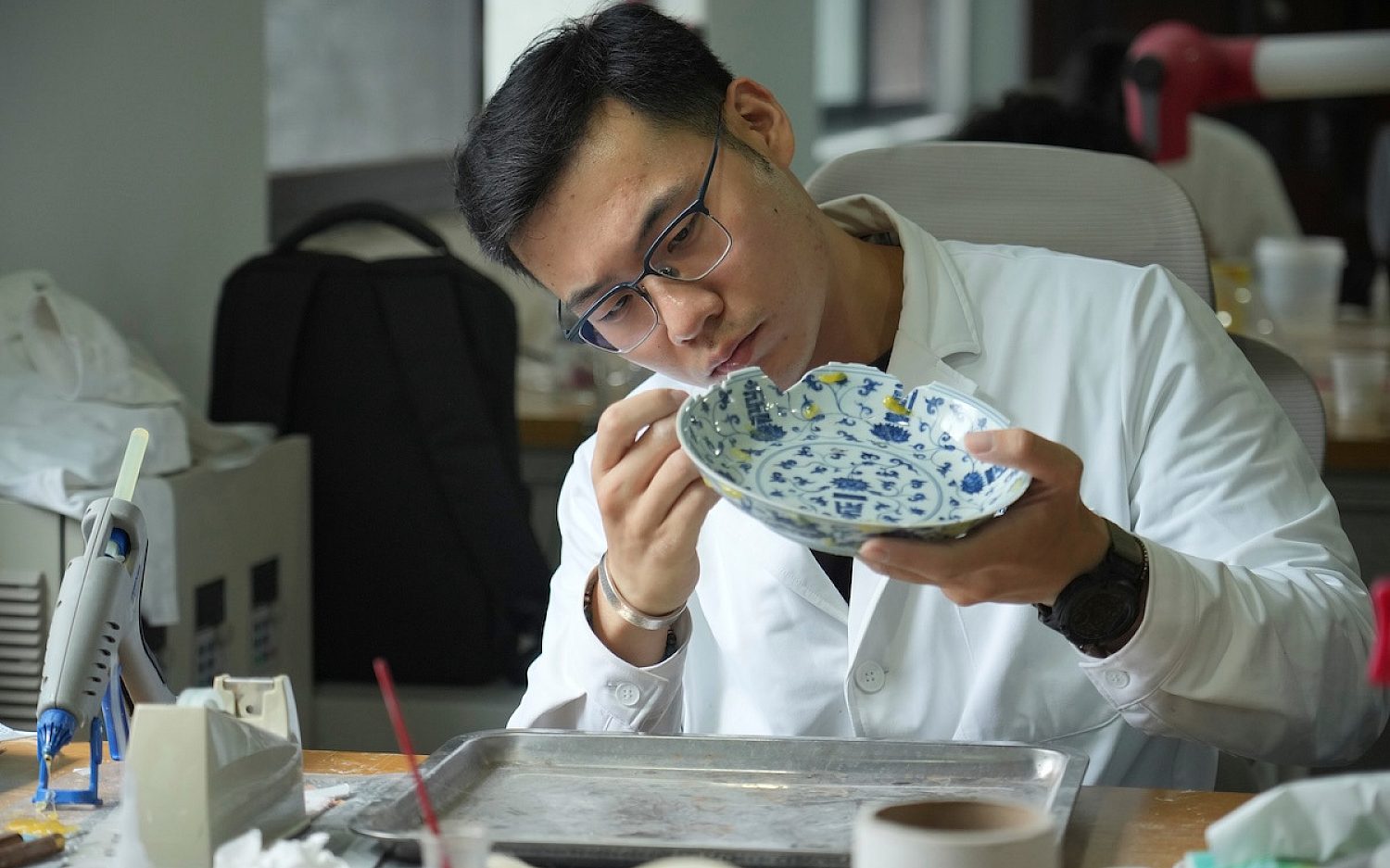
Jingdezhen’s Imperial Kiln Institute (IKL) researches and restores ceramics excavated from a nearby complex. People made pieces for emperors long ago in kilns that are still visible.
Among objects made at the kilns were those used in the famed Porcelain Tower in neighboring Nanjing. It was part of a Buddhist temple complex that was destroyed in the 19th century. Porcelain tiles, each bearing an image of the Buddha, covered the outside walls.
There are traces of other religions. “Islam, Buddhism, Taoism and, later on, European Catholic Christianity harmoniously blend into the porcelain decorations,” Weng Yanjun claims. He is IKL’s president.
Within Jingdezhen’s imperial kiln complex stands a shrine for Tong Bin. Tong Bin is known as the “kiln god,” the so-called protective spirit of ceramics.
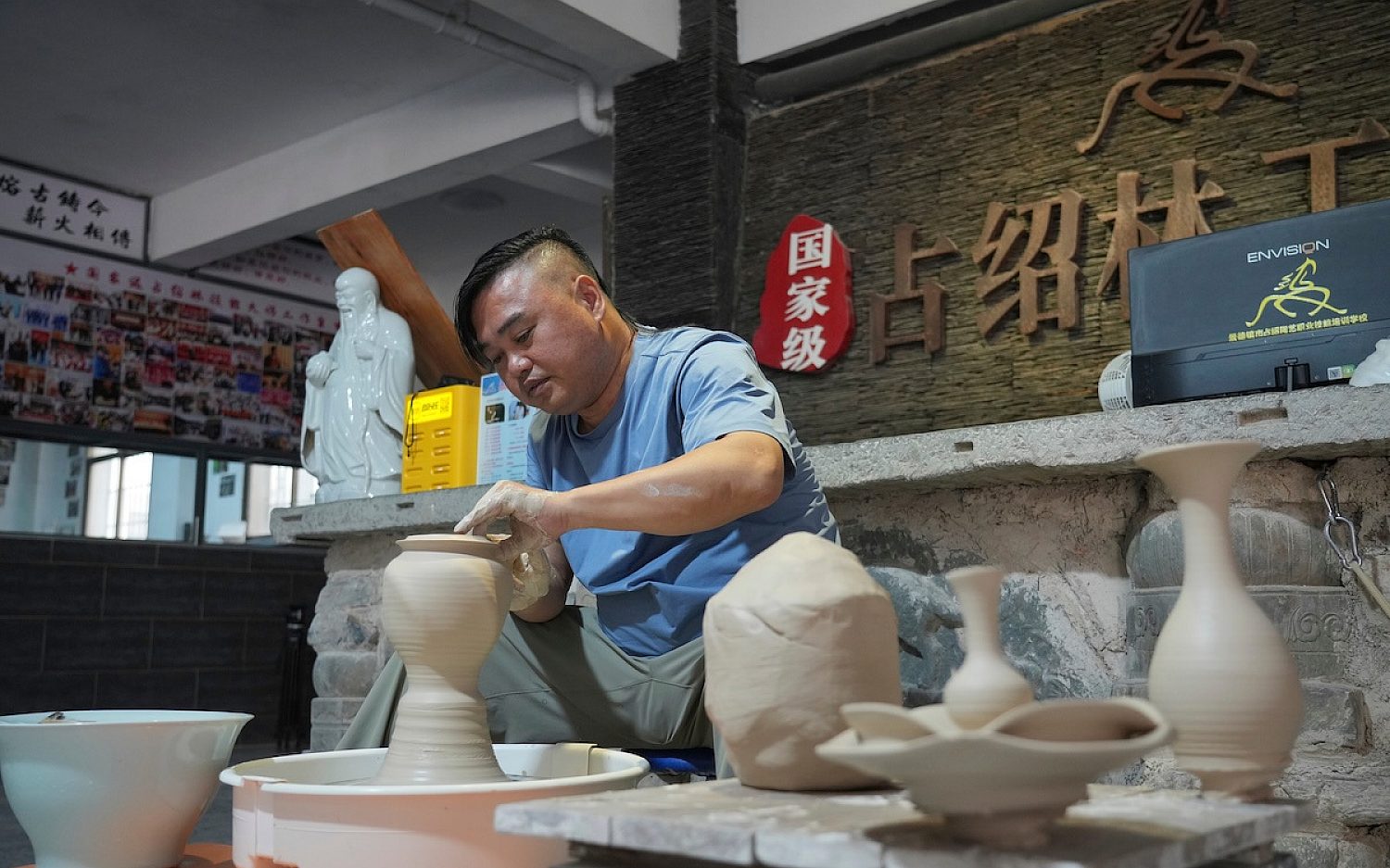
Artisan Sun Lixin learned the porcelain trade from his father when he was 13. Sun instinctively bows to the “kiln god” before he puts any piece in the fire. He wishes for success and fine porcelain.
Chinese artist Huang Qi graduated from Jingdezhen Ceramic University in 2015. She now works as an artist-in-residence. Huang notes that the city’s porcelain sites are attracting “growing attention.” They were inscribed on UNESO’s World Heritage List earlier this year. That makes Huang hopeful for the craft in the days ahead.
“More and more people are coming,” she says. “Things will continue to get better.”
Why? Mastery passed from generation to generation helps preserve distinct art forms. We glorify the master Artist when out of love for Him we use His creation to make objects of enduring beauty.