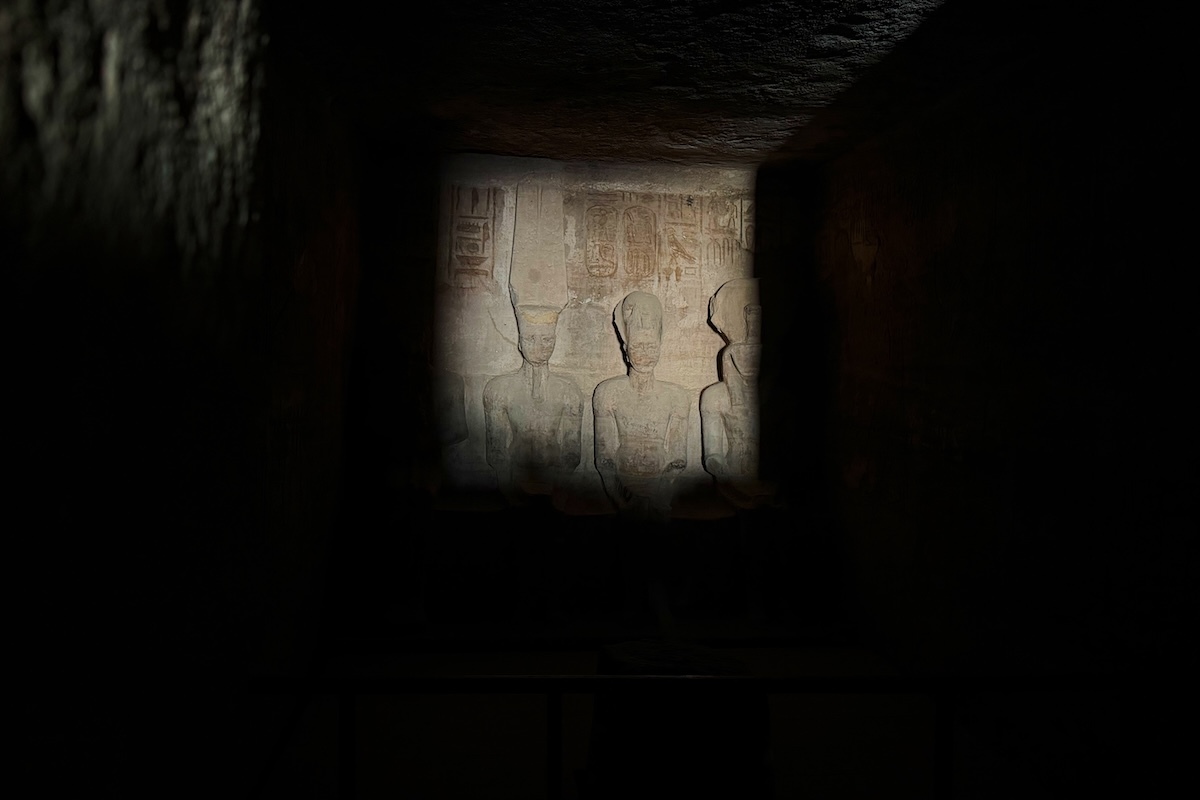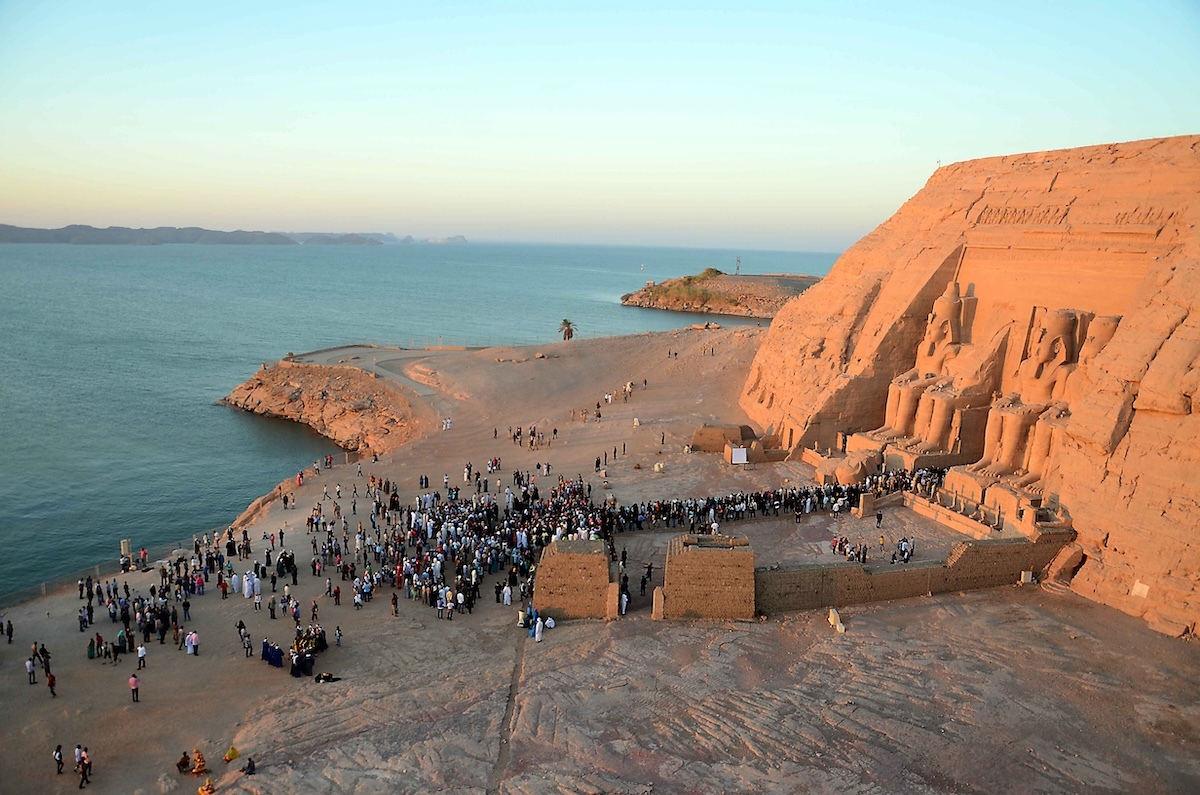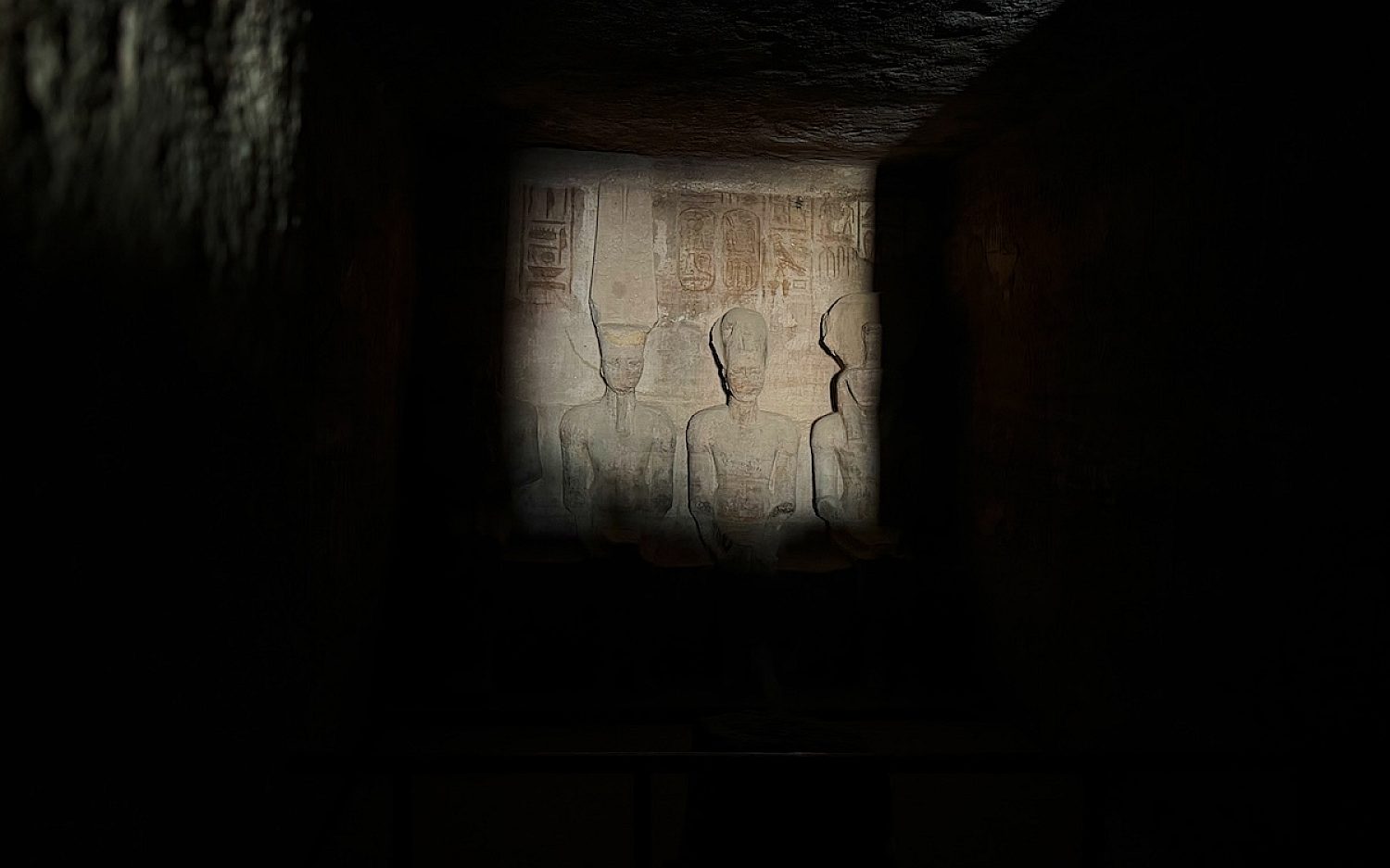
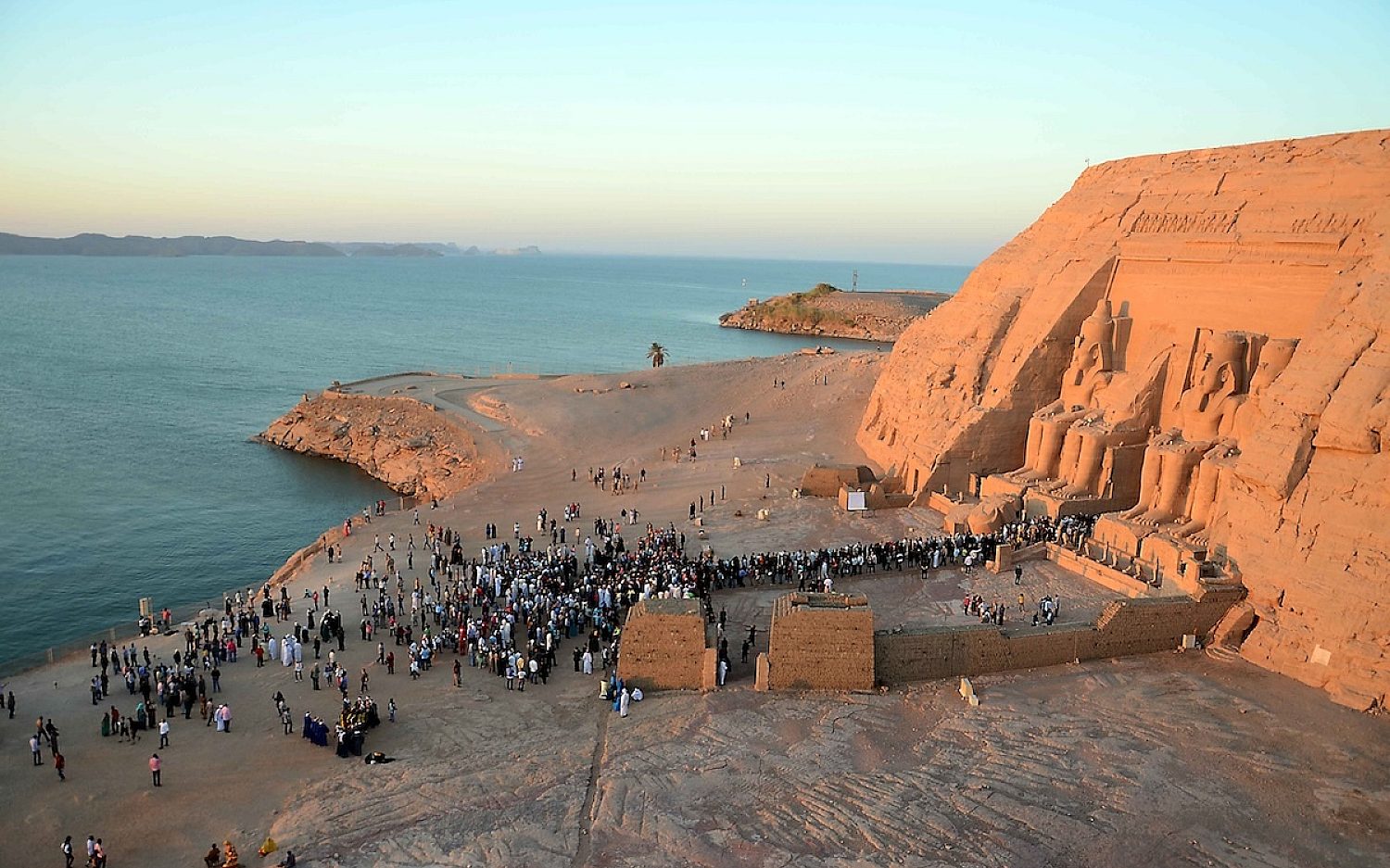
Hundreds of tourists gathered at Abu Simbel in southern Egypt at dawn on October 22 for a birthday party. On that day each year, the Sun sends its first morning rays into the Great Temple of Ramses II. Sunlight also illuminates the temple’s inner sanctuary on February 22. These dates are believed to mark Ramses II’s birthday and ascension to the throne. The industrious pharaoh lived from around 1303 to 1213 B.C.
How does this celebratory light show work? Ancient engineers built the temple to align perfectly with the Sun on certain days for about 20 minutes.
Modern engineers later duplicated their efforts. In the 1960s, archaeologists dismantled and relocated the temple. They knew the completion of the Aswan High Dam across the Nile River in 1970 would change water levels. They labored to protect the edifice from flooding. Engineers ensured the new temple site still aligned with the Sun’s path in the same way.
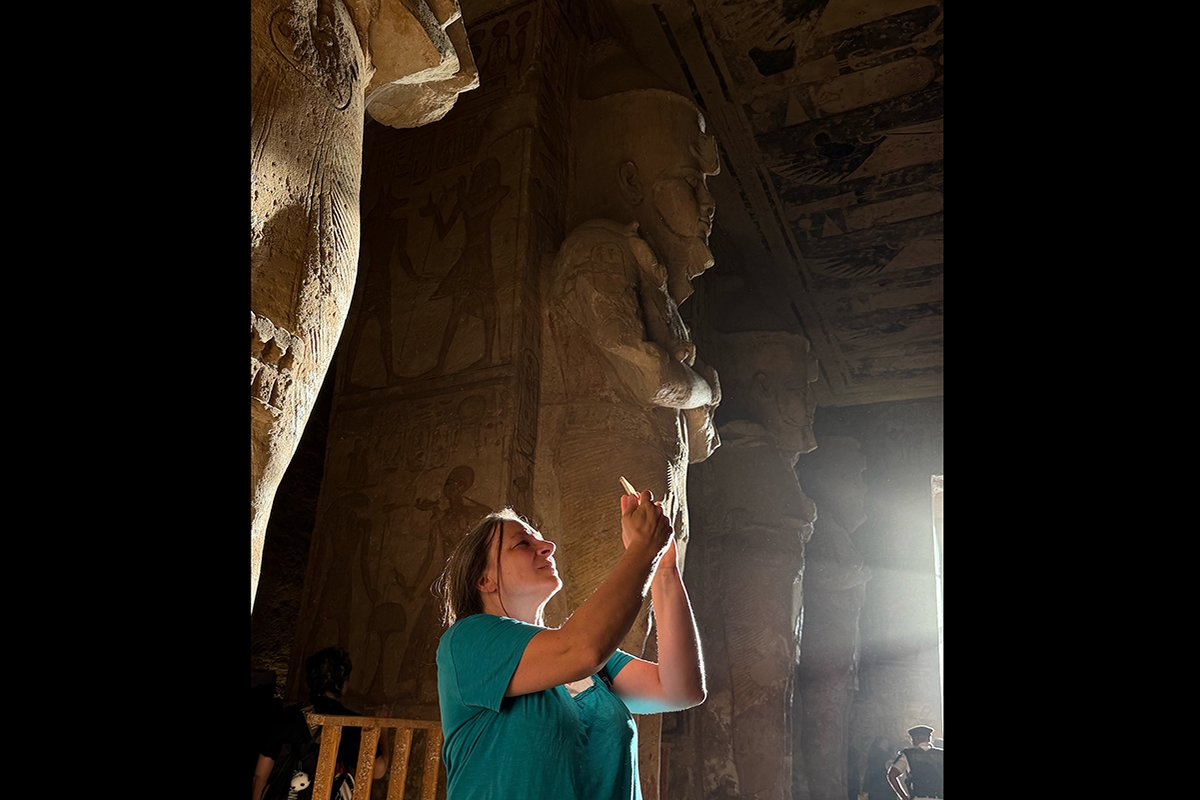
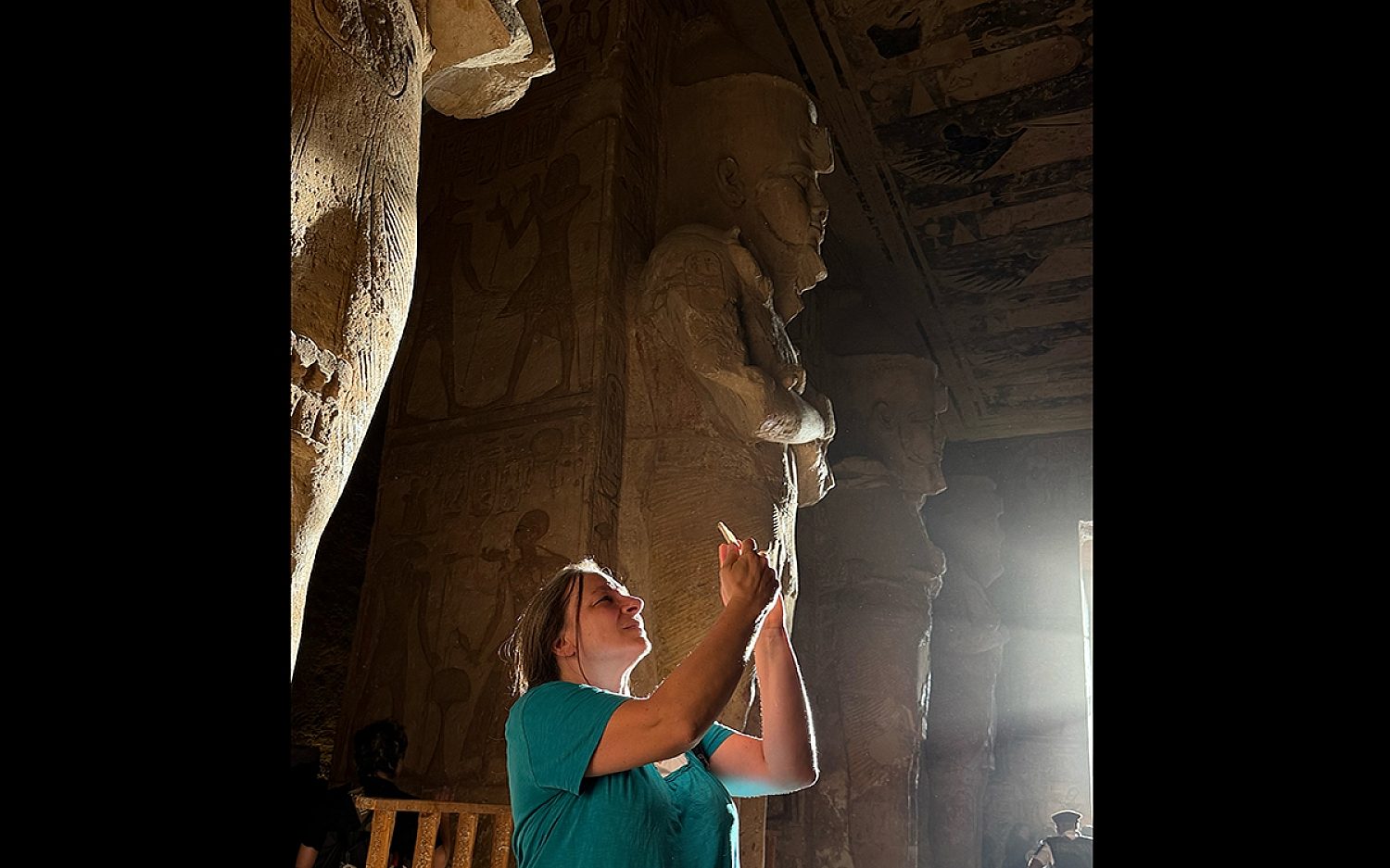
Janice Souudi traveled from Atlanta, Georgia, to witness the sunlight streaming into Ramses’ monument. “I came here today for the huge temple statues and how well preserved they are. But I was most impressed with the colors of the carvings and hieroglyphics and imagery,” she says. “Beautiful, stunning, worth it!”
Abu Simbel is actually the site of two temples carved out of a sandstone cliff. Towering 66-foot-tall statues of a seated Ramses flank the main temple’s entrance. Figures of Ramses’ children, one of his queens, Nefertari, and his mother are carved around Ramses’ feet.
Ramses’ memorial is dedicated to mythological Sun gods Amon-Re and Re-Horakhte. Interior rooms extend 185 feet into the cliff. They contain more Ramses statues. Paintings on the walls depict Ramses’ battle against the Hittites at Kadesh in 1275 B.C. (The Hittites of Kadesh are mentioned in 2 Samuel 24.)
A smaller temple devoted to Nefertari stands north of the main temple. It contains 35-foot statues of Ramses and his queen.
During his lifetime, Ramses II oversaw many projects meant to ensure his legacy. His name and records of his military prowess are all over Egypt and Nubia. He built the city of Per Ramessu, which was renowned for its structure, its gardens, and its orchards.
The ambitious pharaoh also waged military campaigns against Moab, Edom, Negeb, and Libya. The latter part of his reign had fewer skirmishes. His subjects esteemed him and called him by the nickname Sese. The Egyptian Museum at Cairo holds Ramses’ mummified remains.
Even kings of old engaged in some historical editing. While Ramses II arranged for his temple to tout his battle against the Hittites, in reality, the conflict ended in a draw.
Some scholars think Ramses II was the man who ruled Egypt during the Exodus of the Israelites. But others say that the Exodus likely took place about 150 years before he was born. (Read the biblical account of that event in Exodus 1-15.)
Put not your trust in princes, in a son of man, in whom there is no salvation. When his breath departs, he returns to the Earth; on that very day his plans perish. Blessed is he whose help is the God of Jacob. — Psalm 146:3-5