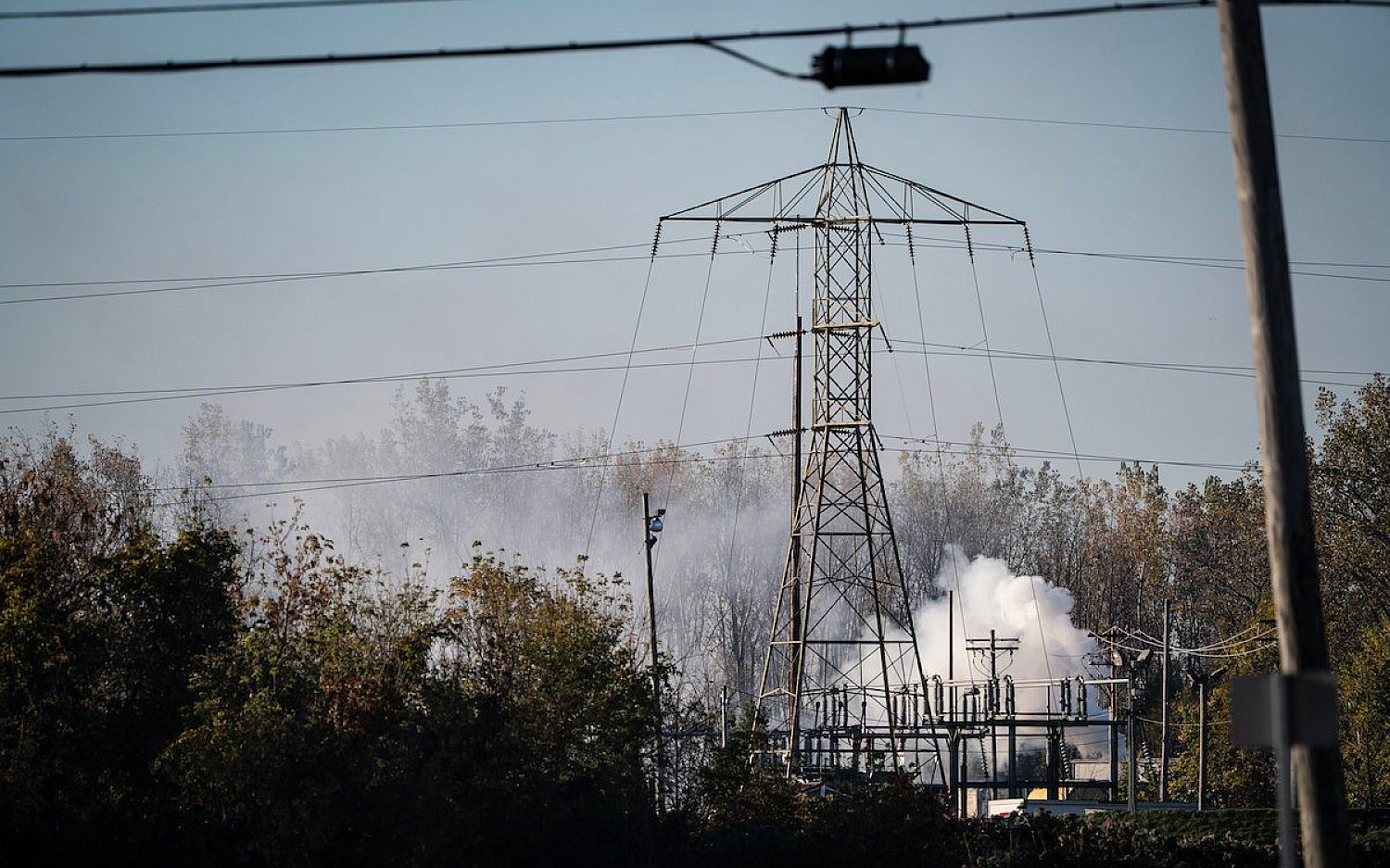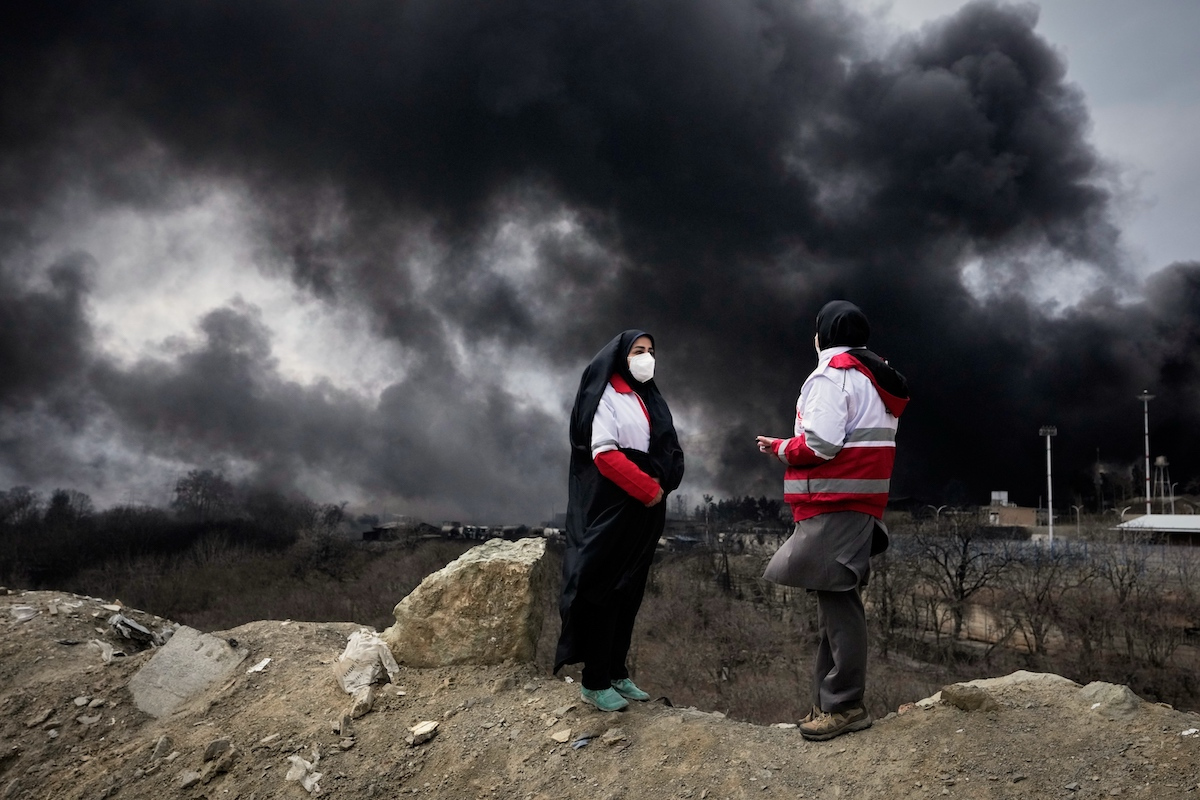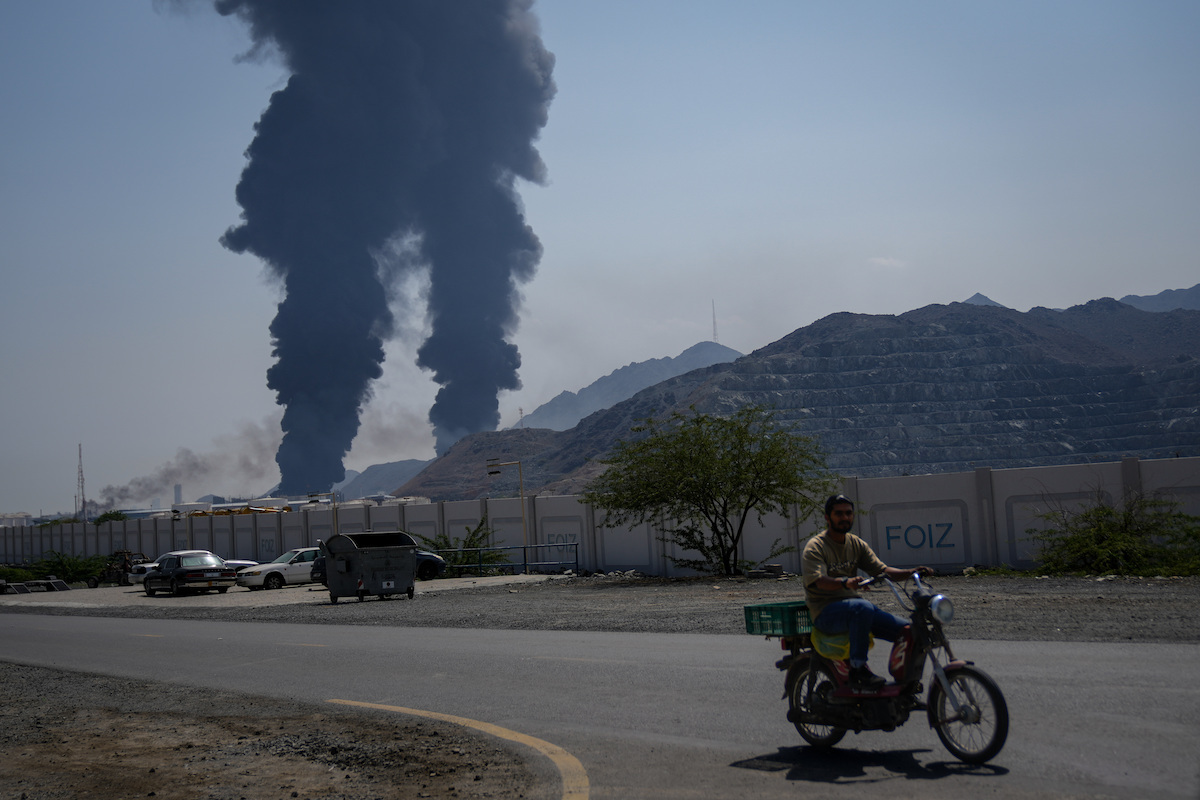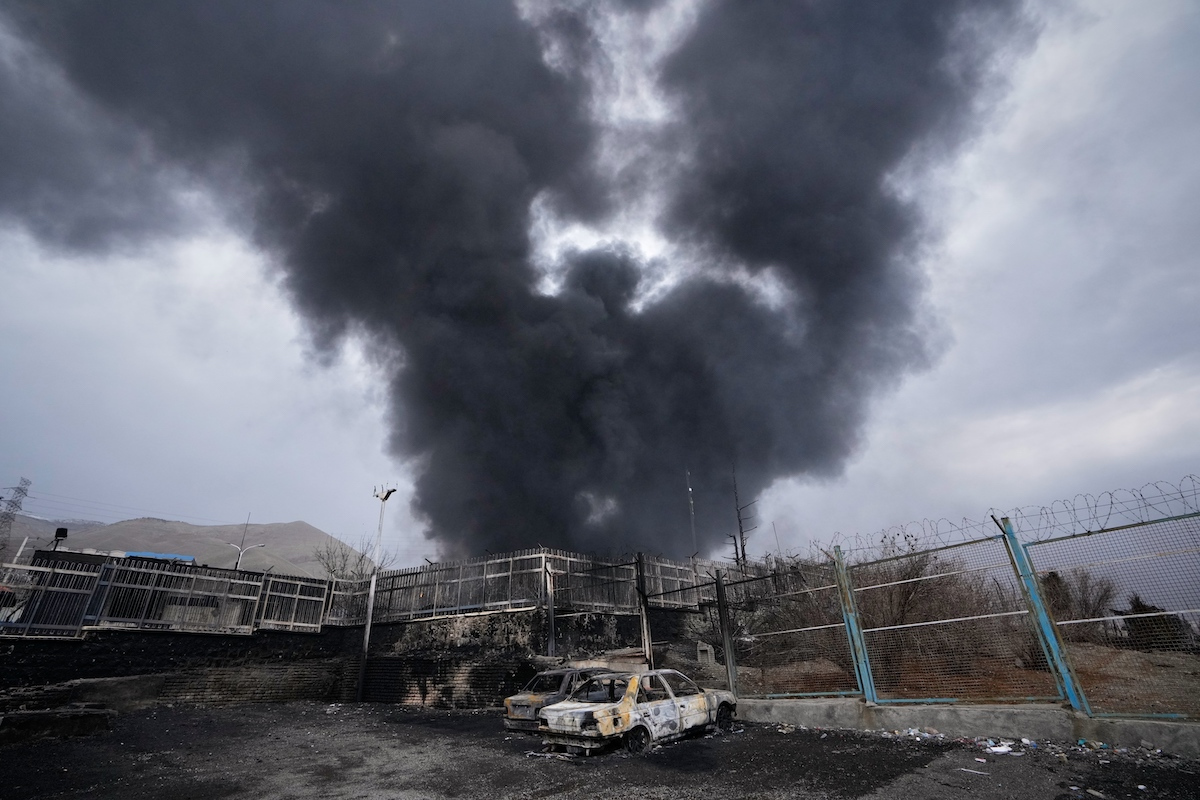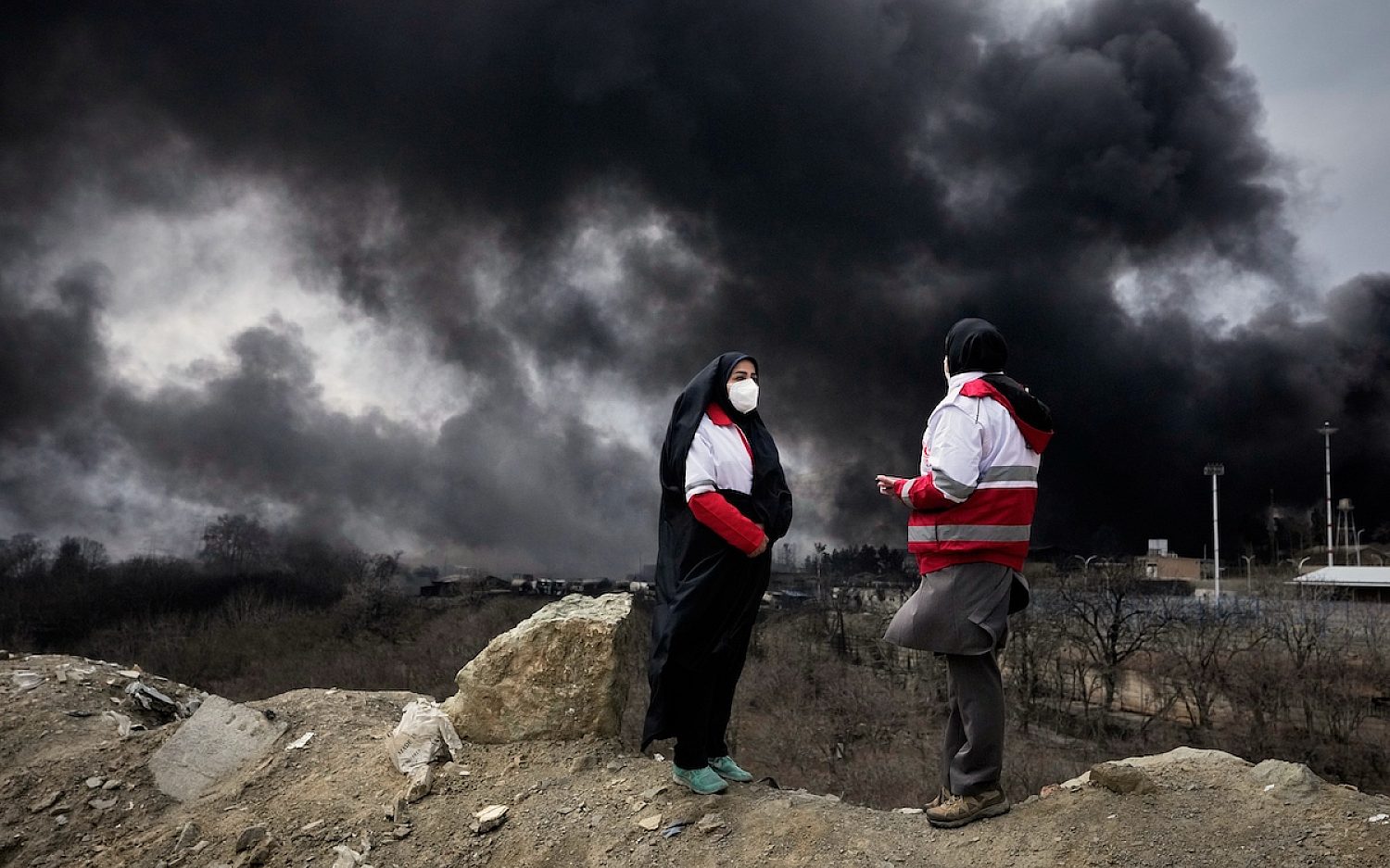
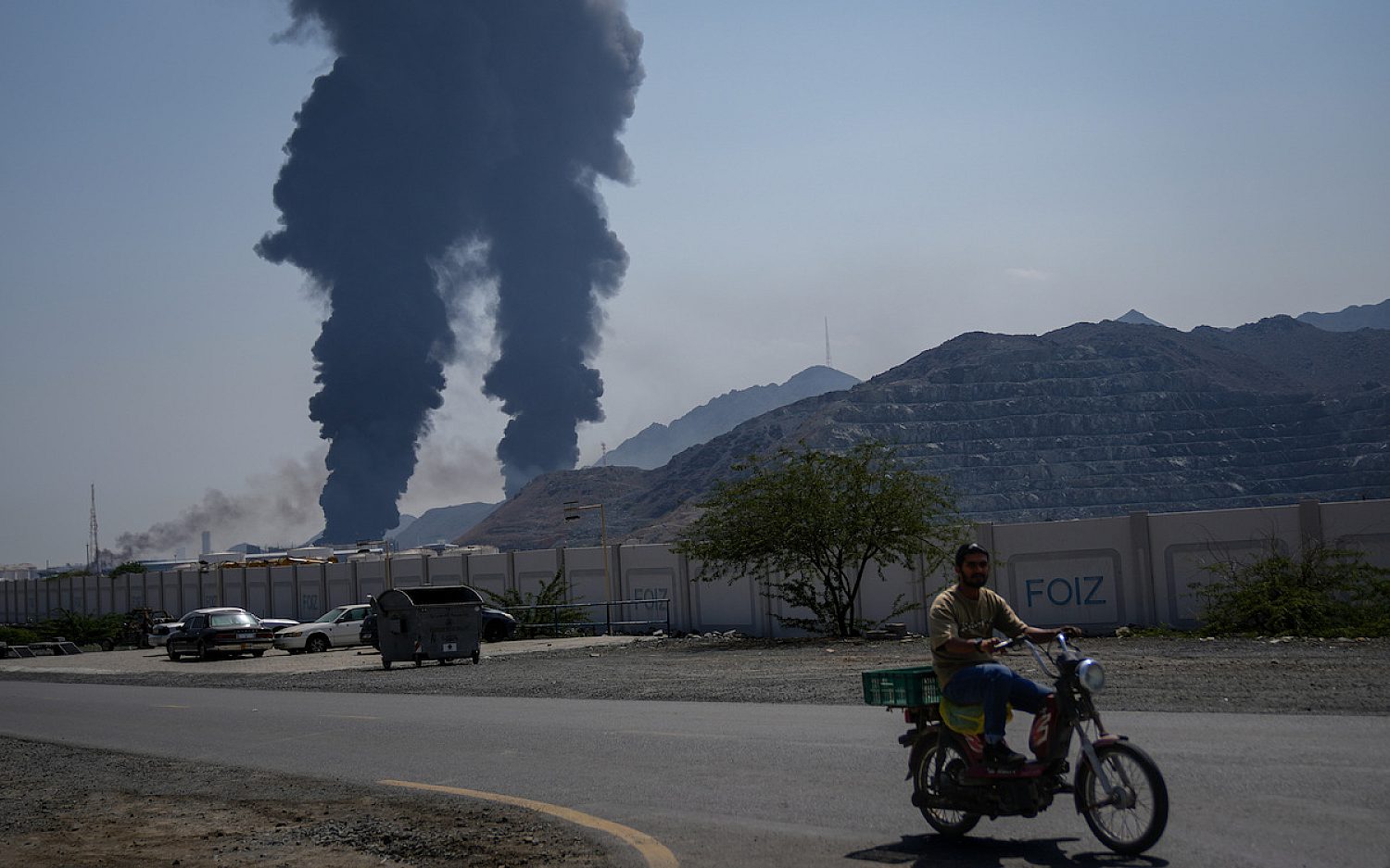
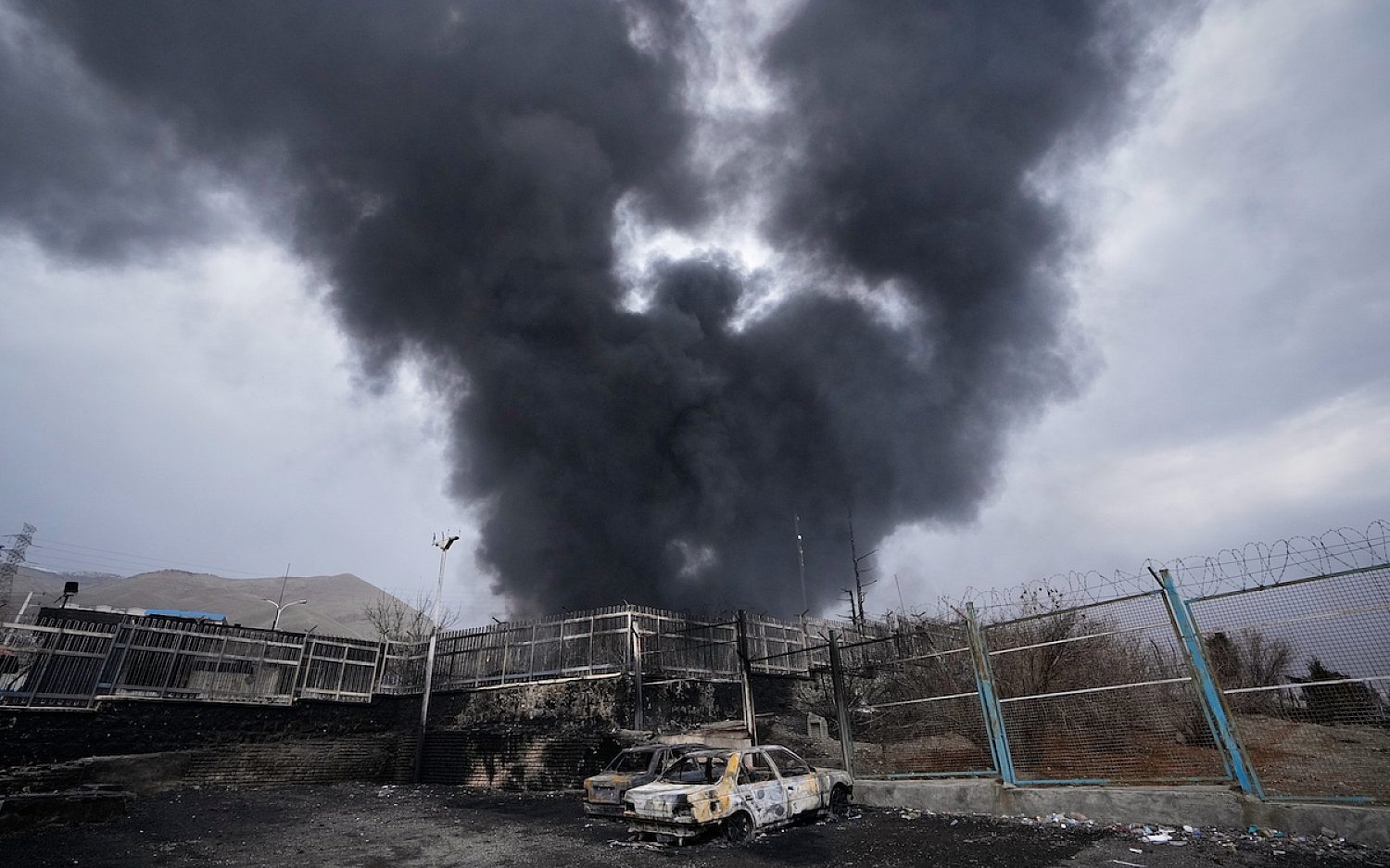
Plumes of oily black smoke rise over Iran. But what goes up must come down.
In late February, the United States and Israel launched a joint attack on Iran. Many of the strikes have targeted Iran’s oil facilities. The explosions send thick, toxic smoke into the sky. That smoke returns to the ground as “black rain.” Health officials warn of serious risks to the public. They advise staying indoors and wearing masks.
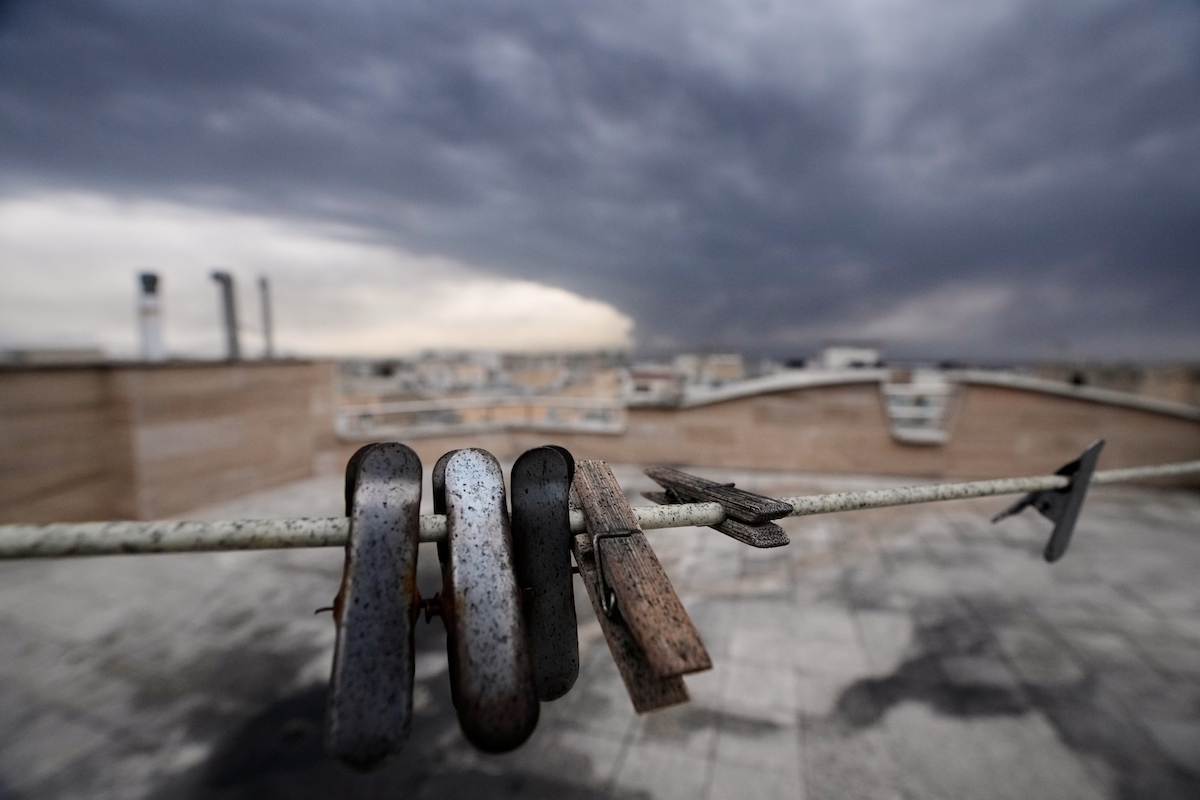
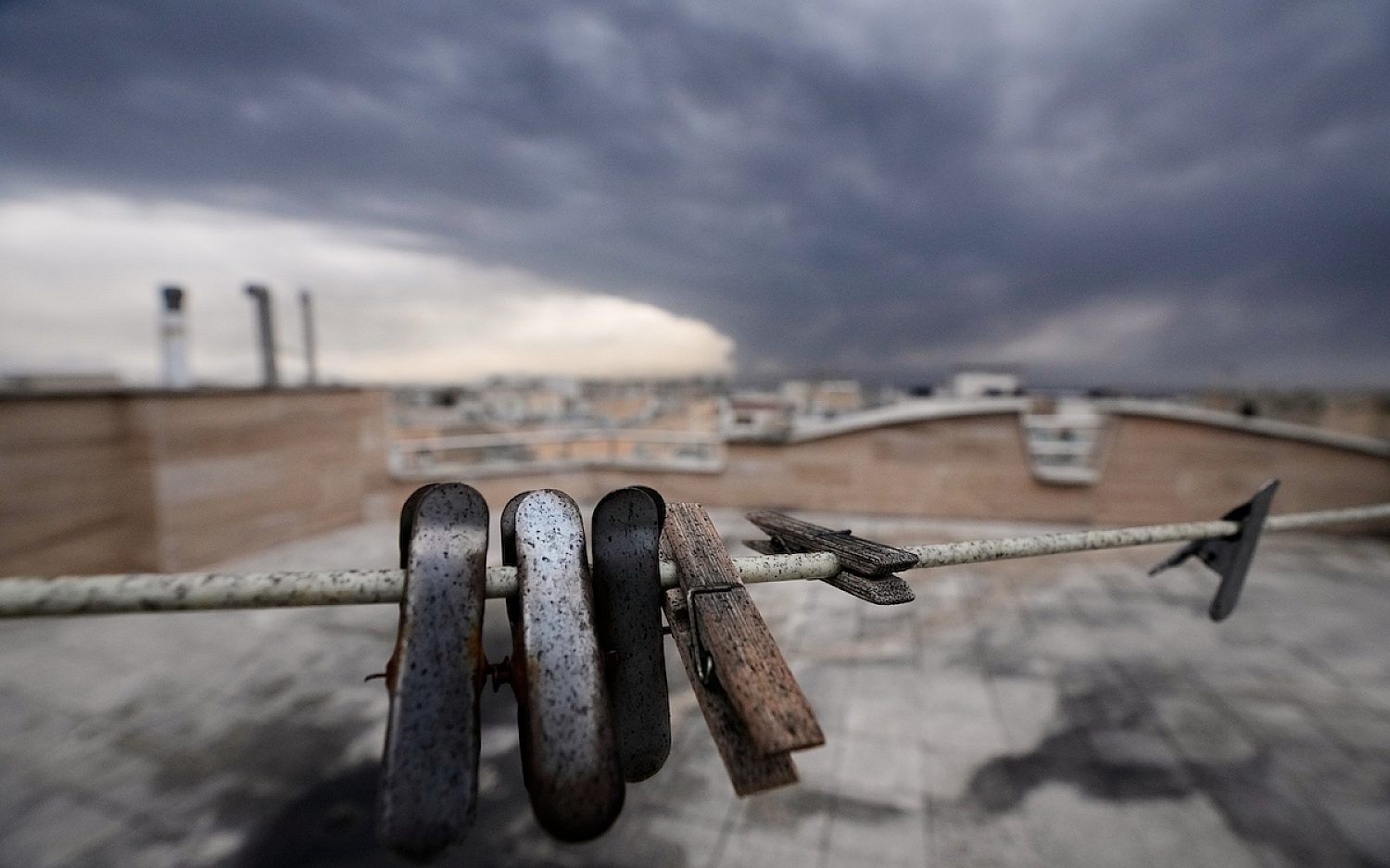
Black rain forms when soot, ash, and toxic chemicals combine with water droplets in the atmosphere. Those droplets become a dark, oily rainfall. This happens not only after bomb strikes. When oil refineries or oil fields catch fire, black rain often follows. Wildfires and volcanic eruptions can also cause the phenomenon.
Residents of Tehran, Iran, saw black rain after airstrikes on nearby oil depots and a refinery. Some people complained of burning eyes and difficulty breathing.
A microscopic soot particle is a small fraction of the width of a human hair. These particles can lodge deep in the lungs and enter the bloodstream. That can lead to heart and breathing problems. Some of the chemicals formed by burning oil can even increase the risk of cancer. Similar concerns can result from ordinary air pollution, but black rain concentrates those effects.
Some Iranians fear that the black rain could also pollute drinking water. But experts say the danger won’t last—as long as the strikes stop.
Peter Adams teaches civil and environmental engineering at Carnegie Mellon University. He says most toxic chemicals will wash out of the atmosphere within a week.
“I’m less concerned about longer-term or regional stuff,” says Adams. “But it’s a real mess for the people in the immediate vicinity.”
We can pray for the health and safety of innocent civilians in Iran. We can also thank God for giving nature a way to flush toxins from the atmosphere. Where humans cause destruction, He brings healing.
For He makes His Sun rise on the evil and on the good, and sends rain on the just and on the unjust. — Matthew 5:45