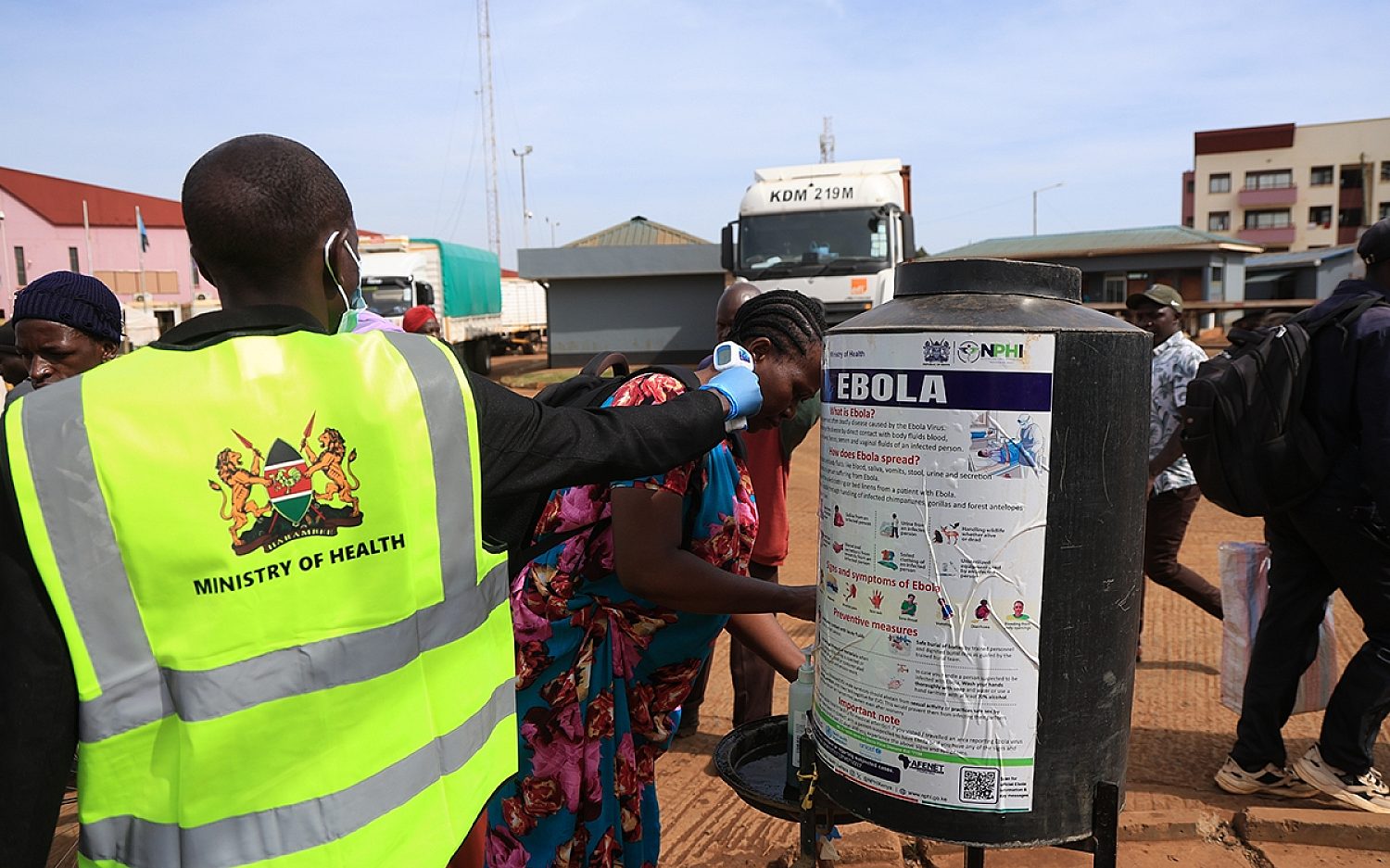
A rare type of Ebola rapidly spreads in the eastern part of the Democratic Republic of the Congo. Aid workers seek to educate residents on how to stay healthy. Listeners often meet them with skepticism and distrust.
Ebola is a virus that spreads through contact with fluids from an infected human or animal, such as sweat, feces, or vomit. Scientists have developed drugs to treat the disease and vaccines that can help prevent infection.
In early May, health workers in Congo identified a new outbreak of Ebola. The virus causing the sickness, Bundibugyo, is less deadly than previous strains. The fatality rate is 30% compared to about 90% for the Zaire virus. However, Bundibugyo doesn’t respond to existing Ebola vaccines or treatments.
“It’s important to keep in mind that every single Ebola outbreak that has occurred in the [Congo]—we’re on our 17th now—has been stopped,” notes epidemiologist Lina Moses.
Dr. Vasee Moorthy, an advisor for the World Health Organization (WHO), says a vaccine for the rare strain won’t be available for at least six to nine months.
The WHO reports over 900 suspected Ebola cases and over 220 deaths in Congo.
To spread awareness about Ebola, Red Cross volunteers travel to different communities. They teach practices to prevent infections, like avoiding contact with sick people.
But often people respond with anger and suspicion. Groups of gunmen are active in eastern Congo. Many residents distrust all outsiders. Some don’t believe Ebola exists.
“We continue to tell them that the disease is out there. Some accept, and others don’t,” says volunteer Vanny Birungi, a resident of eastern Congo.
Residents often hurl insults at Birungi. Sometimes they throw stones as well.
“These people should stop bothering us,” says Pierre Basola, a 56-year-old resident of Bunia, the capital of Ituri province. “They just want to get rich.”
Heather Kerr is a director of an aid group in Congo. “Trust is almost as important as the health response,” she says. “Because if you get this massive distrust in the communities, they’re not going to go to the health centers.”
It doesn’t help that health centers don’t allow families to retrieve relatives’ bodies. Touching the bodies of Ebola victims can spread the disease. Still, grieving family members want to give their loved ones traditional funerals.
Over the weekend, some men stormed the Mongbwalu General Hospital with guns, demanding to receive bodies of relatives. Patients and staff were forced to evacuate.
Pray for the medical staff and volunteers treating patients with Ebola. Ask God to stop the outbreak.