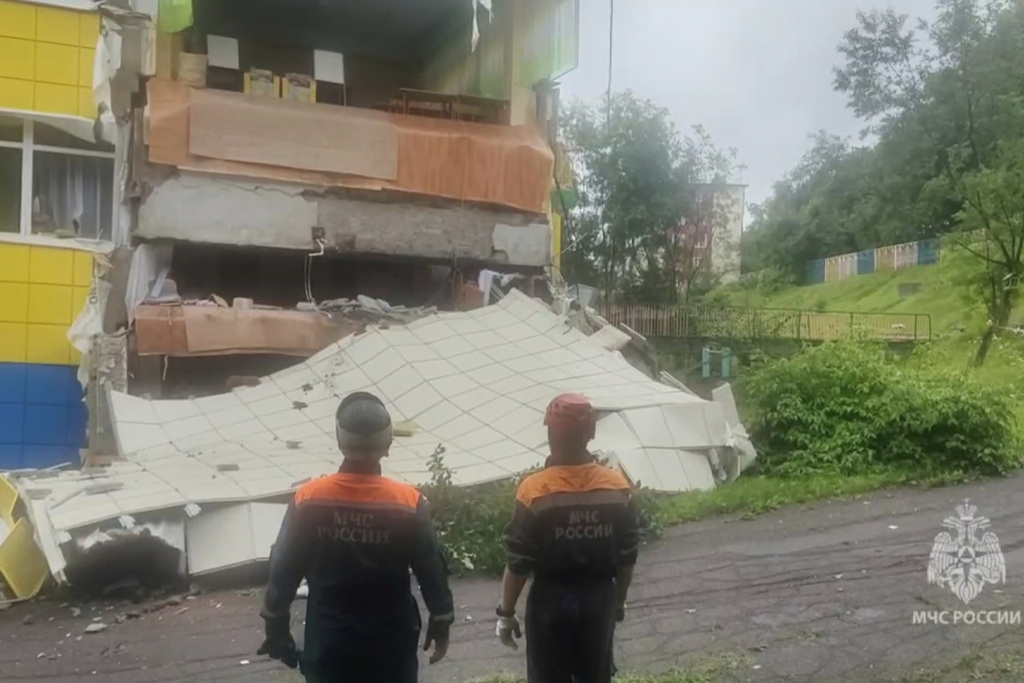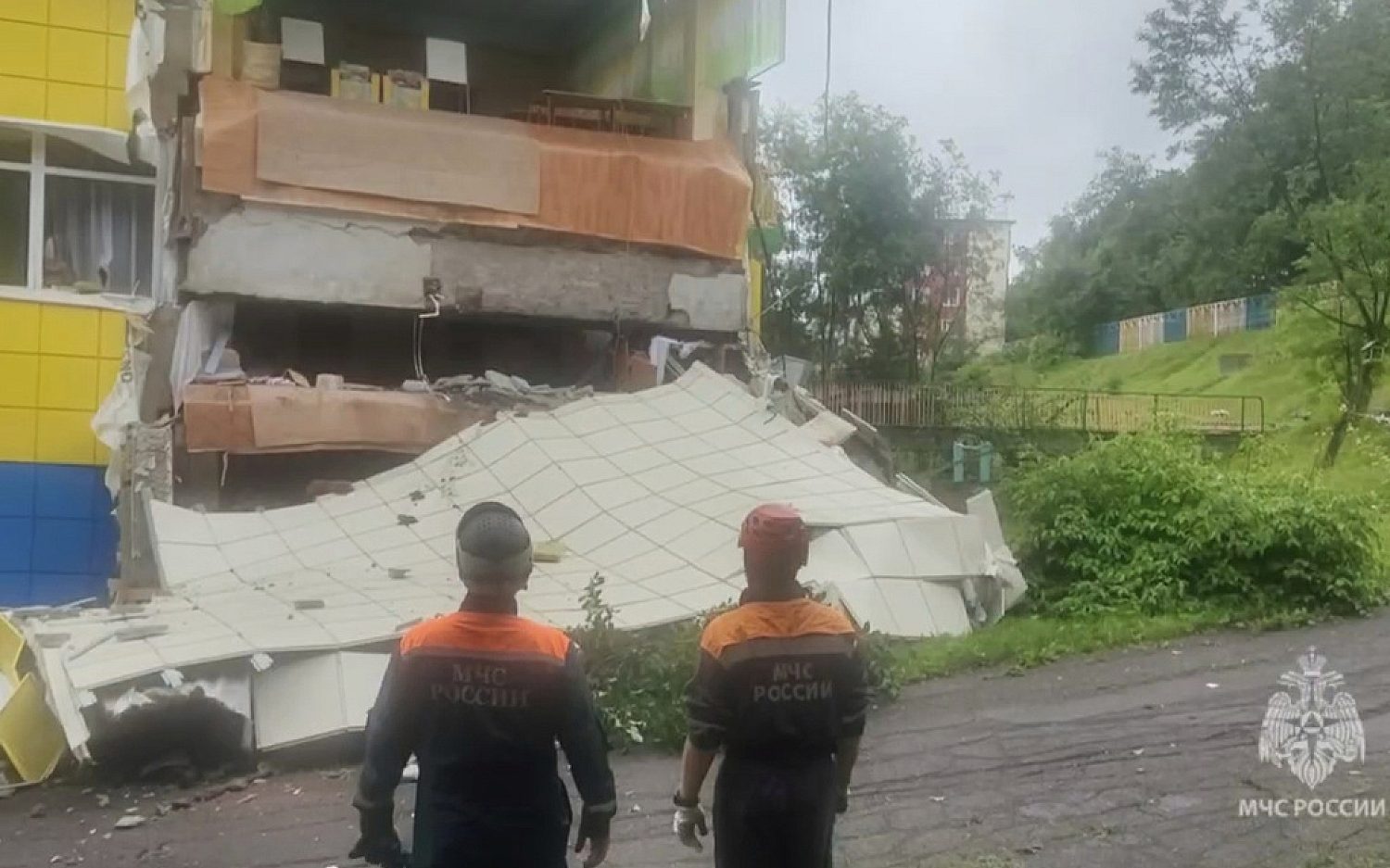
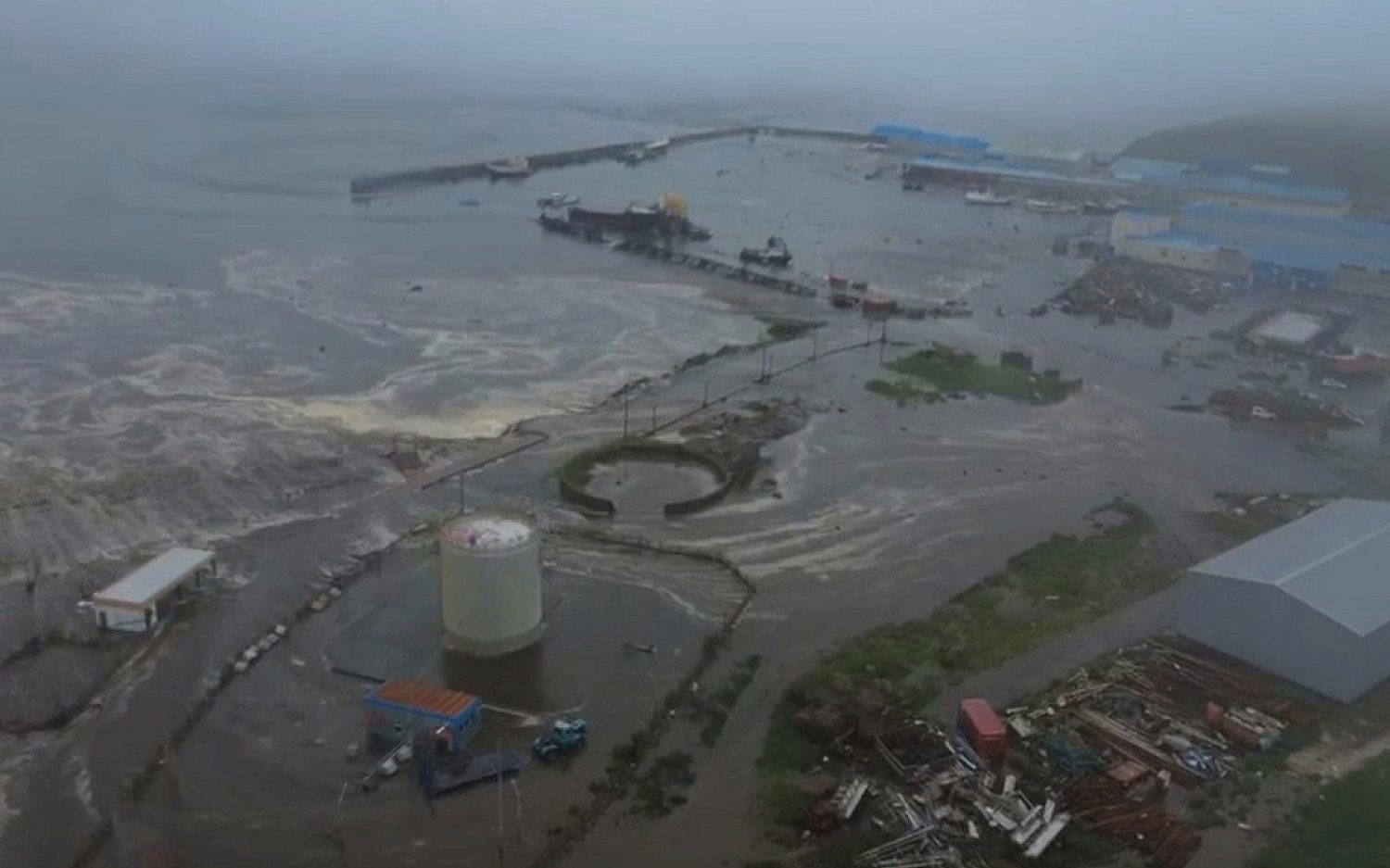
One of the most powerful earthquakes this century struck off the coast of the Kamchatka Peninsula in Russia’s Far East. The quake registered a magnitude of 8.8. It struck early Wednesday local time, which was still Tuesday night in the United States.
The quake was the sixth-biggest ever recorded.
The scale that measures earthquake magnitude, or size, is logarithmic. That means that each whole number on the scale is increased by a factor of 10. So an 8.0 magnitude earthquake is 10 times greater than a 7.0 magnitude earthquake. A 5.0 magnitude quake is a medium earthquake. Earthquakes with ratings of 7.0 and above can cause massive damage.
Oleg Melnikov, head of the regional health department in Kamchatka, says a few people hurt themselves rushing to leave buildings. All were stable.
A video released by a Russian media outlet showed doctors at a cancer clinic on Kamchatka holding a patient and clutching medical equipment as the quake rocked an operating room. They continued with surgery after the shaking stopped.
The quake generated tsunami warnings and advisories for a broad section of the Pacific, including Alaska, the U.S. West Coast, and as far south as New Zealand. Officials are downgrading warnings in most areas. However, advisories remain in place as more aftershocks are possible.
Tsunamis are waves triggered by earthquakes, underwater volcanic eruptions, and submarine landslides. After an underwater earthquake, the seafloor rises and drops. That lifts water up and down, creating tsunami waves.
Many people think of tsunamis as one wave. But they are typically multiple waves that rush ashore like a fast-rising tide.
“Tsunamis cross the ocean at hundreds of miles an hour—as fast as a jet airplane—in deep water,” says Dave Snider, tsunami warning coordinator with the National Tsunami Warning Center in Alaska. “But when they get close to the shore, they slow down and start to pile up.”
Officials urged people to stay away from coastlines until any wave surges passed in places as far away as Fiji, Samoa, Tonga, Federated States of Micronesia, and Solomon Islands.
“It’s a bit like throwing a very, very large rock into the sea and then watching the waves propagate away from that rock, that splash,’’ researcher Simon Boxall says. This tsunami isn’t one “that’s going to cause mass devastation. But it will cause coastal flooding and it will cause damage, and it does put lives at risk if people don’t move to high ground.’’
Some tsunamis are small and don’t cause damage. Others cause massive destruction. In 2004, a 9.1 magnitude earthquake off Indonesia caused waves that leveled remote villages, ports, and tourist resorts across Southeast and South Asia. More than 220,000 people tragically died. A 9.0 magnitude quake and tsunami ravaged parts of Japan’s northeastern coast in 2011, taking almost 20,000 lives.
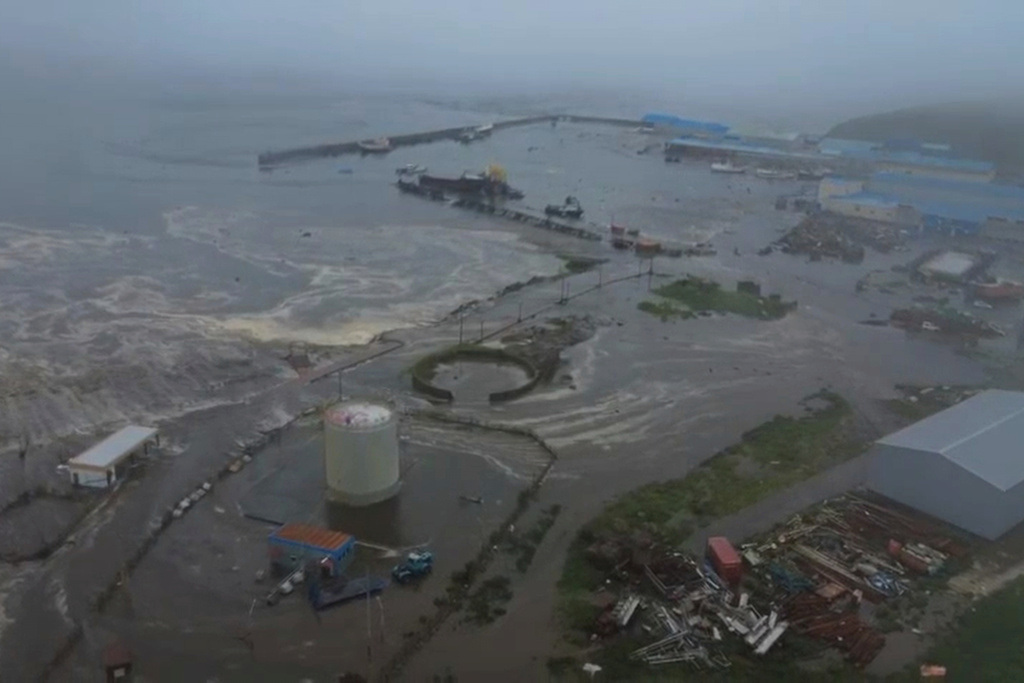
Kamchatka officials recorded a tsunami height of 10 to 13 feet. Tsunami waves about two to five feet high reached San Francisco early Wednesday. Other areas have seen smaller waves.
More aftershocks are possible, putting the entire Pacific Rim on tsunami watch. As of Wednesday morning, tsunami warnings remained in effect for parts of the northern California coast.
Pray for safety for people in areas affected by the quake. Thank God that the quake appears to have caused little damage and few injuries.