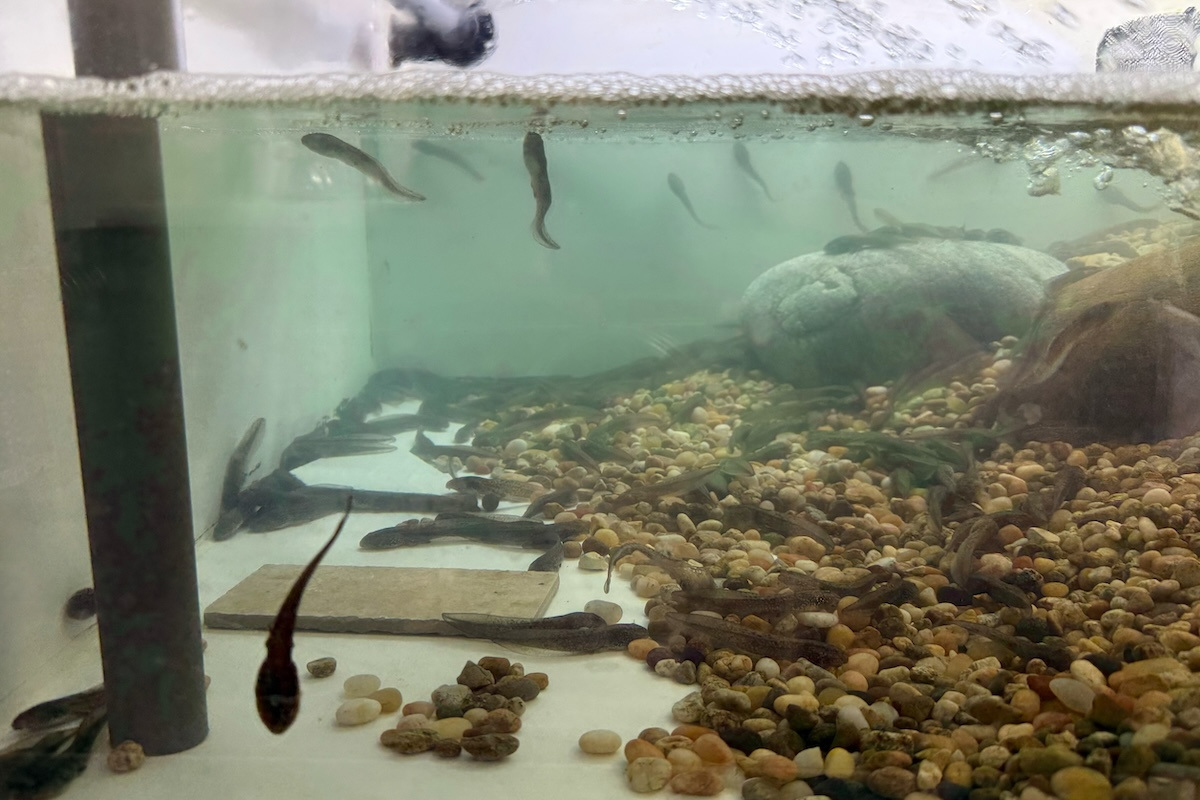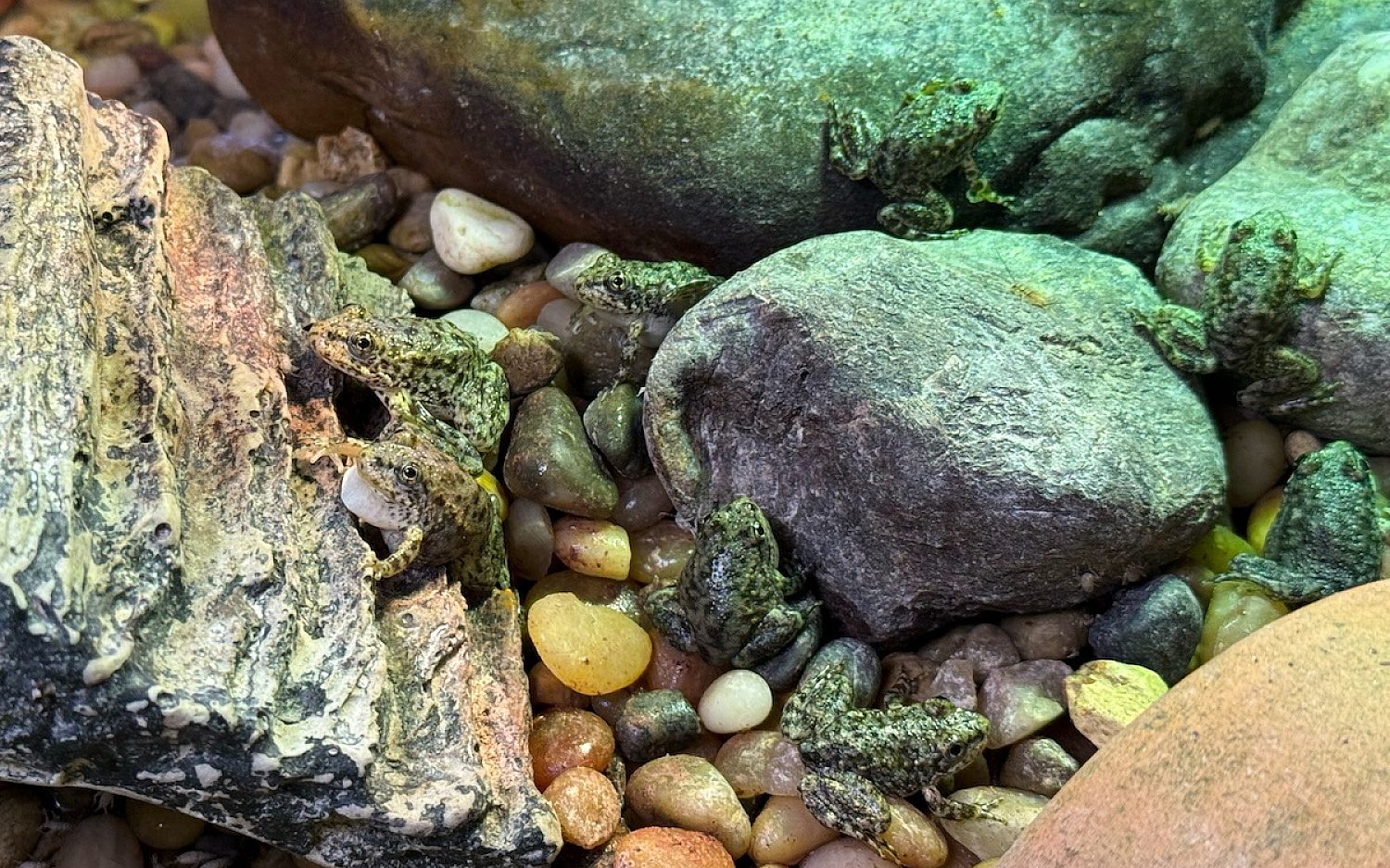
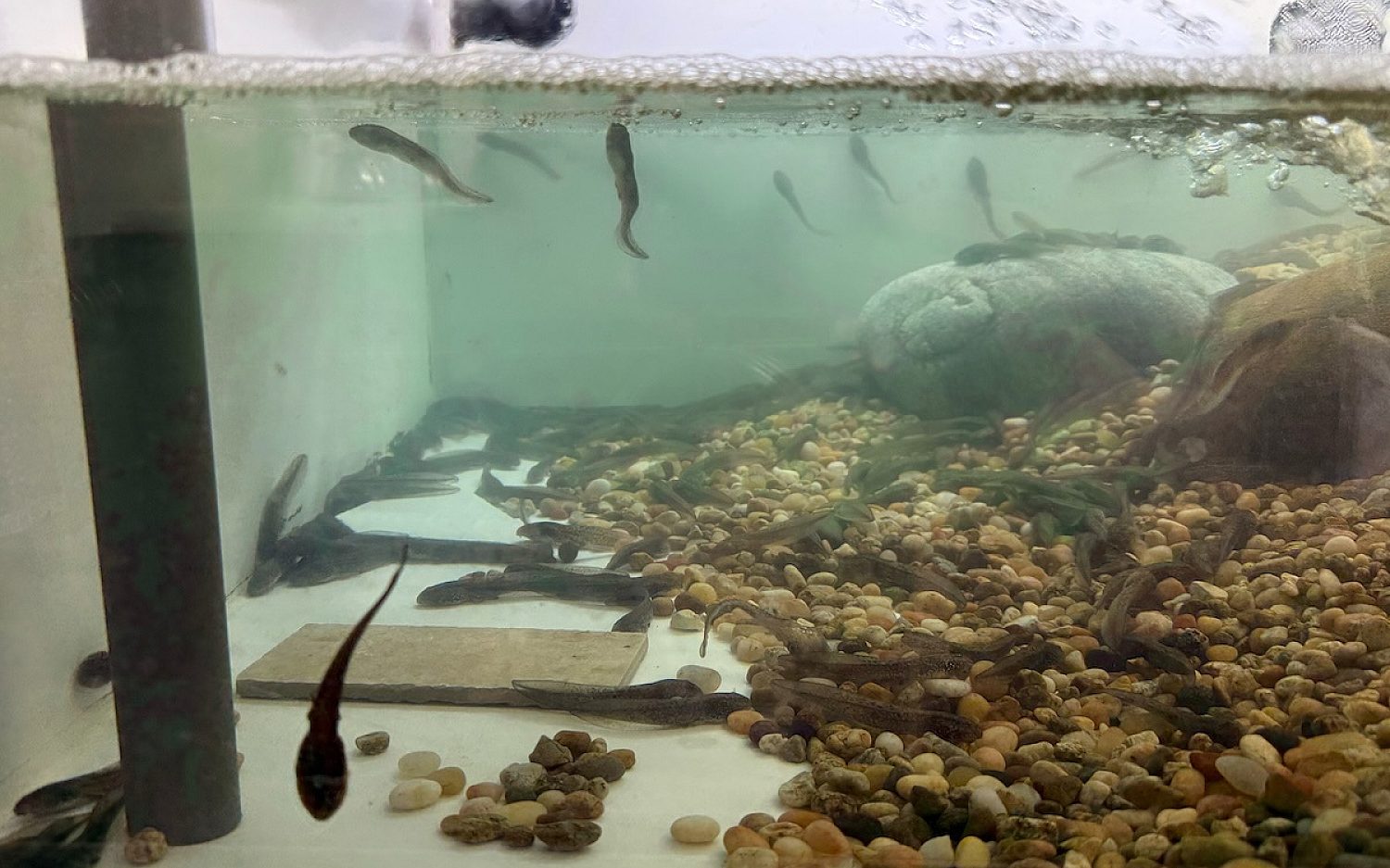
Scientists gather in a nursery in Long Beach, California. They spread a mixture of spirulina (algae), fish food, and calcium on small plates. Their ravenous, tiny wards must eat four to five times each day. What are the wee ones in their care? Mountain yellow-legged tadpoles.
A tadpole’s life is not for the faint of heart. While it sprouts legs and develops lungs, it encounters fish and other predators. It takes a mountain yellow-legged tadpole about two to four years to become a juvenile frog. The timeframe varies based on water temperature. So the Aquarium of the Pacific gives hundreds of these critically endangered creatures a leg up.
Mountain yellow-legged frogs used to be the most populous vertebrate in the mountains of California. They thrived in streams, lakes, and ponds. But their numbers dwindled to fewer than 200 by 2021.
Their populations were first threatened in the late 1800s. People introduced non-native trout to their habitats for recreational fishing. Those trout feasted on tadpoles.
The amphibians are also prone to chytrid fungus. The fungus infects skin and causes some tadpoles and frogs to lose weight and become lethargic. Many die.
Another devastating blow came in the fall of 2020. The Bobcat Fire destroyed about 95% of the mountain yellow-legged frog’s habitat. Rainfall in the aftermath turned burn areas into mudslides. Waterways filled with runoff. Scientists salvaged a handful of tadpoles from the region, and the aquarium raised and released them.
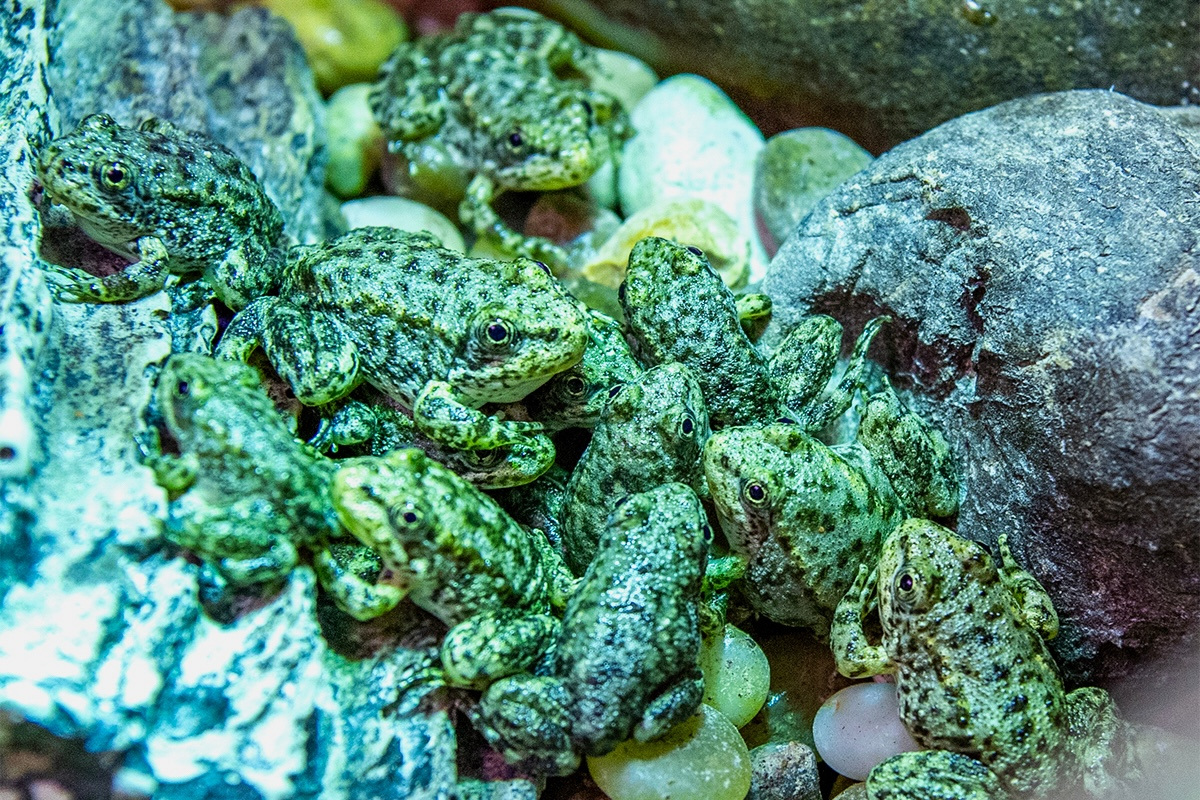
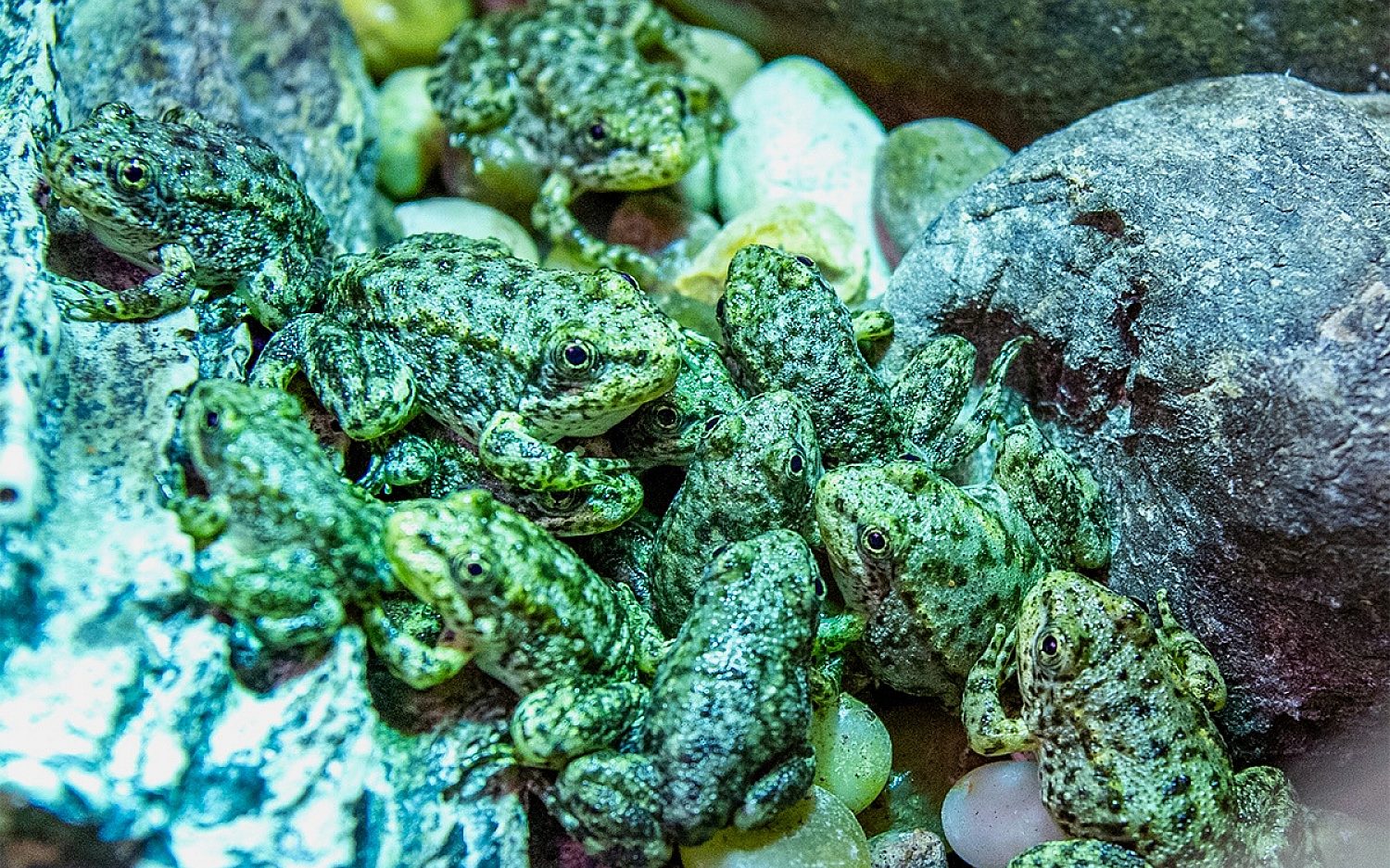
Now the Los Angeles and San Diego zoos breed the frogs and send hundreds to the Aquarium of the Pacific.
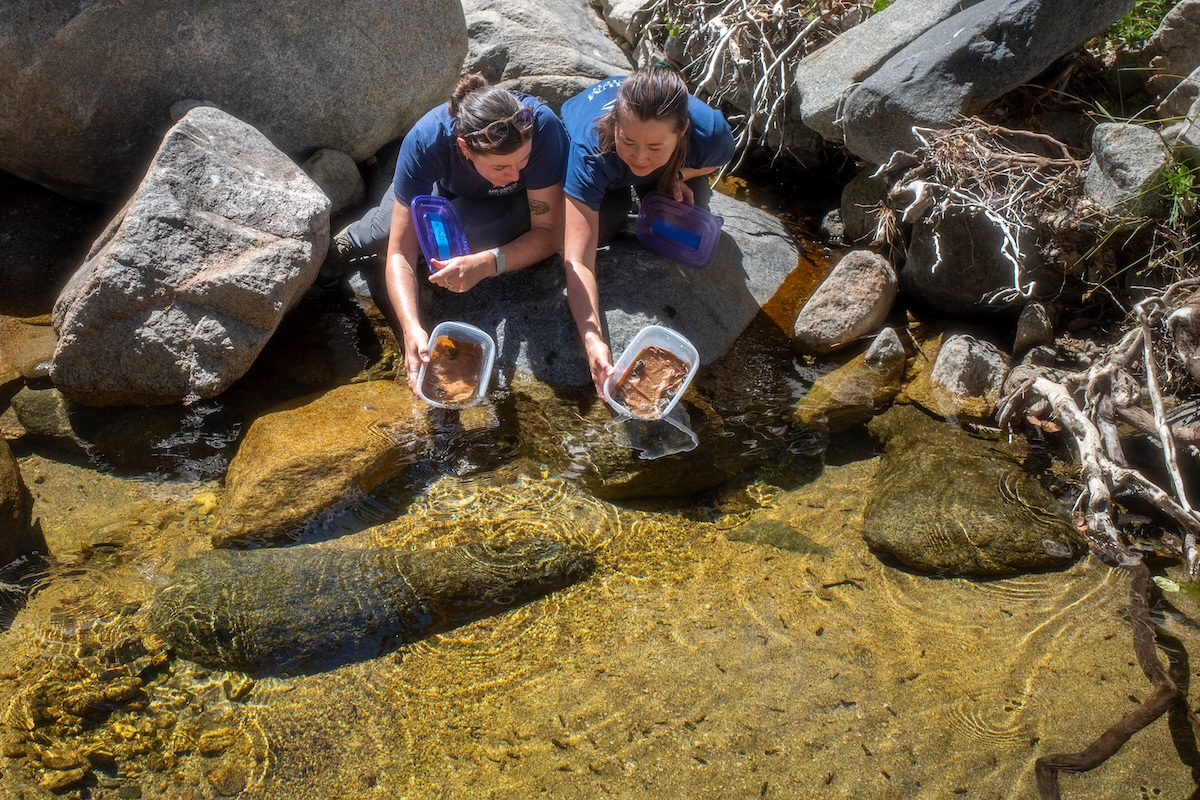
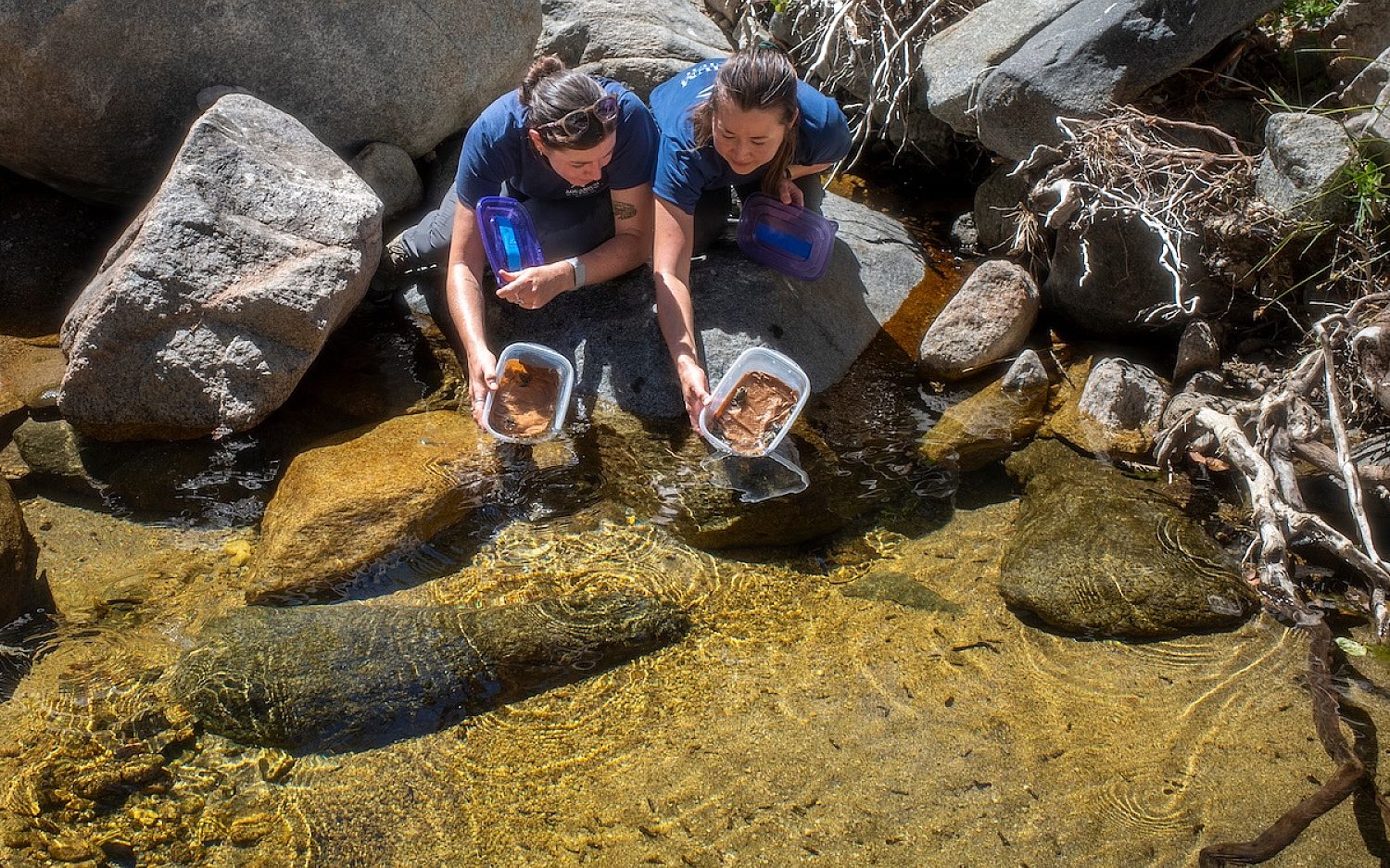
Erin Lundy is the Conservation Initiatives Manager at the aquarium. “Although they’re pretty slow growers, given the right conditions, frogs are pretty successful, so my hope is that we can get them back,” she says. The aquarium celebrated its release of 1,000 frogs since 2020 in August.
Lundy and her care team periodically change the water flow rates in the tanks so the baby frogs grow strong limbs and get used to swimming in different conditions. She feeds them live crickets, fruit flies, and beetles to emulate their diet in the wild.
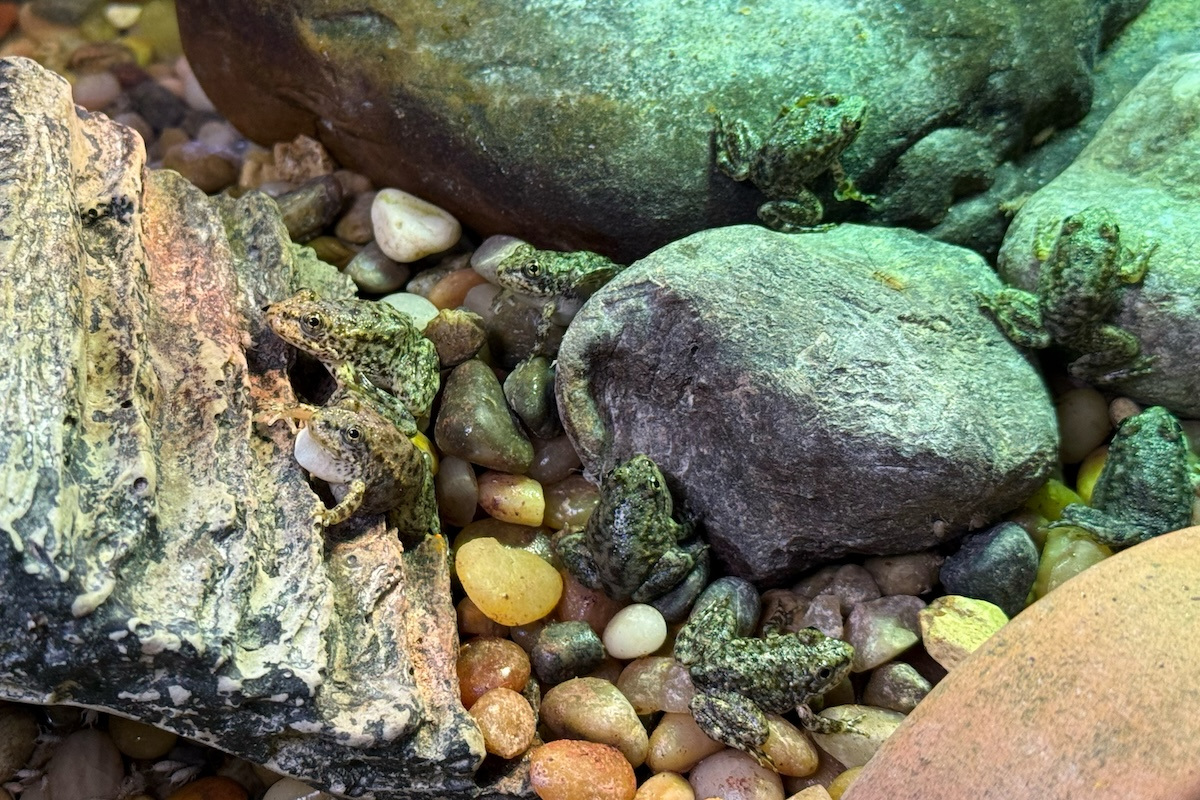
When the frogs have all four limbs and no more tail, they are ready to enter the wild. About 60% to 65% of the aquarium’s tadpoles survive to this stage, which is considered high, Lundy says.
Lundy used to worry the frogs wouldn’t know what to do when they were set free. During one release, she watched as one mountain yellow-legged frog jumped from its container, landed on a rock, and immediately ate a housefly—something it had never seen before. God designed frogs to know how to be frogs!
God also created mountain yellow-legged frogs to play an important role in native ecosystems. They are a source of food for several native animals. As tadpoles, they help keep waterways clean by eating large amounts of algae and other decaying organic matter.
O Lord, how manifold are your works! In wisdom have you made them all. — Psalm 104:24