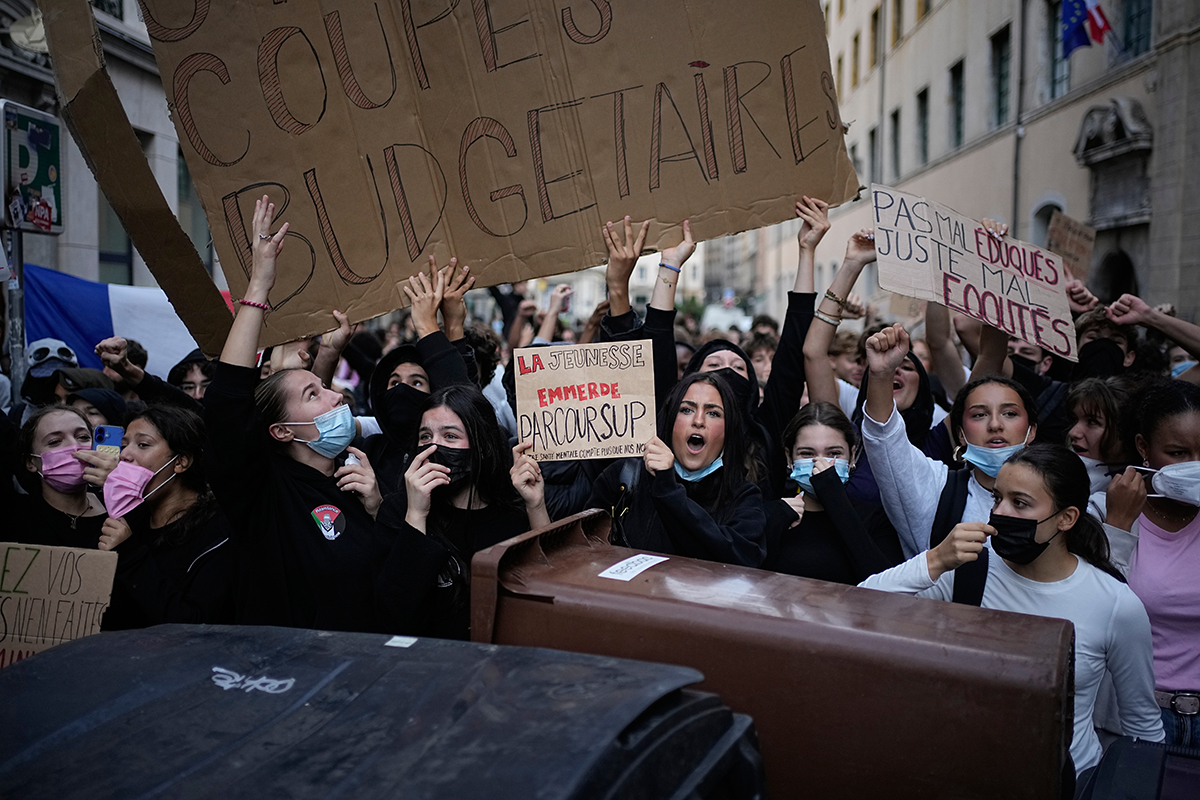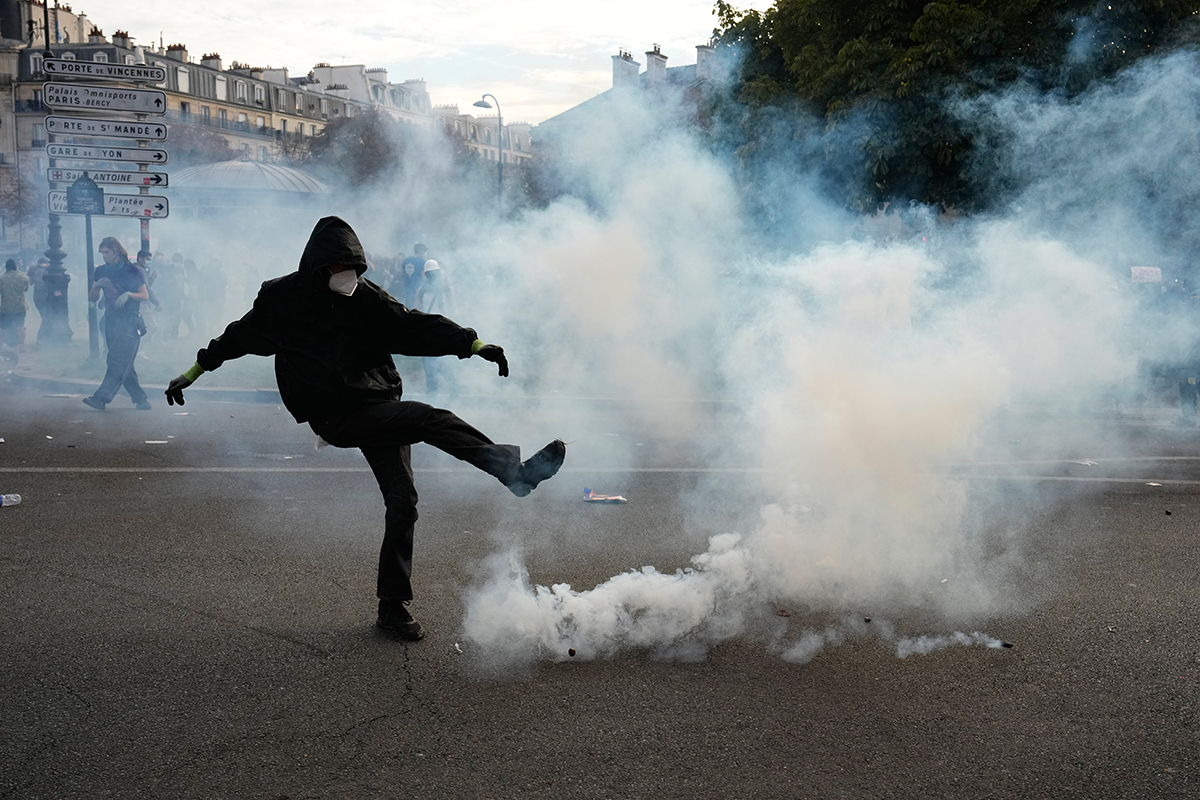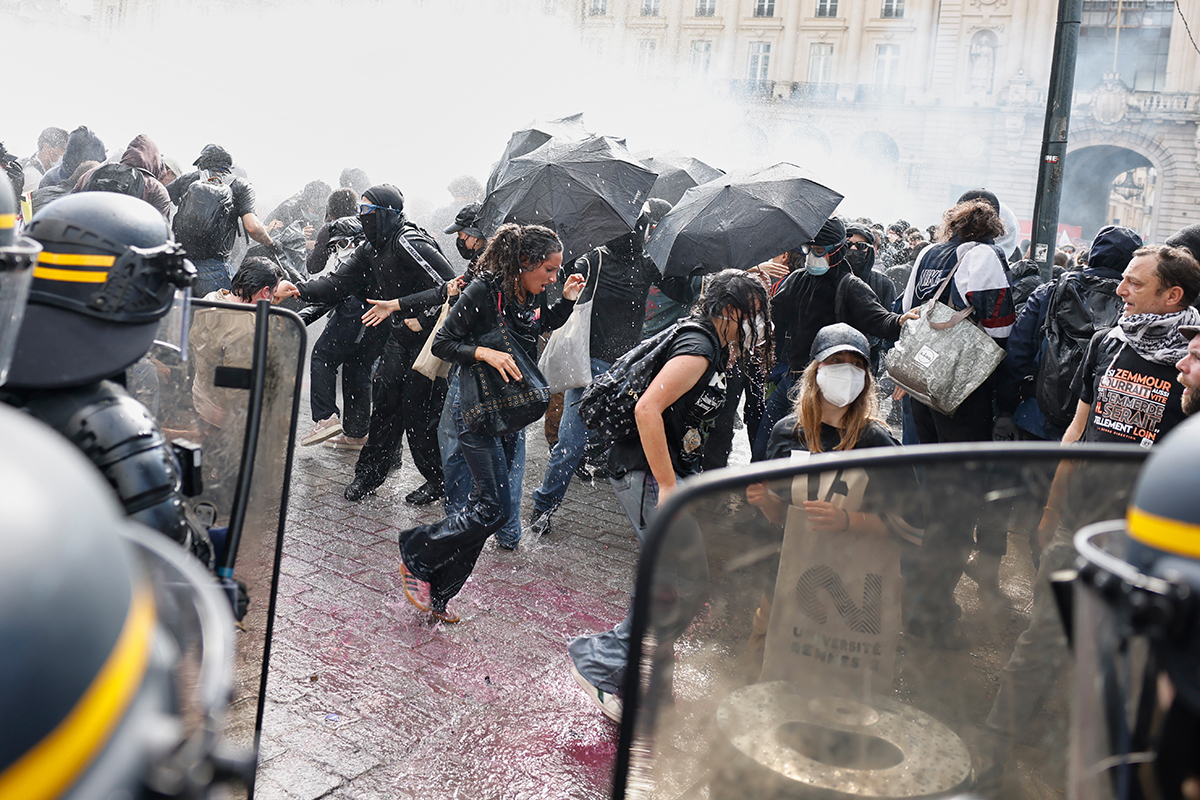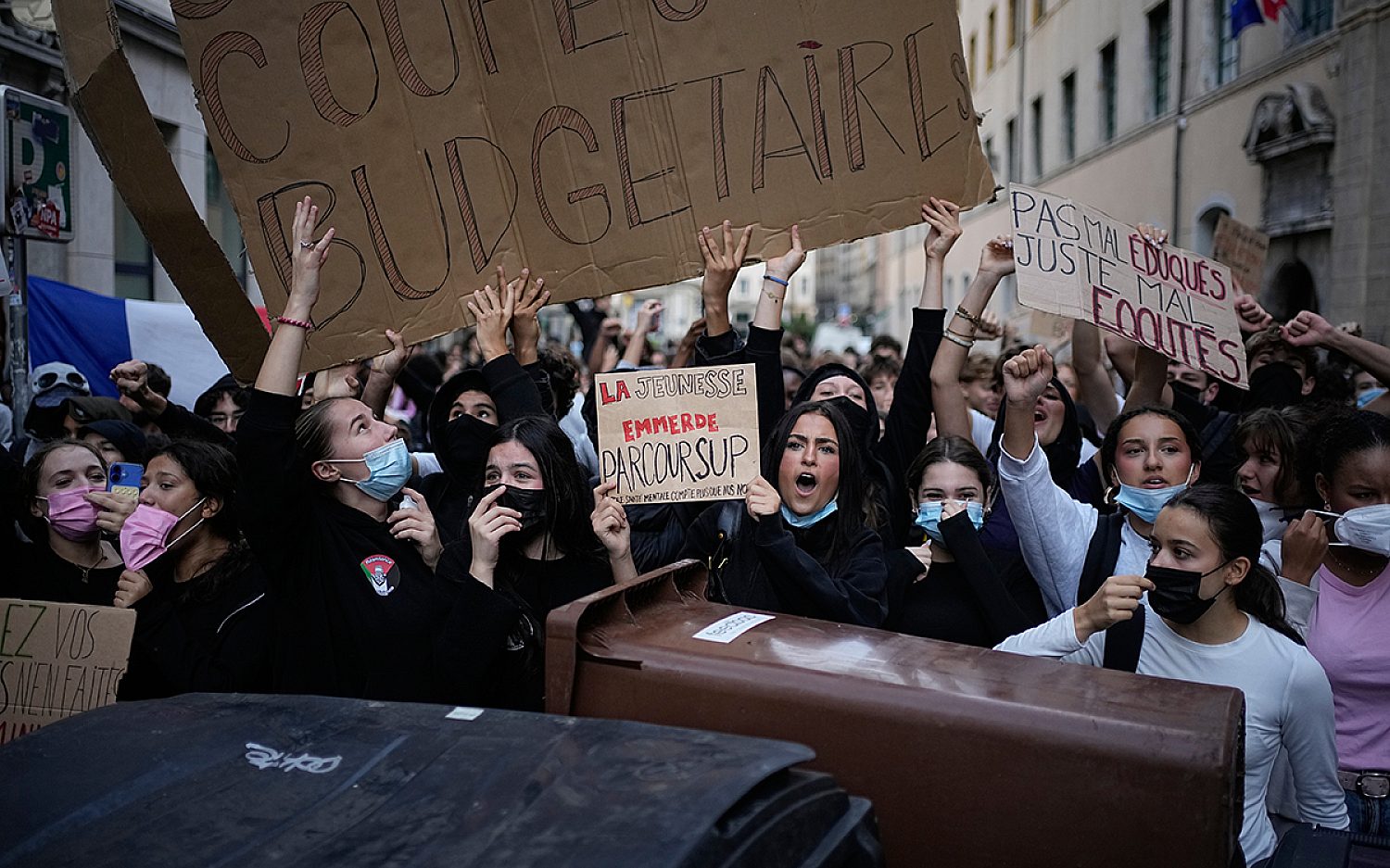
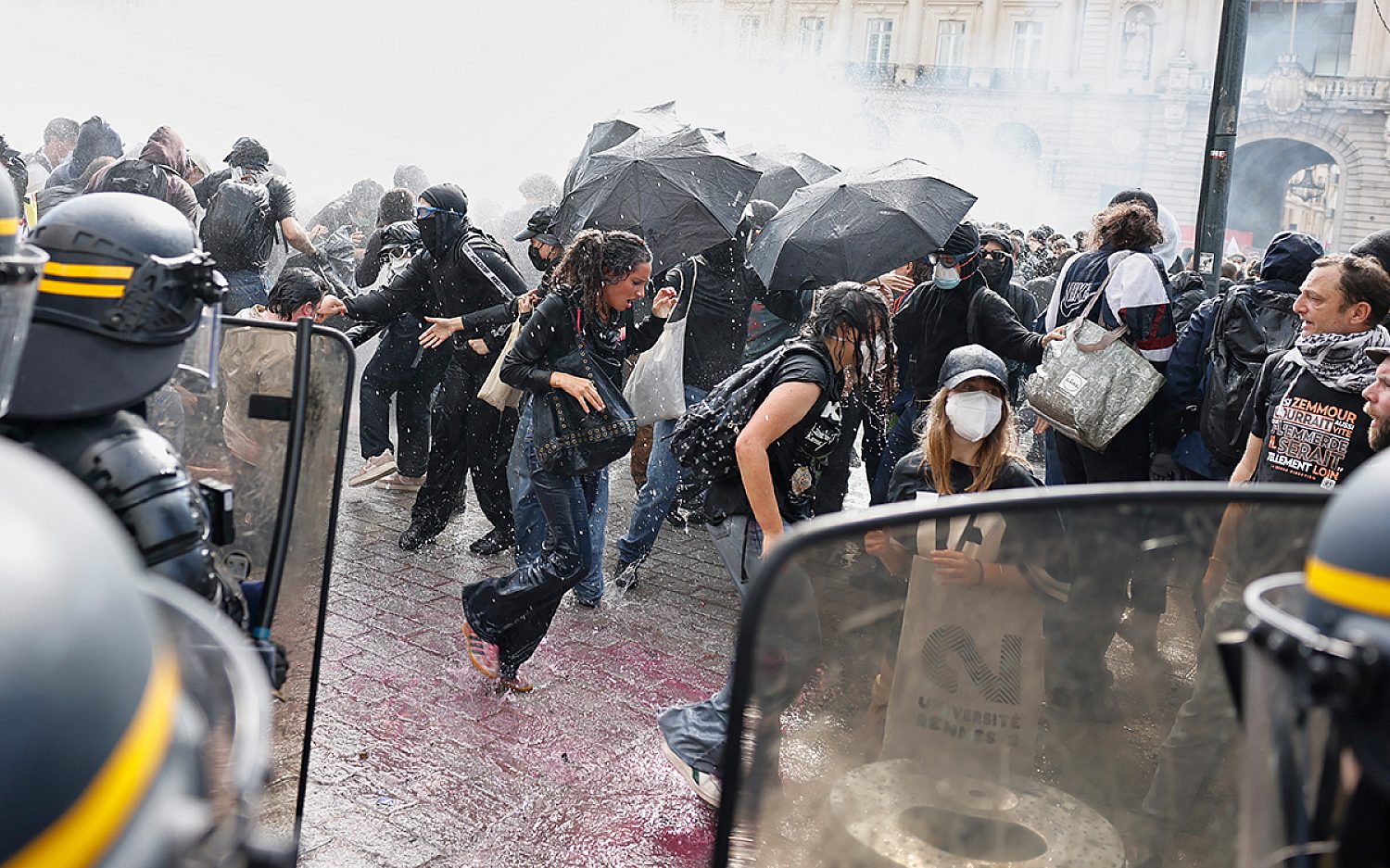
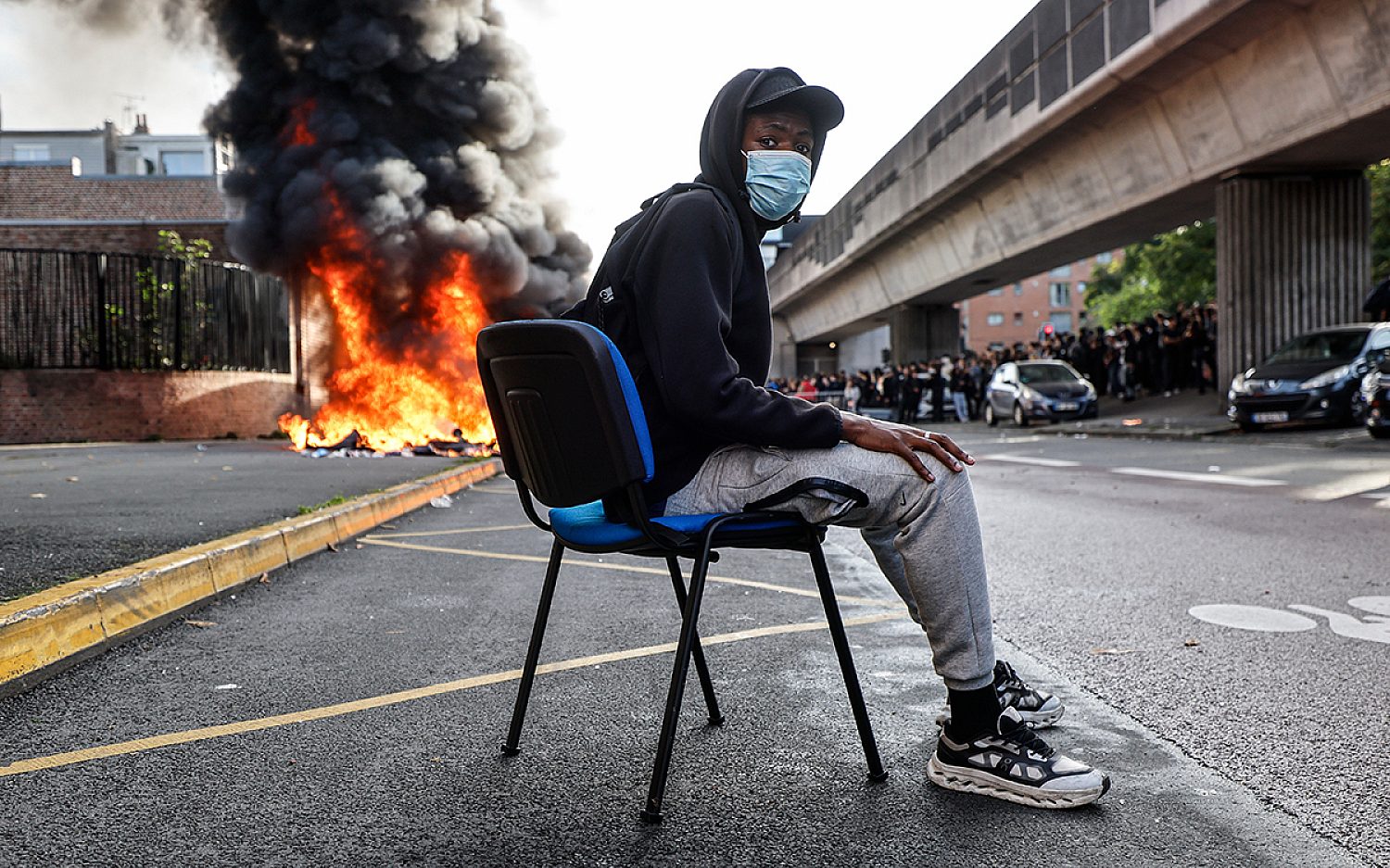
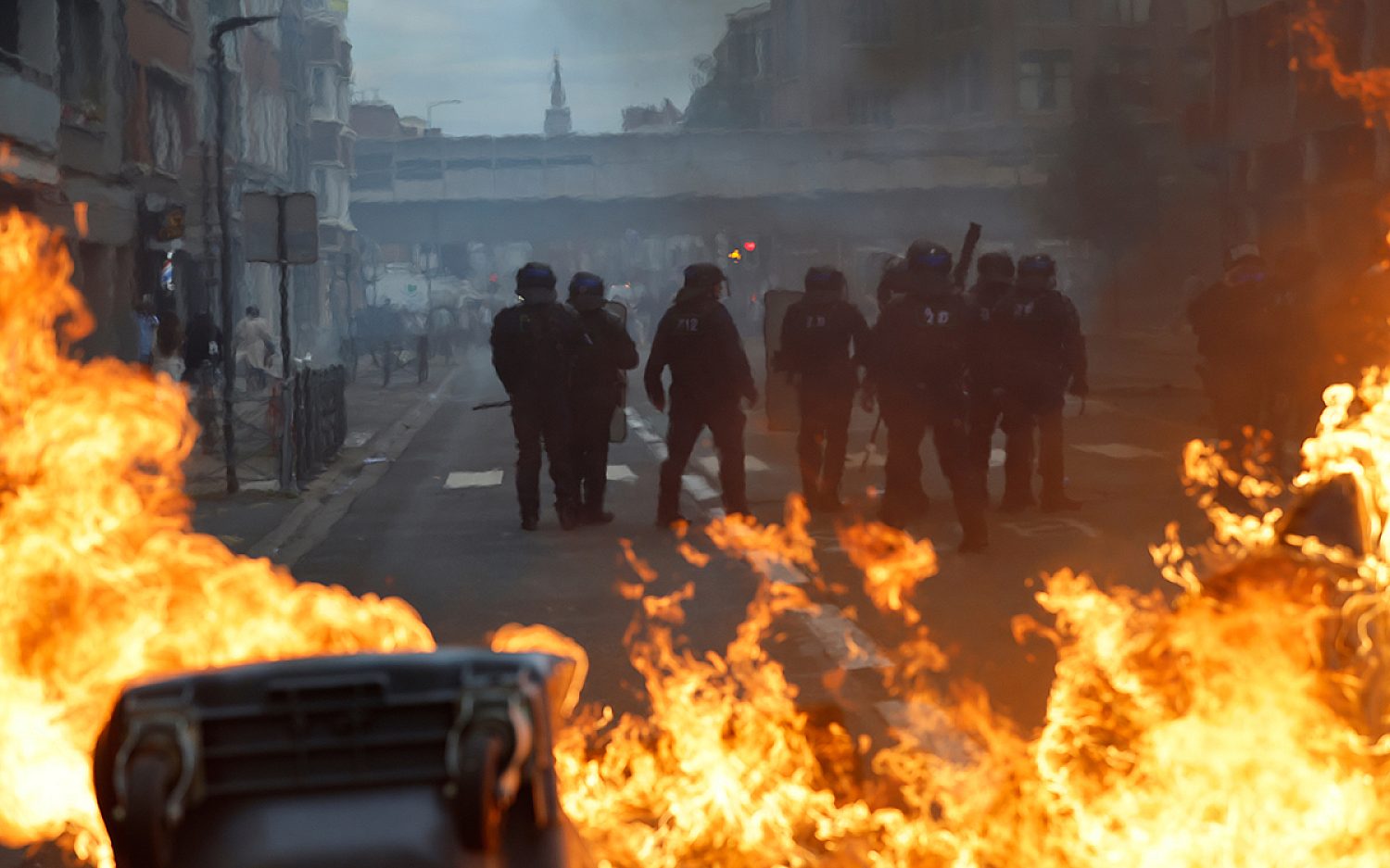

Students around France are raising signs and setting fires to protest what they say is a lack of funding for the country’s school system. The movement began at a high school in the Paris region in mid-September. Now it has spread across the nation.
The Interior Ministry estimated that 266,000 people gathered for protests on Tuesday alone. About 56,000 of those marched in Paris.
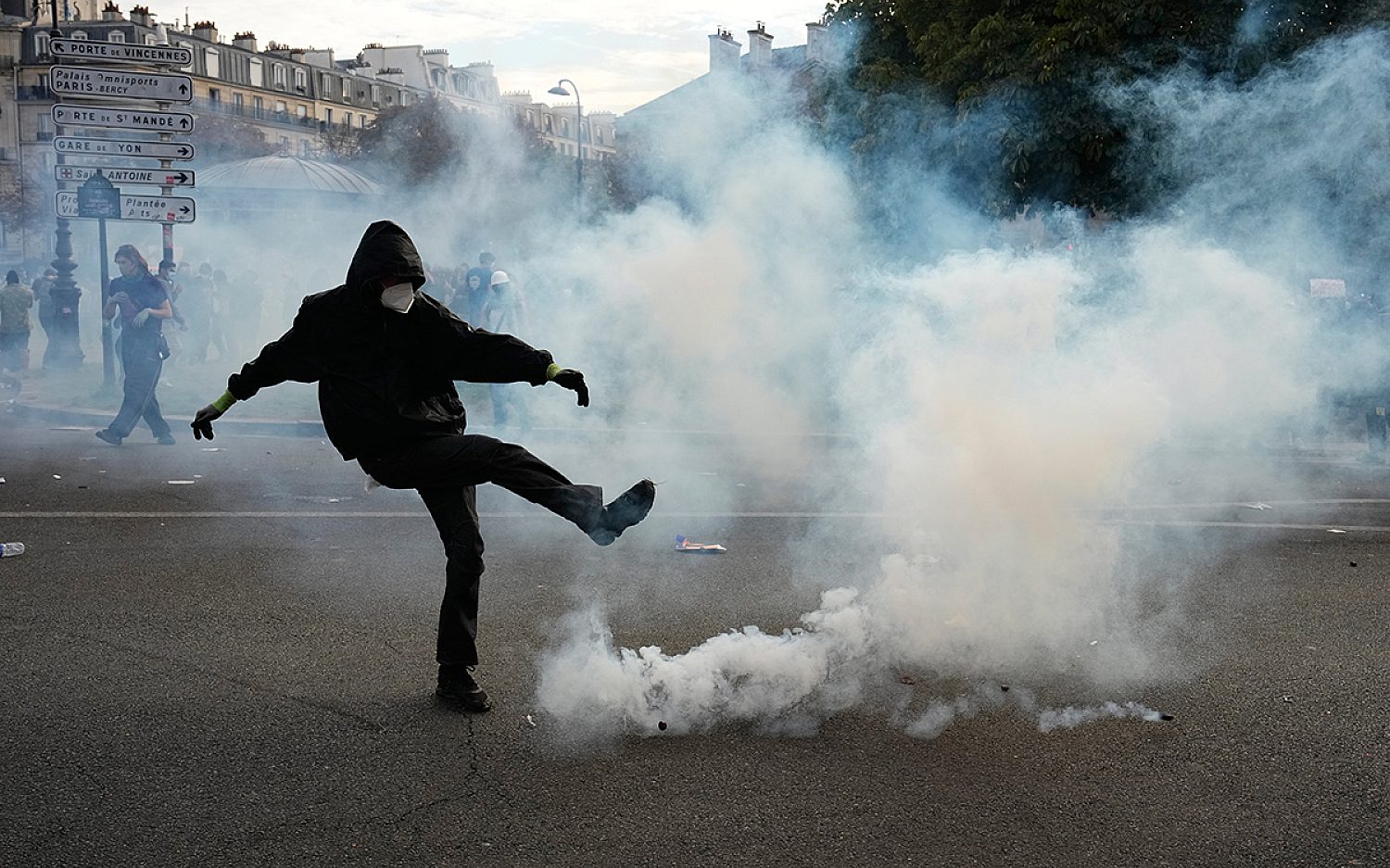
At first, the protestors deployed signs, school boycotts, and peaceful marches. But things are escalating. Police fire tear gas and use anti-riot weapons to control crowds. Students have hurled acid, fireworks, trash, and other projectiles.
Around 400 or 500 schools have had to close because of damage or attacks that targeted staff.
Police have made over 6,500 arrests, many of minors. Parents and officials argue over whether all the incidents and arrests are just. On Monday, a 15-year-old boy lost a hand in an incident involving a police stun grenade.
Interior Minister Laurent Nuñez says the police response has been proportionate in “almost all cases.” He argues that the protests at times turned into riots, requiring police intervention.
Students voice a range of grievances. Most complain that classrooms are rundown and don’t have proper desks, chairs, and air conditioning. Some cite plummeting test scores and a lack of resources for disadvantaged students.
“We need to listen to them,” says Léa Monimart, an adult protester. “They are 17 years old; they are not completely clueless, and they know what they are talking about. It’s important to show that there are adults who support them.”
French citizens also point to other difficulties like increased fuel prices and rising poverty. The protests bring attention to France’s upcoming presidential election. As President Emmanuel Macron’s final term ends, the unrest increases pressure on his administration to attempt fixes for the country’s problems.
Hear the cases between your brothers, and judge righteously . . . You shall not be partial in judgment. You shall hear the small and the great alike. — Deuteronomy 1:16-17