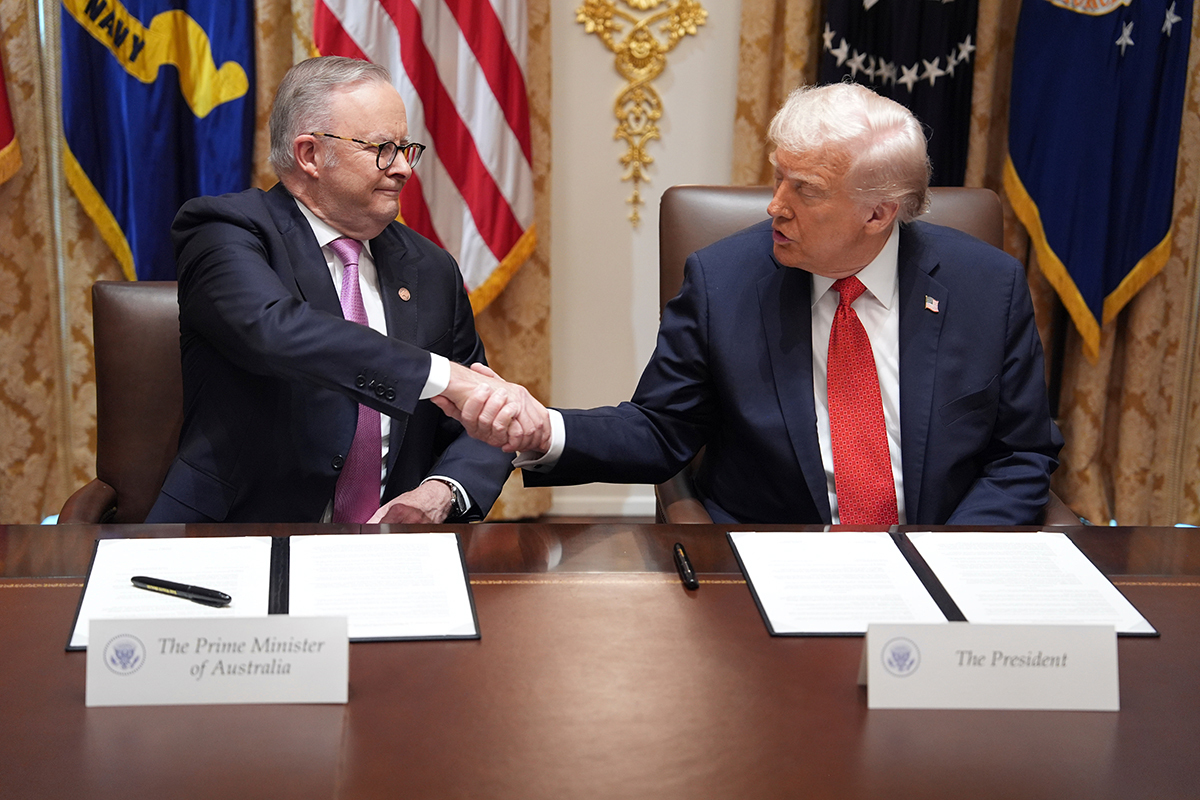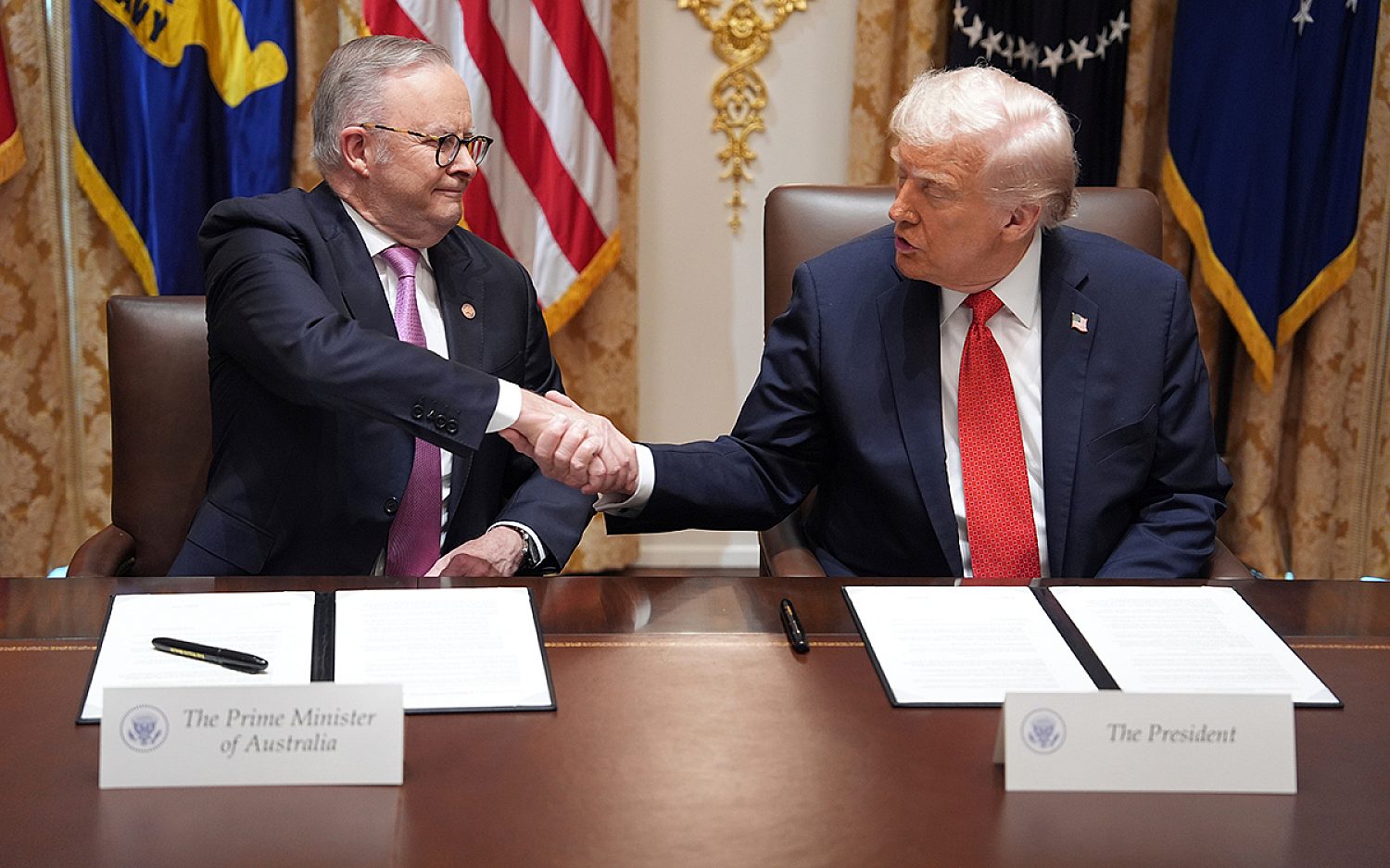
U.S. President Donald Trump and Australian Prime Minister Anthony Albanese met at the White House in Washington, D.C., on Monday. They signed an $8.5 million critical minerals deal. China recently made tougher rules on exporting its own critical minerals abroad. So the United States is eyeing the Land Down Under’s rich mineral resources.
Critical minerals include rare earths. They are important for the energy, defense, and technology industries. Fighter jets, electric vehicles, laptops, and phones all require them. And the U.S. government considers them at high risk of supply chain disruption.
Earlier this month, Beijing tightened its rules on exporting rare earth materials. It now requires foreign companies to get approval from the Chinese government to buy magnets with even tiny amounts of rare-earth materials. The Trump administration says this gives China too much power over the global economy and the technology supply chain.
The U.S.-Australia agreement could immediately boost rare earth supplies in the United States. That’s if American companies can secure some of what Australian mines are already producing.
Eventually, other sources of rare earths could reduce China’s dominance. However, it will take years to develop enough of a supply to do that.
The investment outlined in the new agreement shows how serious the United States and Australia are about addressing the problem of China’s excessive control over these minerals.
“The U.S. and Australia will invest over $3 billion in joint critical minerals projects within six months. That’s a somewhat unprecedented speed” of spending on a new project, says Gracelin Baskaran. She’s director of the Critical Minerals Security Program at the Center for Strategic and International Studies.
Still, USA Rare Earth mining company founder Pini Althaus has a warning. He says that Australia can’t currently supply everything the United States needs. America must continue to develop mining and processing projects both at home and in friendly nations.
“Keep in mind, China has almost a 40-year head start on us,” Althaus says. “We have at least a couple of decades to catch up to China . . . to meet our own supply chain requirements.”
Supply disruption can cause big problems. But it can also remind us of a supply chain that never will be disrupted. God will never allow us to be separated from His grace.
And God is able to make all grace abound to you, so that having all sufficiency in all things at all times, you may abound in every good work. — 2 Corinthians 9:8