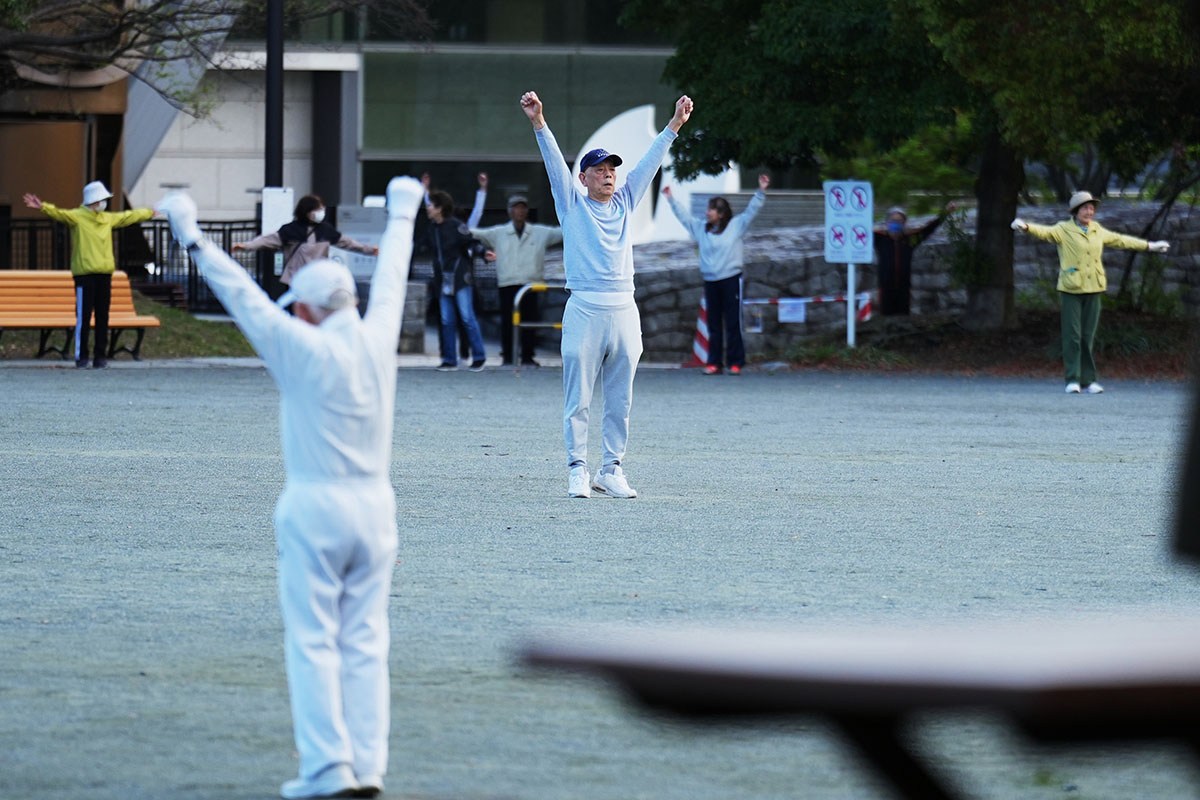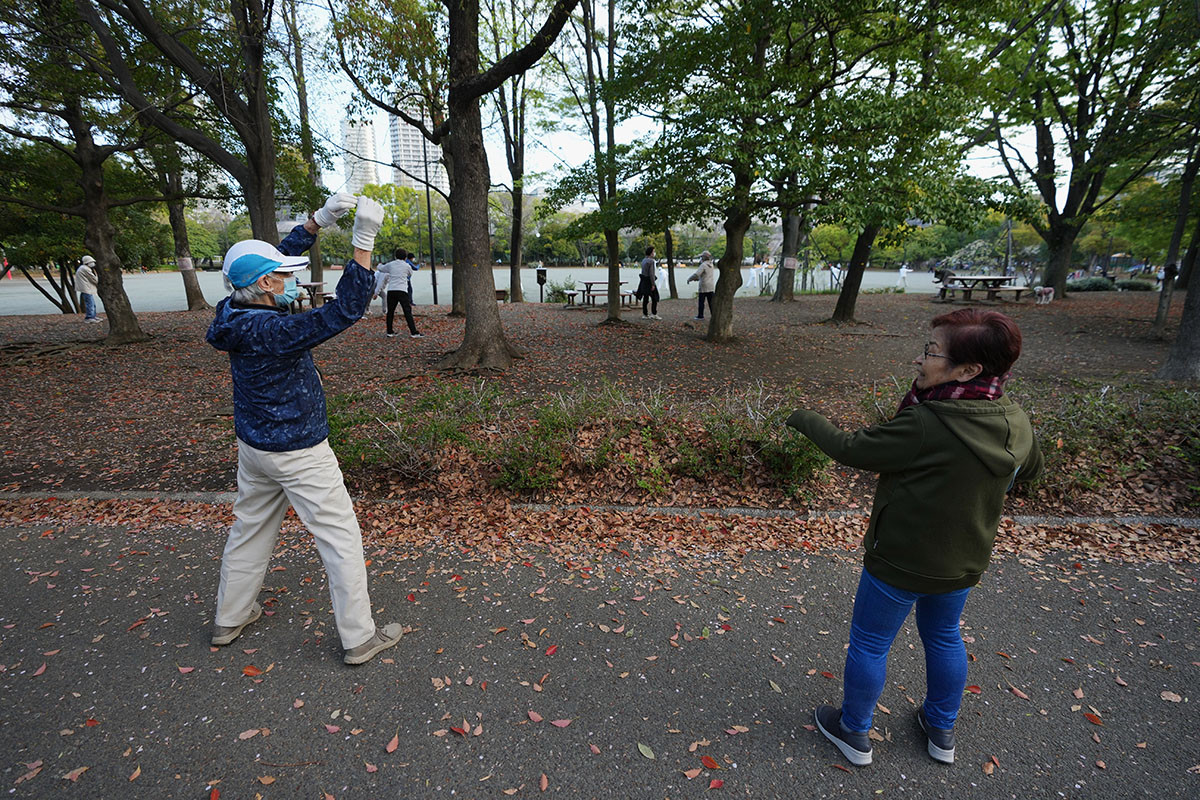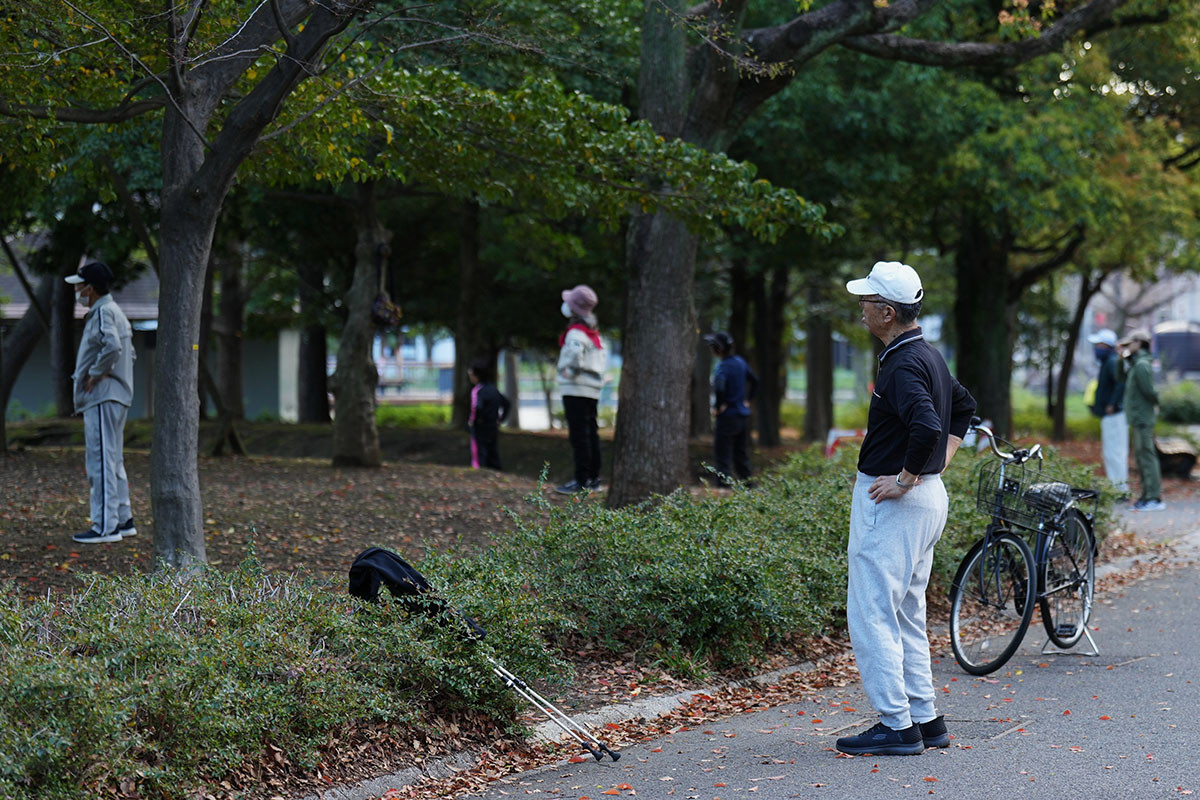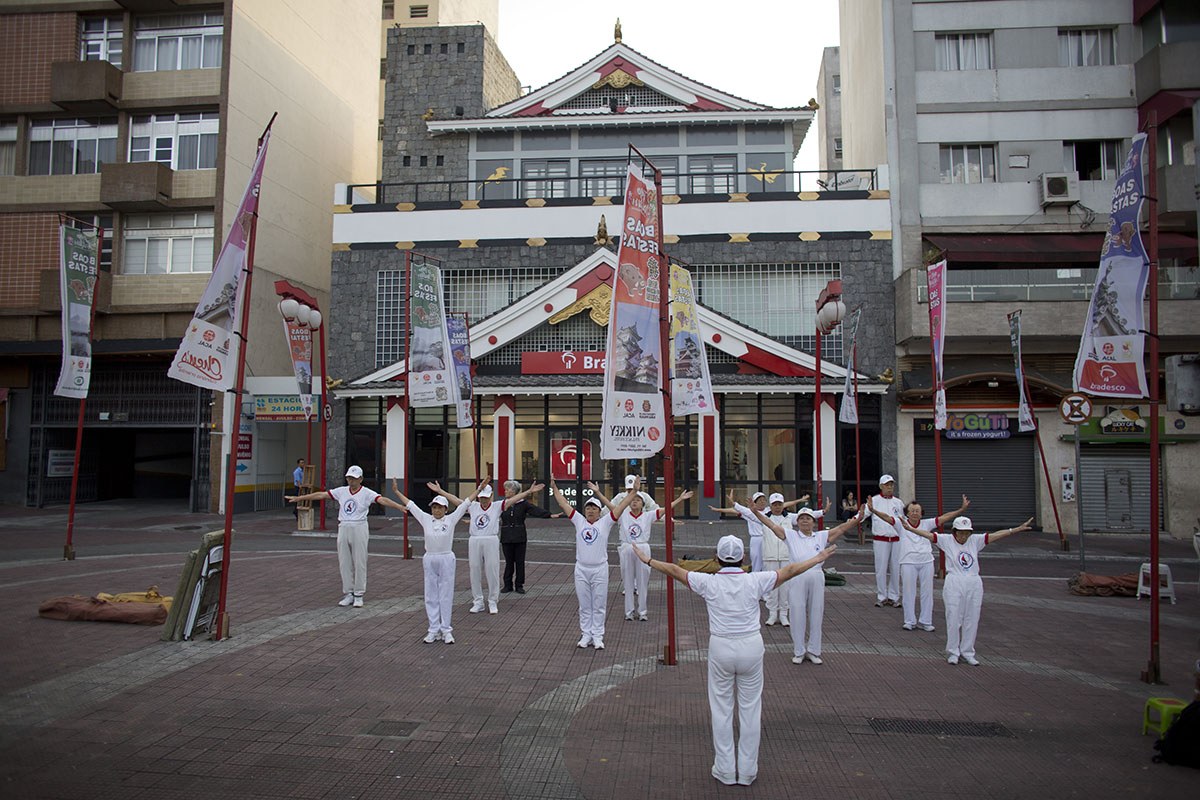
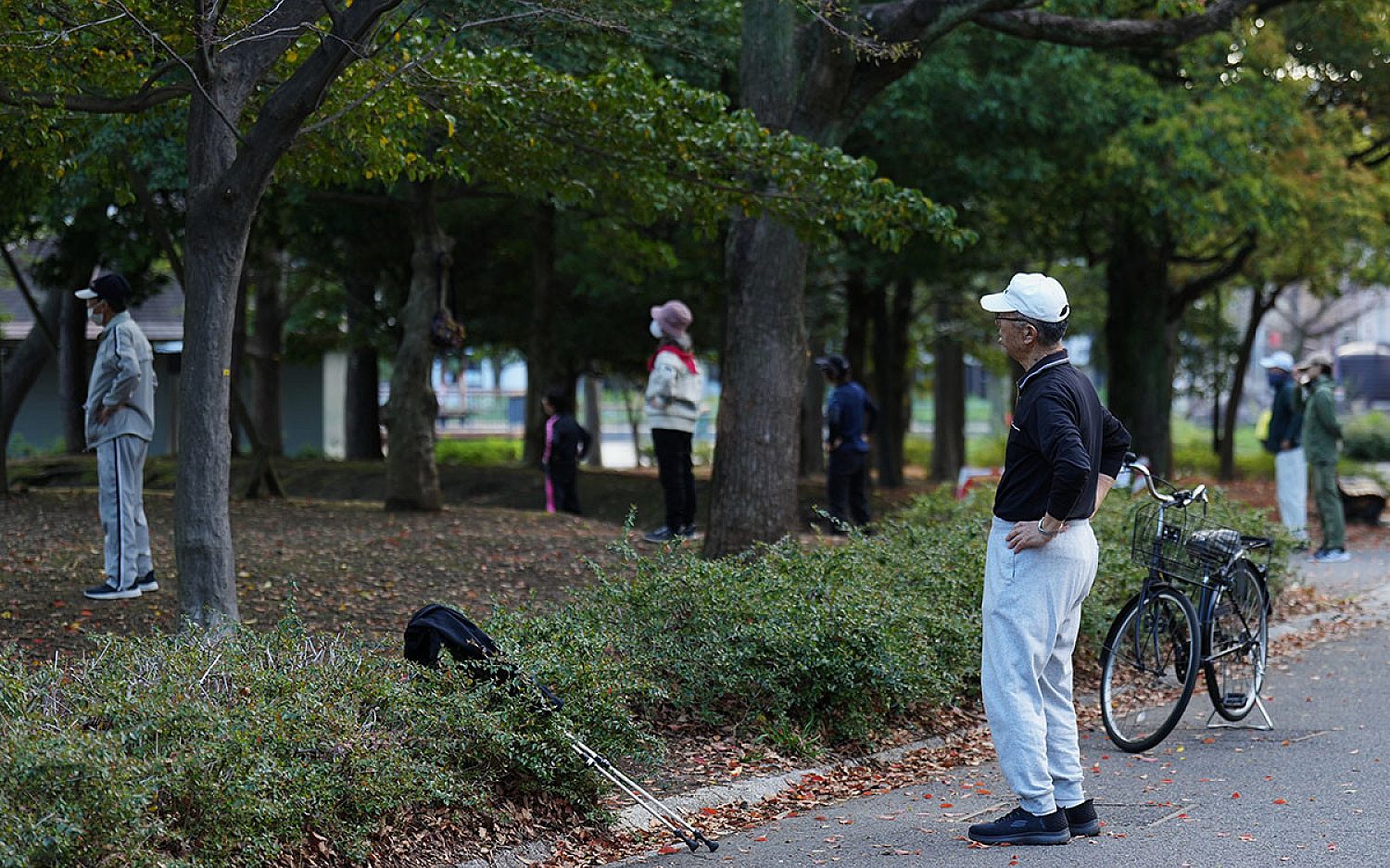
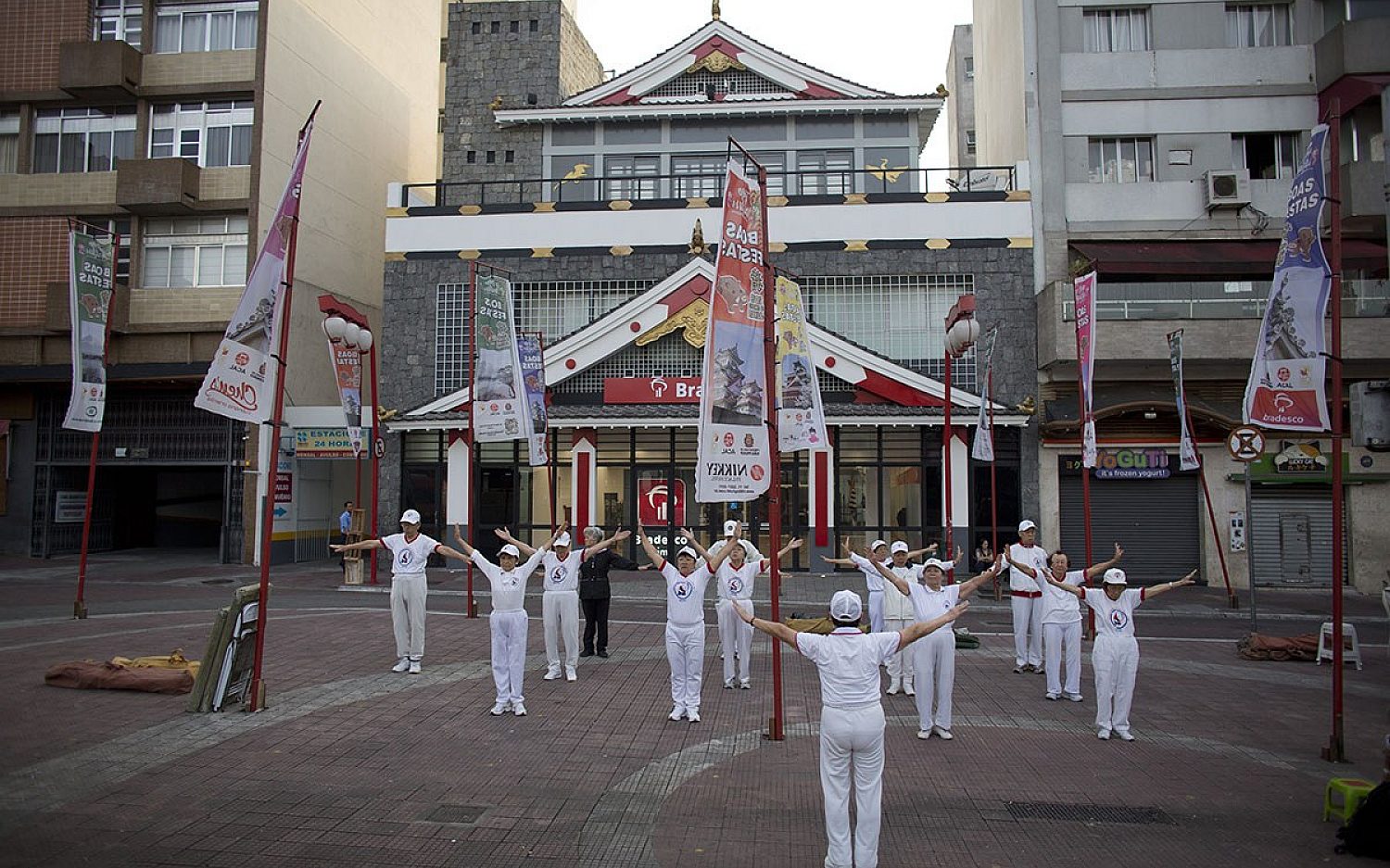

Rise and move! Many Japanese start their mornings with Radio Taiso (“Exercise Radio” in English).
Each morning at 6:30 a.m., folks tune in to basic instructions for calisthenics. Millions take part in parks, workplaces, schools, and homes.
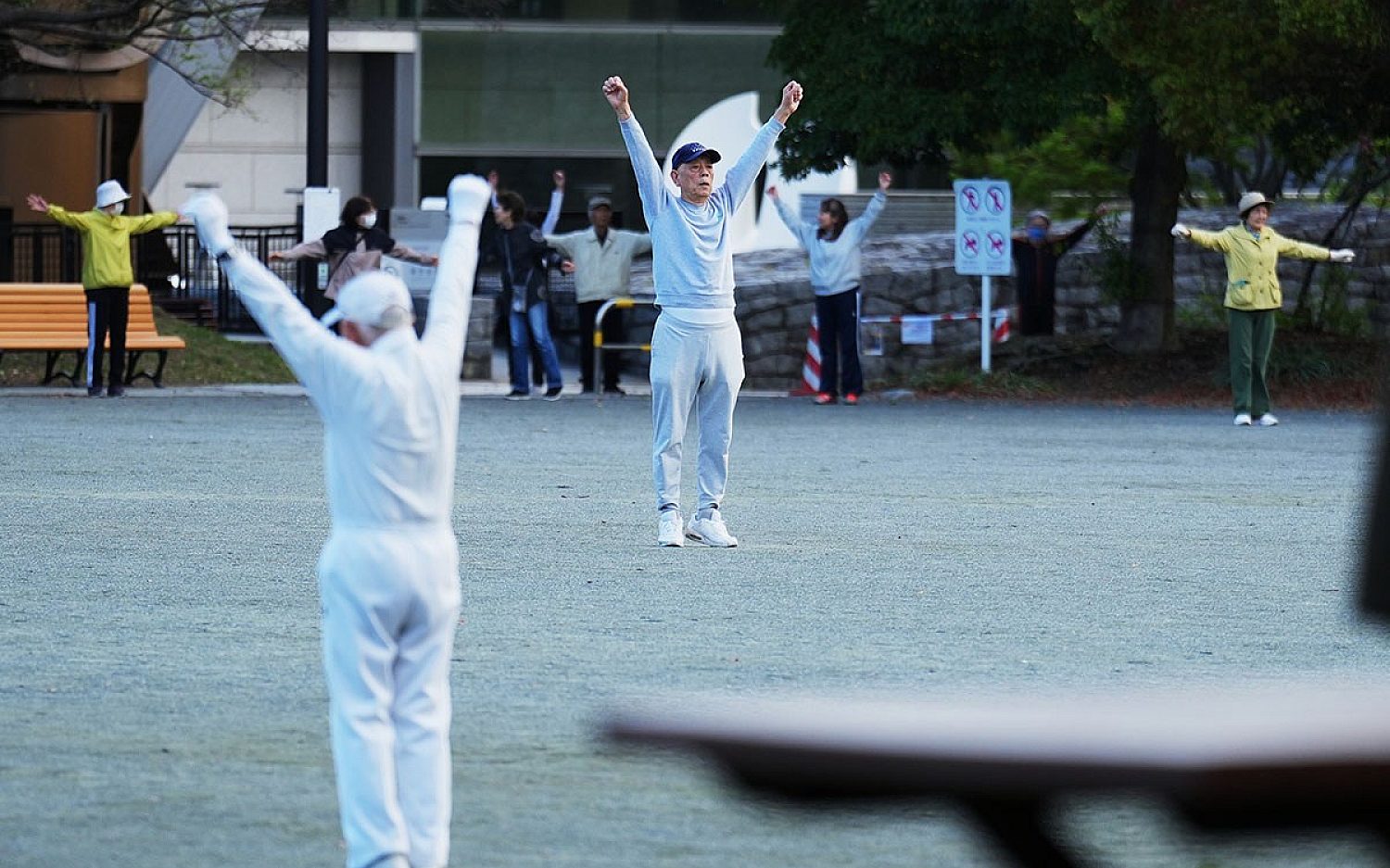
Radio Taiso was introduced in 1928. The tradition endures because the exercises, done to a soft piano melody, are suitable for all ages and abilities. The movements are basic: Reach to the sky, twist at the torso, bend at the hips, swing the arms. It’s over in just 10 minutes.
Most moves can be done standing or seated. Beginners quickly pick up the routines, no equipment needed. Some folks repeat the program on their own later in the day.
The program begins with arm exercises—lifting, circling, and stretching the arms side-to-side. It’s followed by bending and twisting at the waist. Shoulder raises are incorporated with a few mini-jumping exercises and marching-in place moves. Along the way come neck exercises, moves to stretch the chest, and small squats.
Each movement is repeated four to eight times with reminders throughout to relax and inhale and exhale slowly.
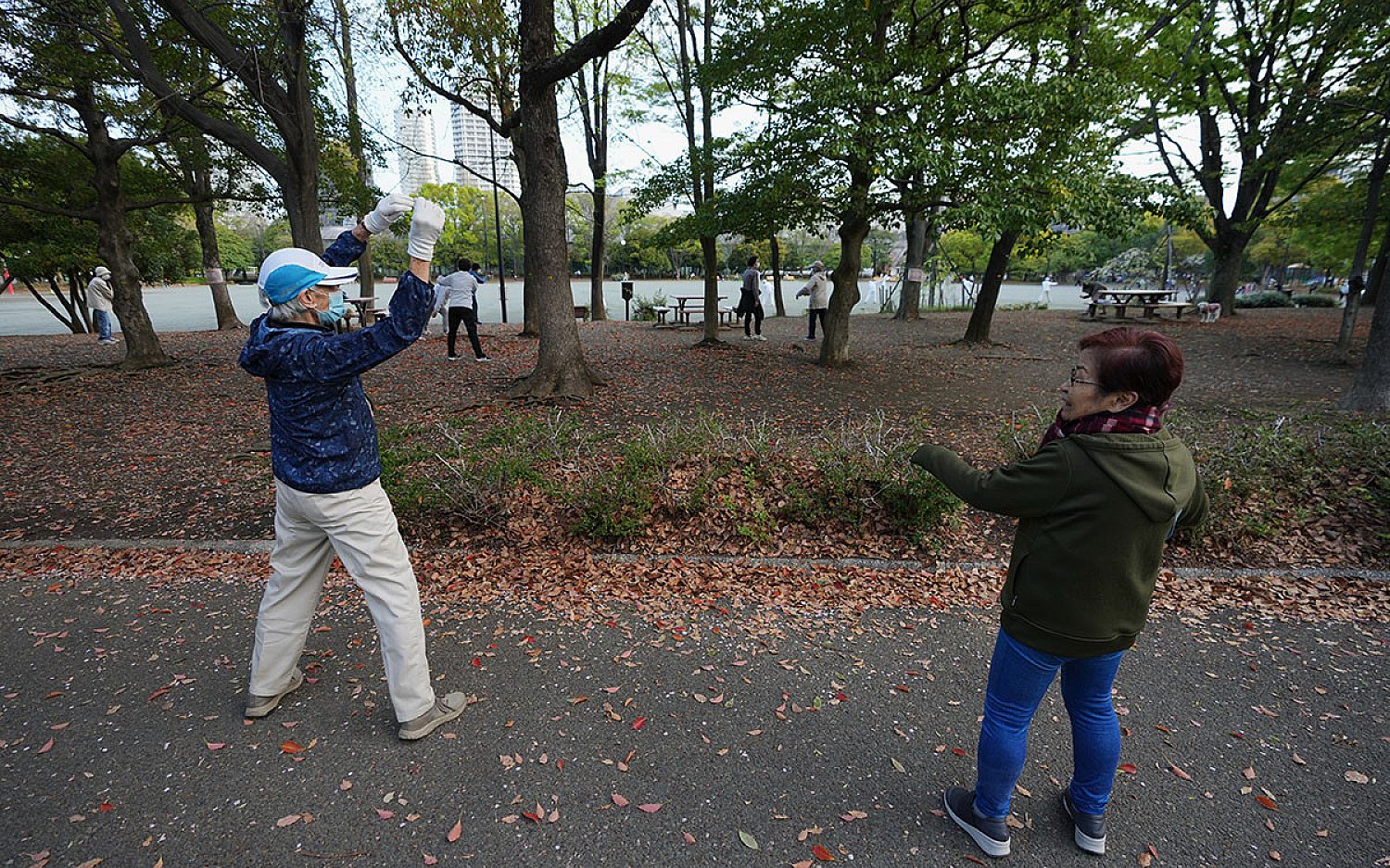
Mieko Kobayashi is 88. She gathers with a large group in Kiba Park in the east Tokyo area almost every day.
“By moving my body, I feel better,” she says.
For many elderly participants, this activity also provides a social outlet. At 83, Kenji Iguchi has been a regular for about 20 years.
“I get up at 5:00 a.m. anyway,” he says. “Most of the faces are familiar, and coming here and getting together with them is also one of the things I look forward to.”
A morning ritual can set the tone for the rest of the day. Psychologist Debbie Sorensen says that reading, journaling, or exercising in the morning can help folks start the day feeling “more grounded and recharged,” according to CNBC. Many Christians dedicate time to reading the Bible and praying. They follow the example of David and Jesus, who sought fellowship with God in the morning. (Psalm 143:8, 5:3; Mark 1:35)
Radio Taiso was inspired by a similar radio program in the United States sponsored by the Metropolitan Life Insurance Co. The Japan Radio Taiso Federation says postal officials visited the United States in the 1920s and returned to Japan with the concept.
Postal workers distributed pamphlets and organized training sessions. Within a decade, millions participated.
According to a 2023 survey, more than 20 million people in Japan practice a Radio Taiso session at least once per week.
Why? Morning routines can help us prioritize what’s good for us—from communion with God to exercise for our bodies and minds.
Recommended Reading: For more about the wisdom of daily rituals, read Every Moment Holy by Douglas Kaine McKelvey.