

In an age of fashion fads, online trends, and single-use plastics, many people find centuries-old artifacts fascinating. They are physical reminders of past human achievement and artistry. Now two treasures on display for the first time help viewers understand life in ancient Rome—and remind them that importance, wealth, and beauty fade.
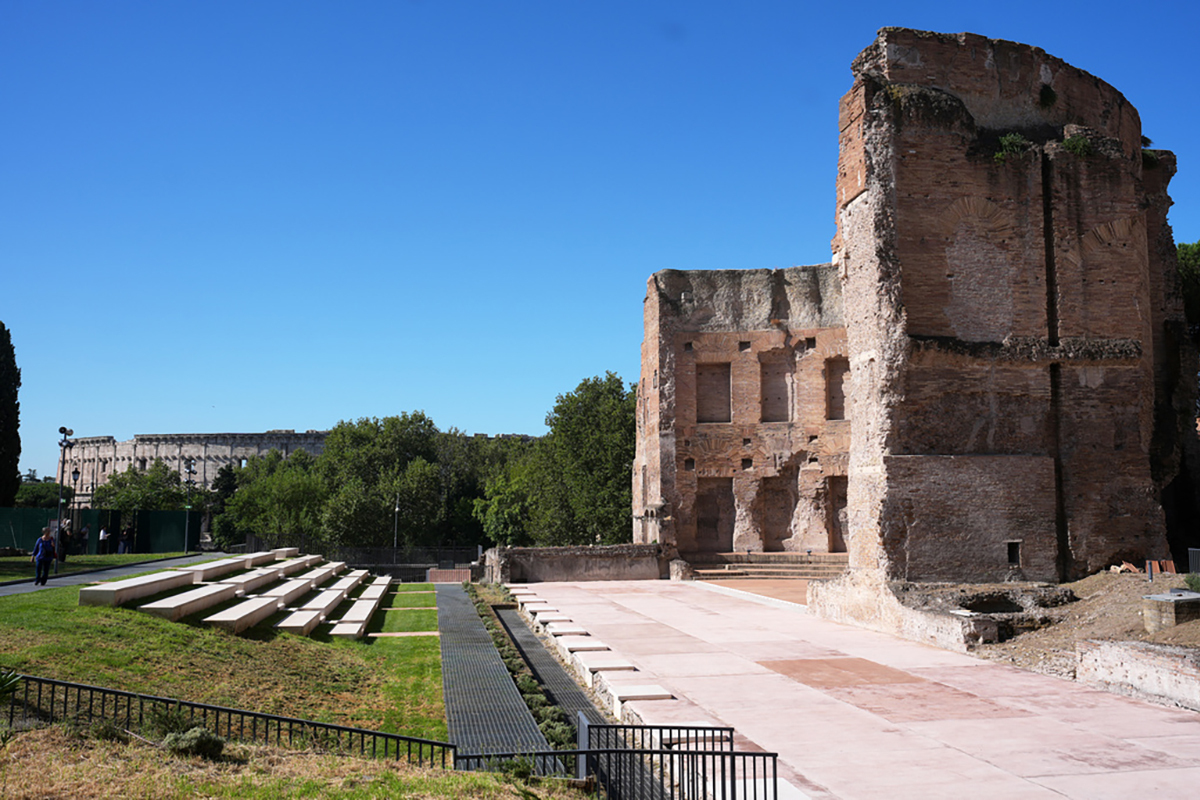
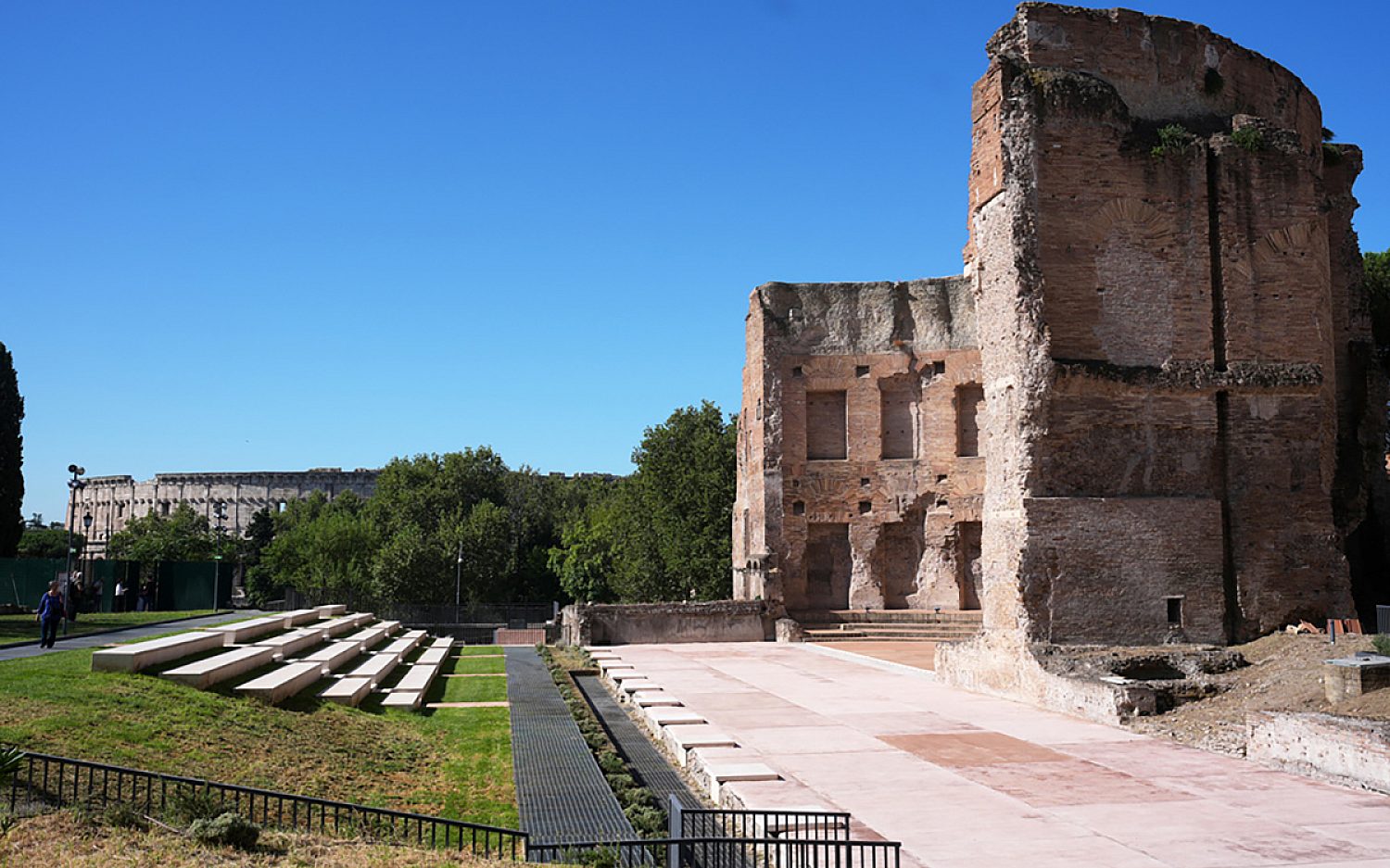
In the 1990s, archaeologists dug underneath ancient Rome’s Baths of Trajan. This sprawling bath complex built by Emperor Trajan in the early second century extended over 15 acres—the largest in the world at the time. In addition to rooms for bathing, it held a swimming pool, gardens, two libraries, art spaces, and sports zones.
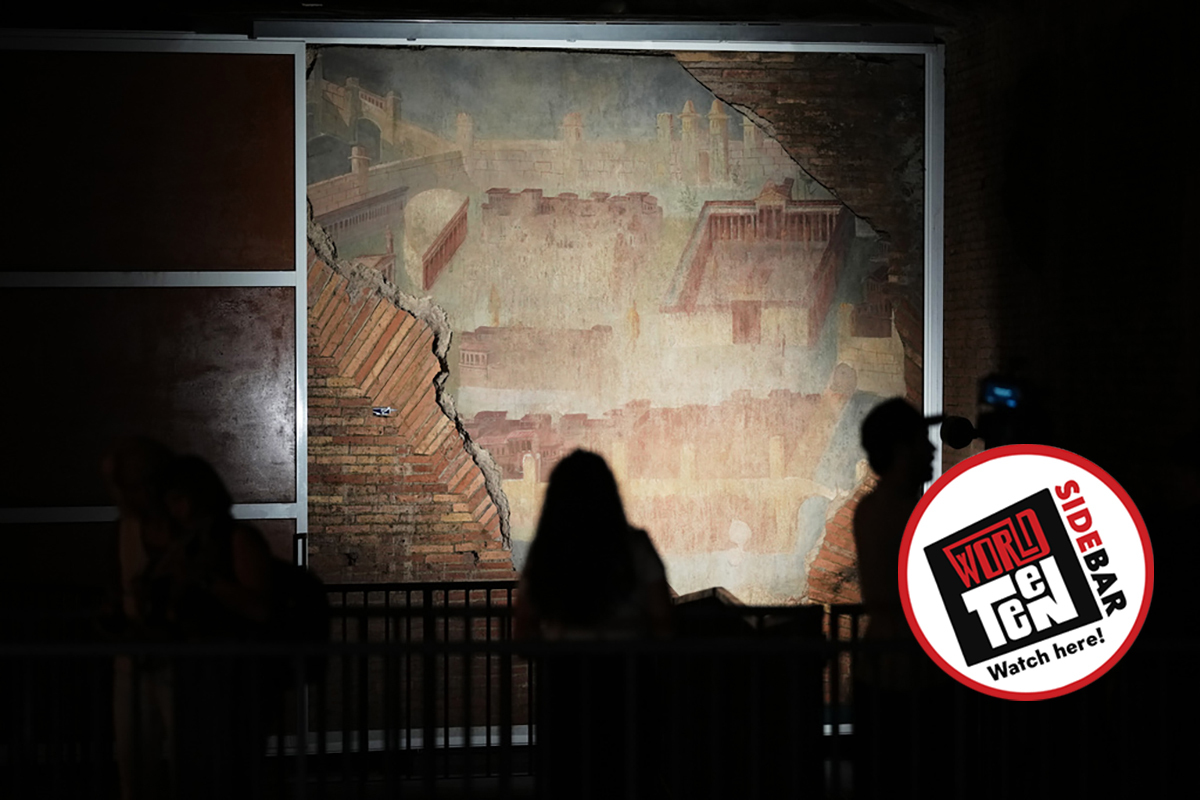
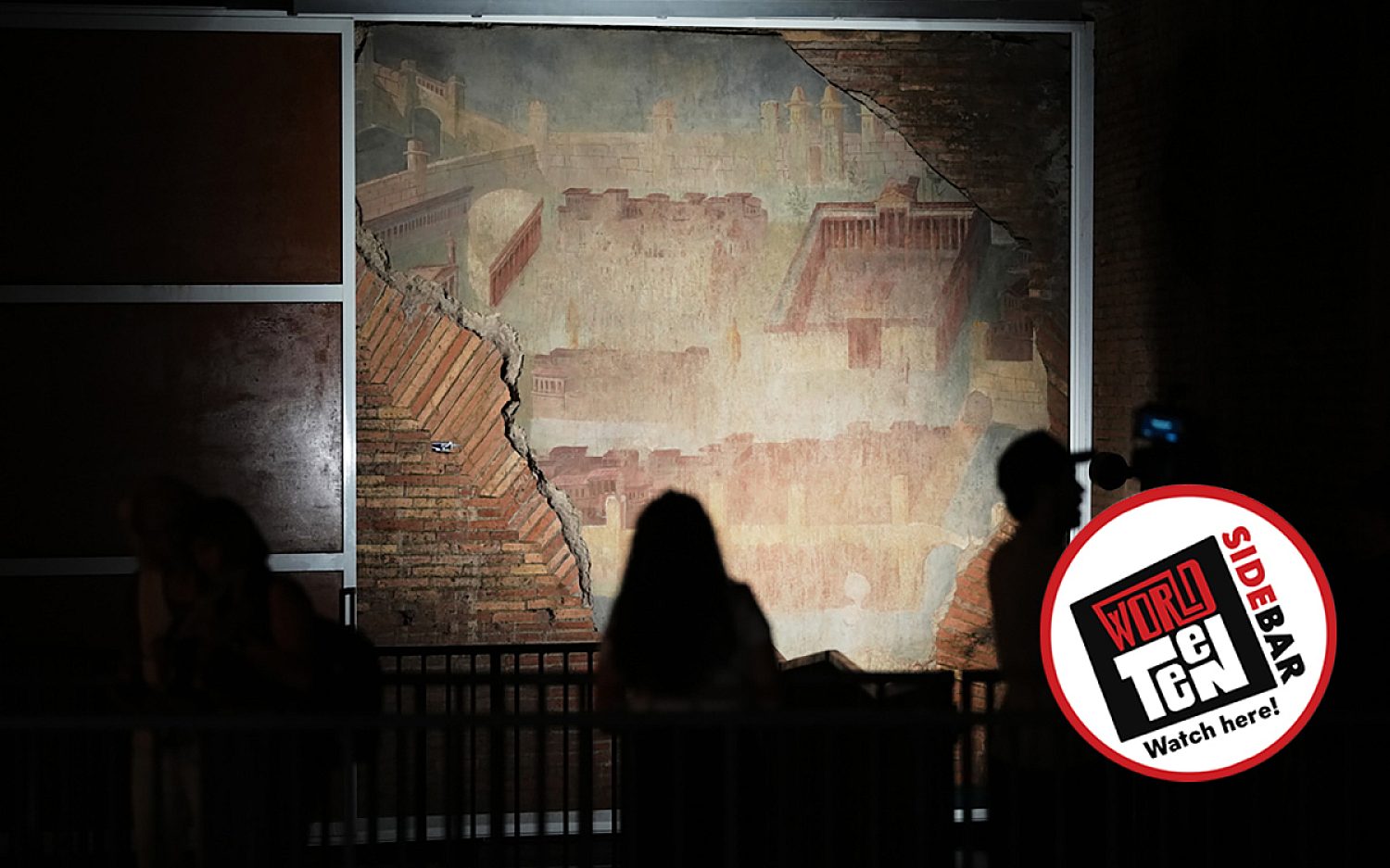
Archaeologist Eugenio la Rocca detailed two major artworks unearthed during the digs. Writing in 2001 for mapmaking journal Imago Mundi, he told of a large fresco titled Painted City.
La Rocca believed the fresco was not “purely artistic and decorative” but a type of map. It featured a birds-eye view of a walled port city with clear but faded colors.
A fresco is a type of mural painted on wet plaster. An artist first applies plaster and sketches on it. Painting must happen quickly since the plaster hardens within hours. The pigment doesn’t merely stay on top of the plaster. It penetrates into the wet surface. Mistakes must be chipped away after hardening and the entire process started over.
Rome’s cultural superintendent, Claudio Parisi Presicce, says the fresco’s grand city includes a theater, a temple, public piazzas, and towers.
“We don’t know what city it refers to, but it must have been a particularly well-known one,” Presicce says.
According to la Rocca, early guesses included Rome, Antioch, and London.
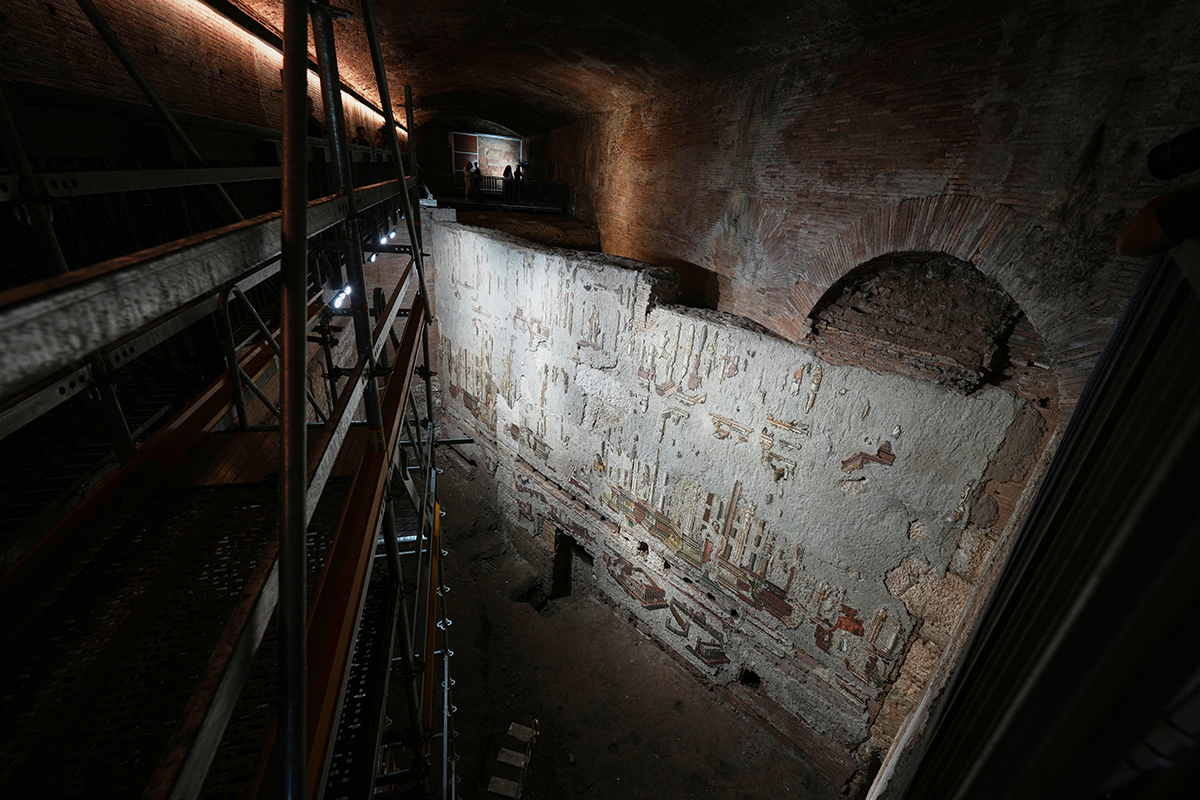
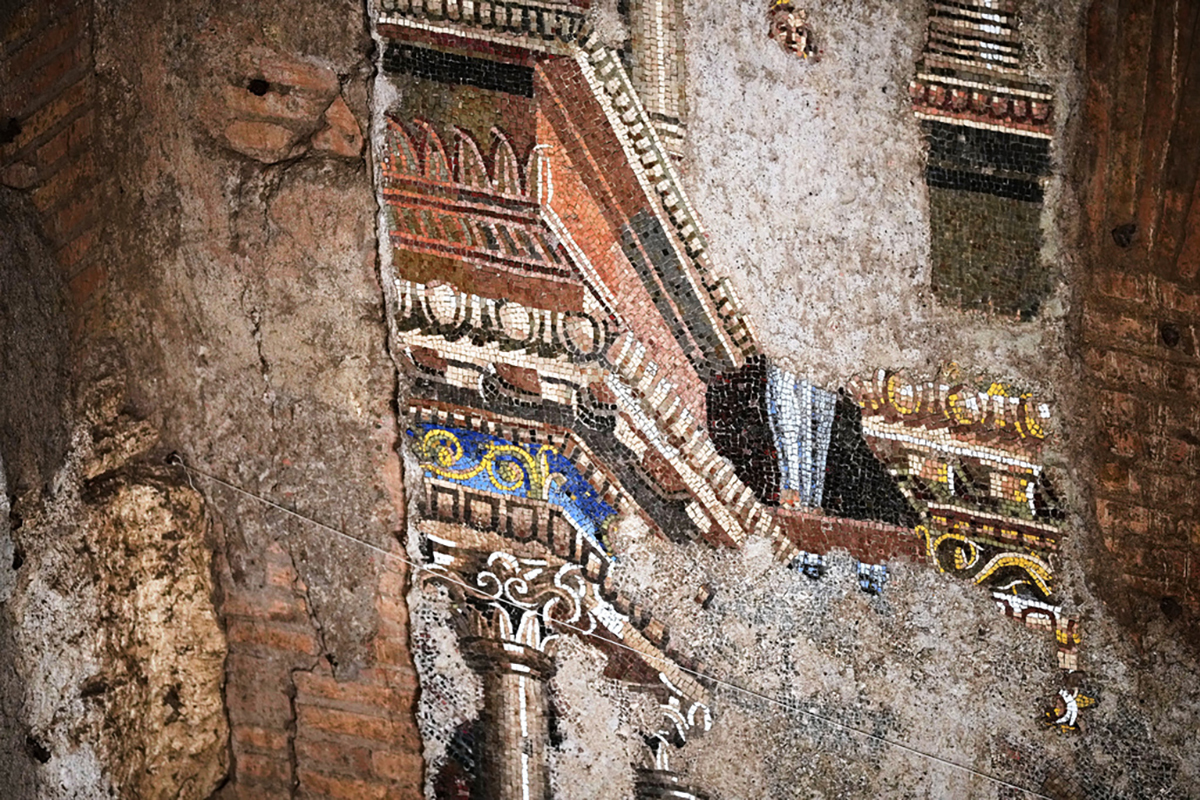
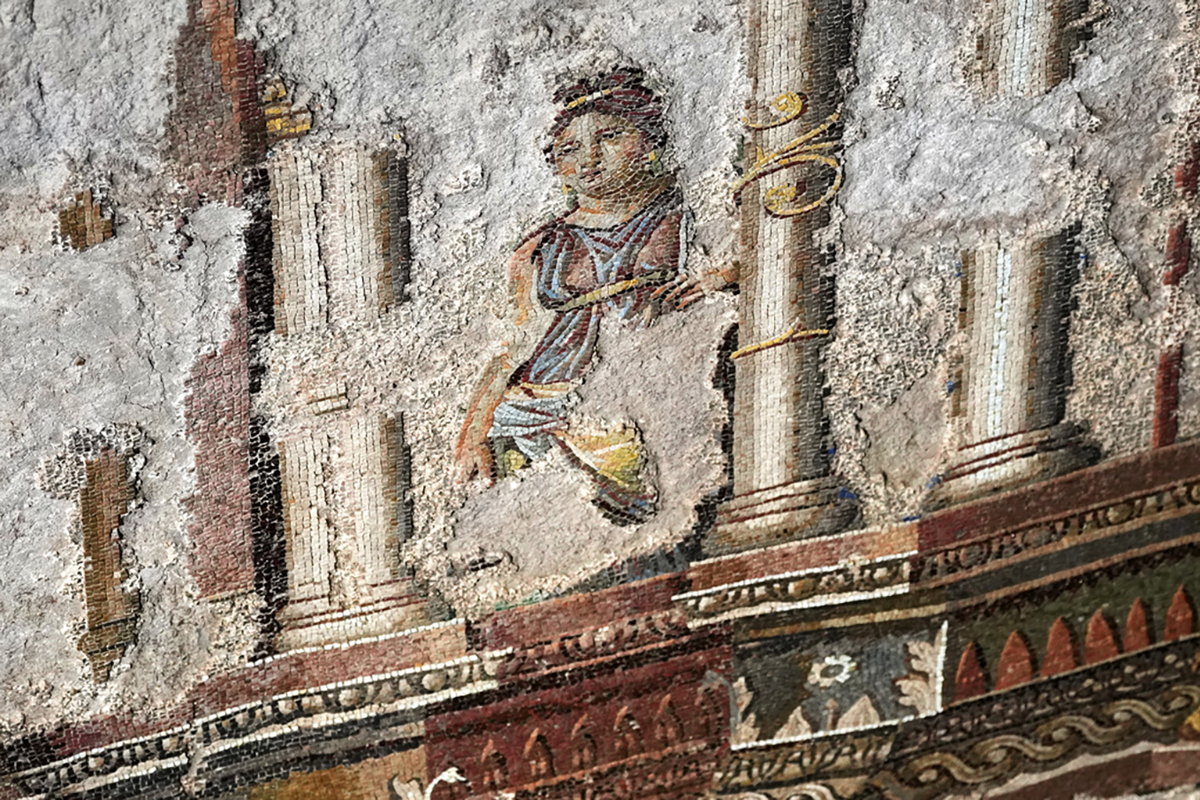
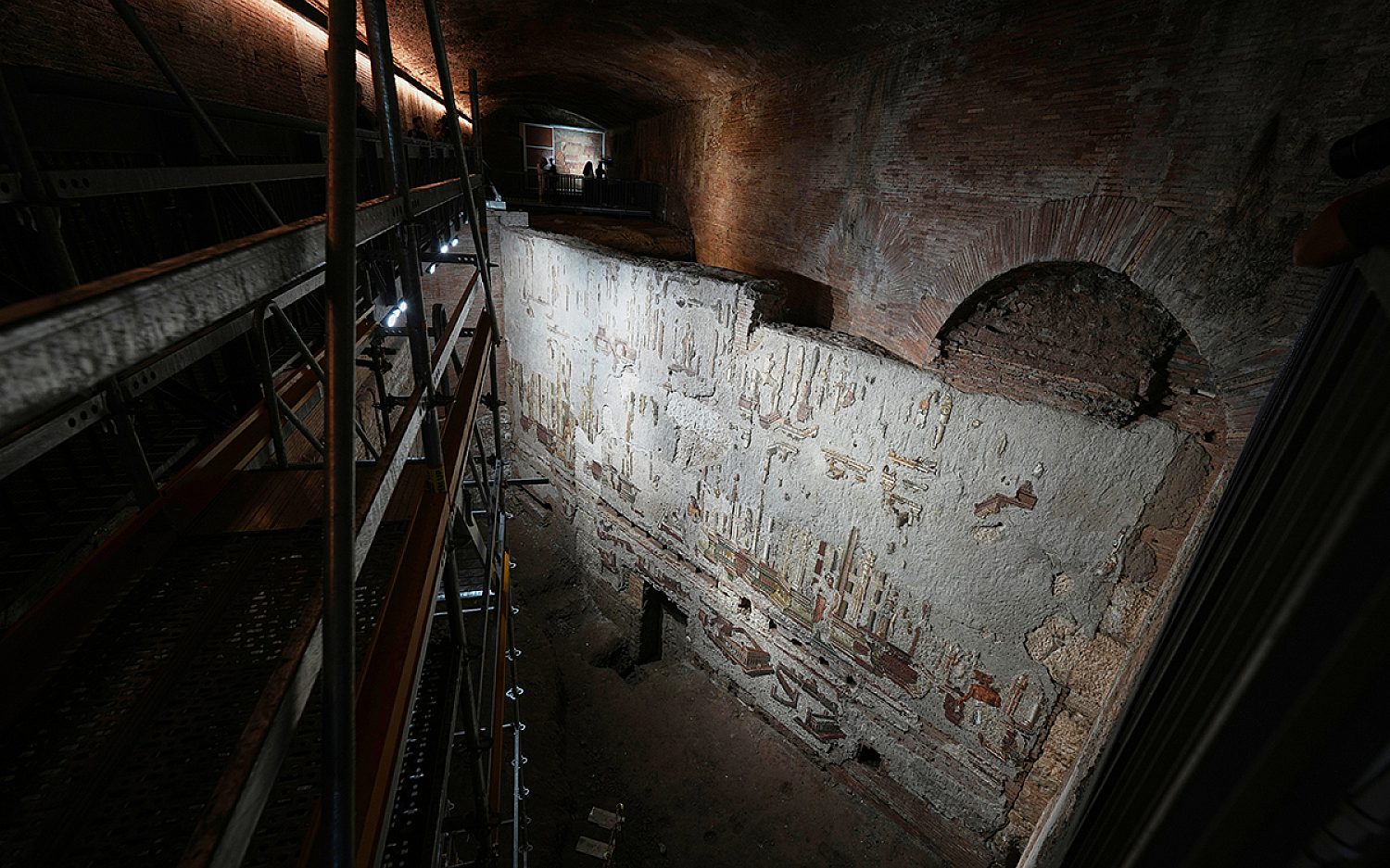
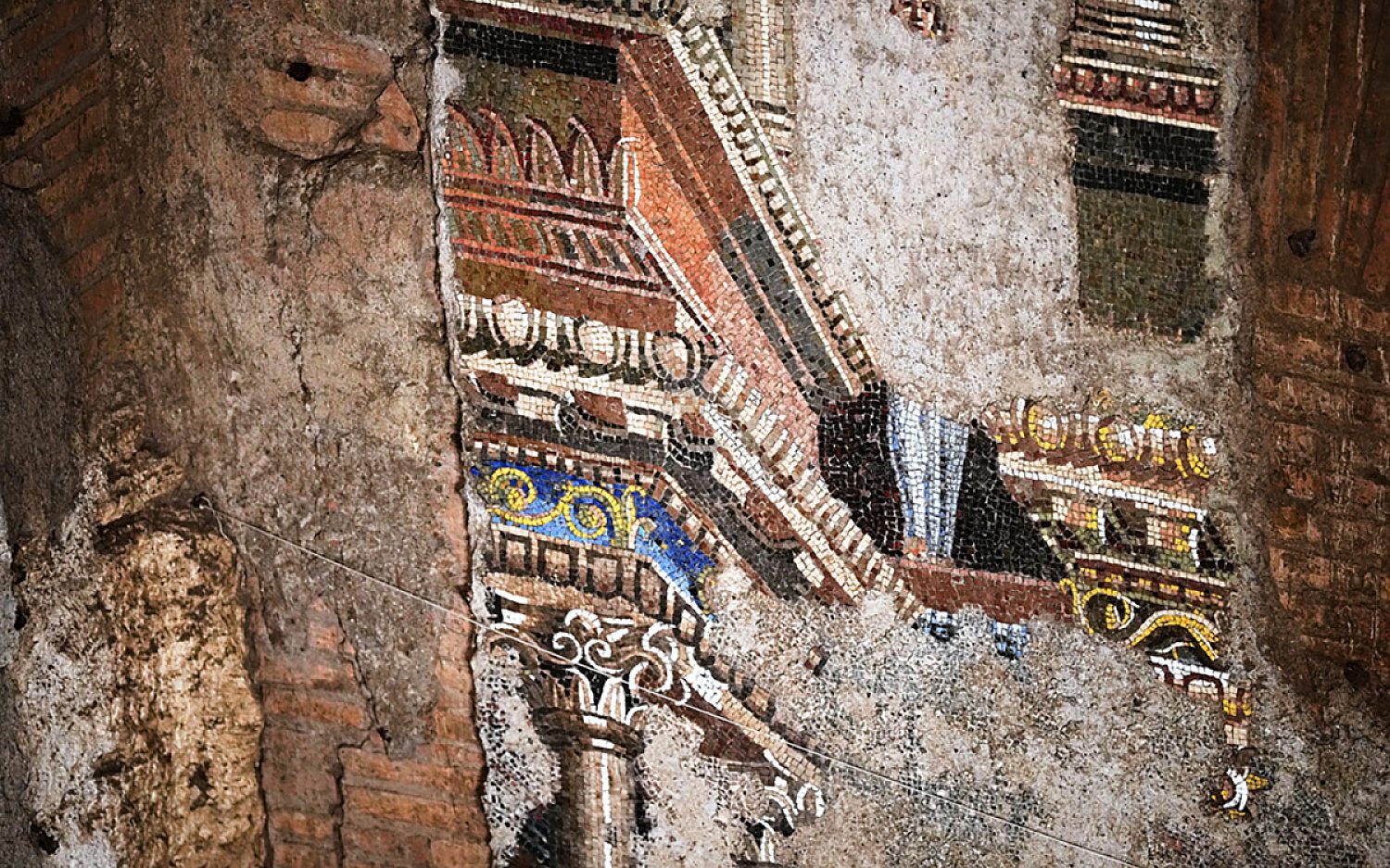
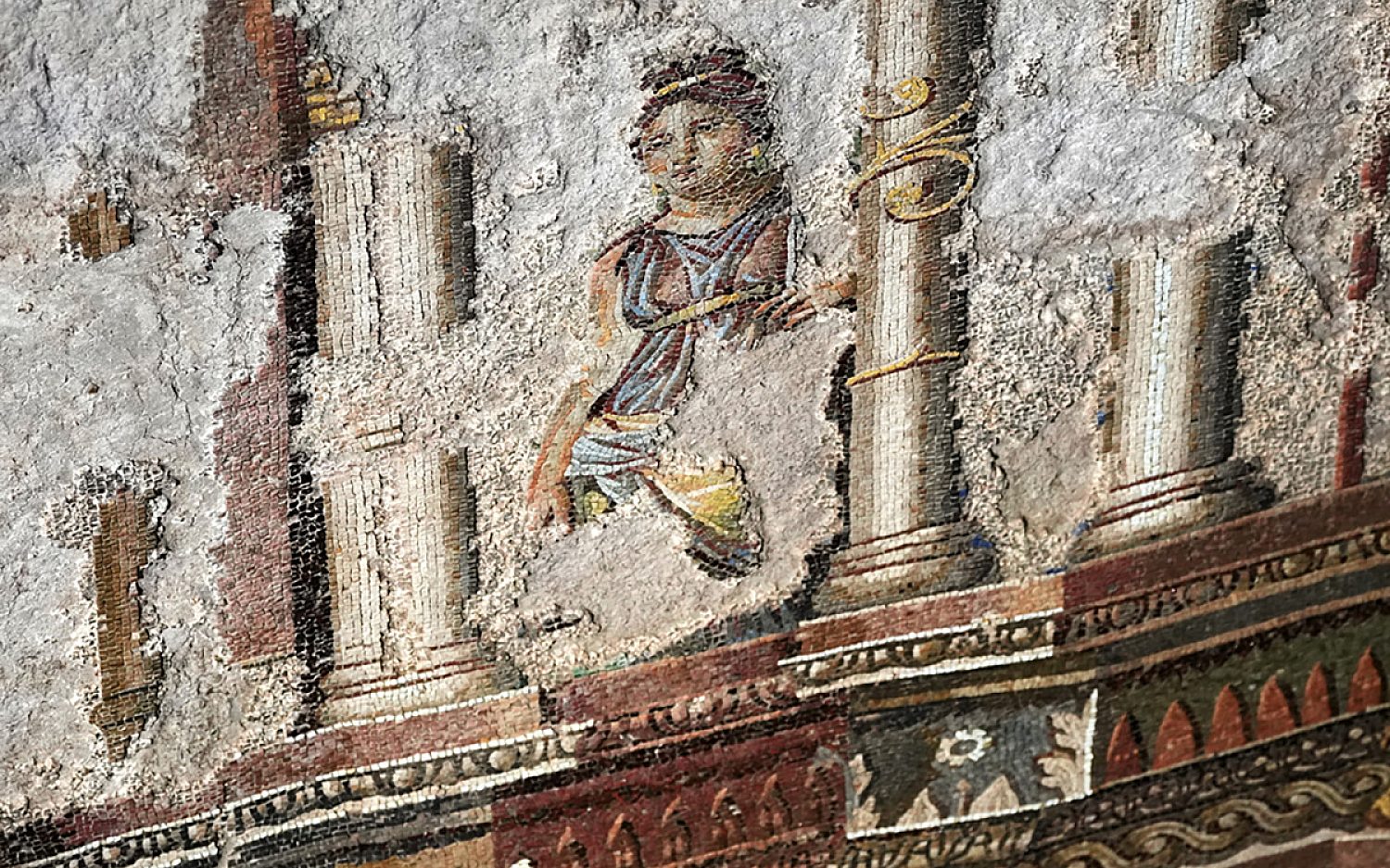
Finding the “Great Mosaic” involved feeding a tiny camera through a hole in the fresco room wall. Inside yet another room, the researchers spied an enormous mosaic pieced together from bits of tile or stone called tesserae.
The mosaic measured about 33 feet high. So far, officials don’t know how long it is.
“We think it’s the biggest wall mosaic ever found in the Roman world,” says Francesco Pacetti, another onsite archaeologist. “We are still digging to find where it stops.”
The “Great Mosaic” features intricate design elements and people. At the top, up-close images appear like theater scenes. Views of the port city line the bottom.
After decades of restoration, limited public showings of both pieces began in September. Officials aim to discover the effects of humidity and climate before allowing wider access.
“They are truly unique in the world,” says Rome’s Mayor Roberto Gualtieri, “both from the point of view of artistic beauty and the historic and documental importance.”
We have this treasure [the gospel] in jars of clay, to show that the surpassing power belongs to God and not to us. — 2 Corinthians 4:7
Why? Antiquities provide an ever-growing record of God’s grace in the midst of earthly decay, temporal treasure, and human brokenness.
Click the “video” button at the top of the page to watch a WORLDteen Sidebar about frescoes in Italy that depict scenes from St. Francis of Assisi’s life.