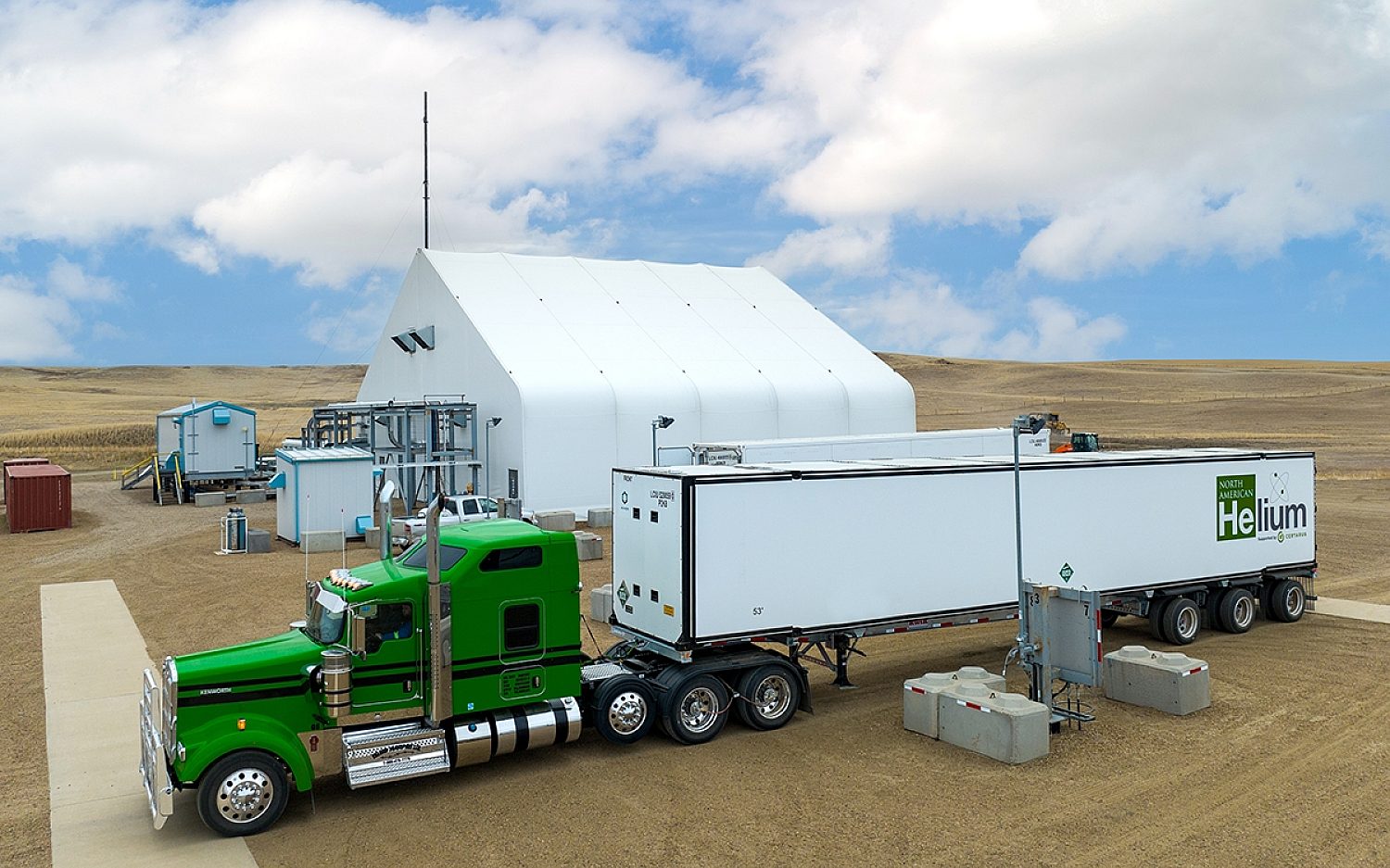
The United States designated helium as a critical material last week. “But why?” you might ask. “Isn’t helium used to inflate balloons?” Well, yes. But did you know that it also helps power your electronics?
The Department of Energy is not interested in helium for its party tricks. Helium plays an important role in wind, solar, and nuclear energy production.
The United States is the world’s top producer of the gas. The nation needs a large supply of helium to produce semiconductors. Those are essential to energy generation and used in electric vehicles, solar panels, cell phones, and other technology. Helium is also used in space exploration and medical imaging.
The unique properties of helium make it irreplaceable. It can’t explode or catch fire, and it has the lowest boiling point of any gas.
Helium is now number 20 on the critical materials list. The designation means that the government will monitor helium production more closely. It will provide more funding for helium producers too.
Critical materials are non-fuel minerals, elements, or synthetic substances. They contribute to the nation’s economic health, national security, and modern technology. To make the critical materials list, an element or substance must be essential to energy generation.
Another criterion is that there must be a high risk of disruption of the global supply chain for that material. Helium is a byproduct of natural gas processing. Once released into the atmosphere, it floats into space and is permanently lost.
Qatar and Russia are other top helium producers. But both countries have limited their exports. The Strait of Hormuz, which Qatar uses for trading, is mostly closed due to ongoing war. Russia put export controls on helium in April to protect its supply.
Energy Secretary Chris Wright says the Trump administration wants the United States to depend less on foreign sources for critical materials. He says doing so will help strengthen domestic manufacturing and offer Americans more jobs.