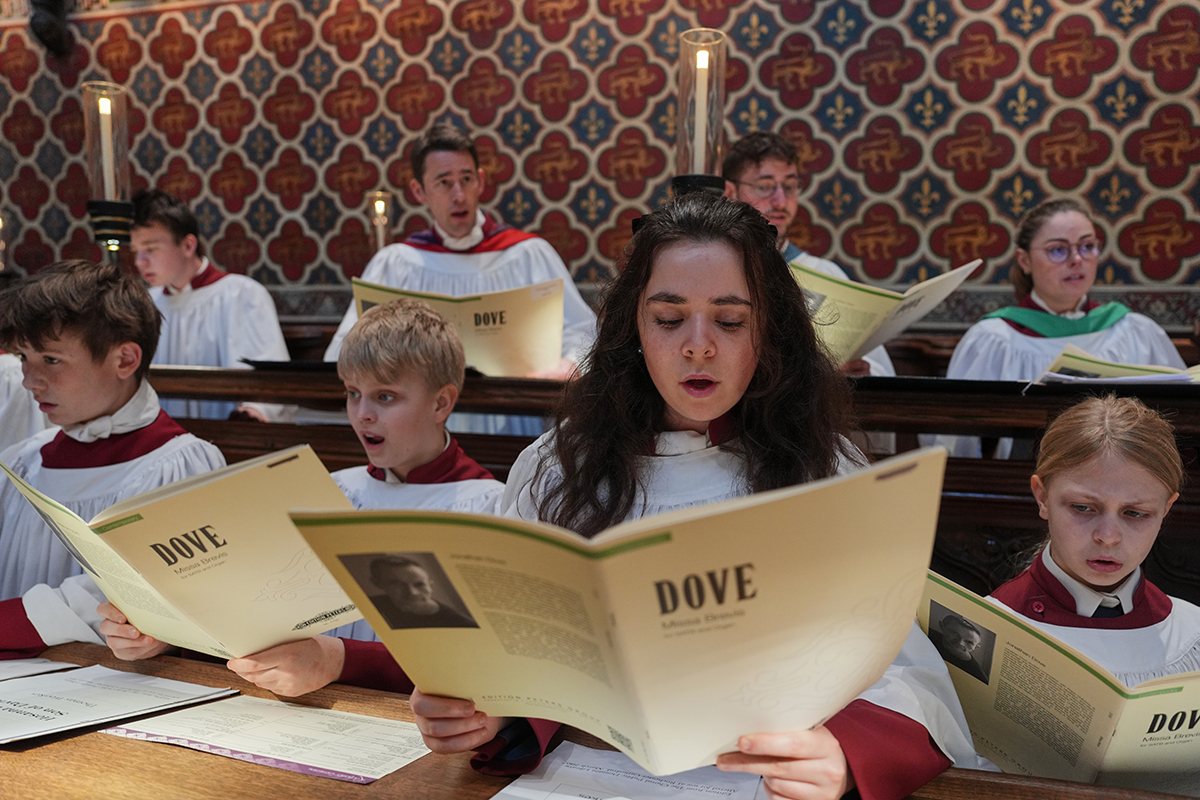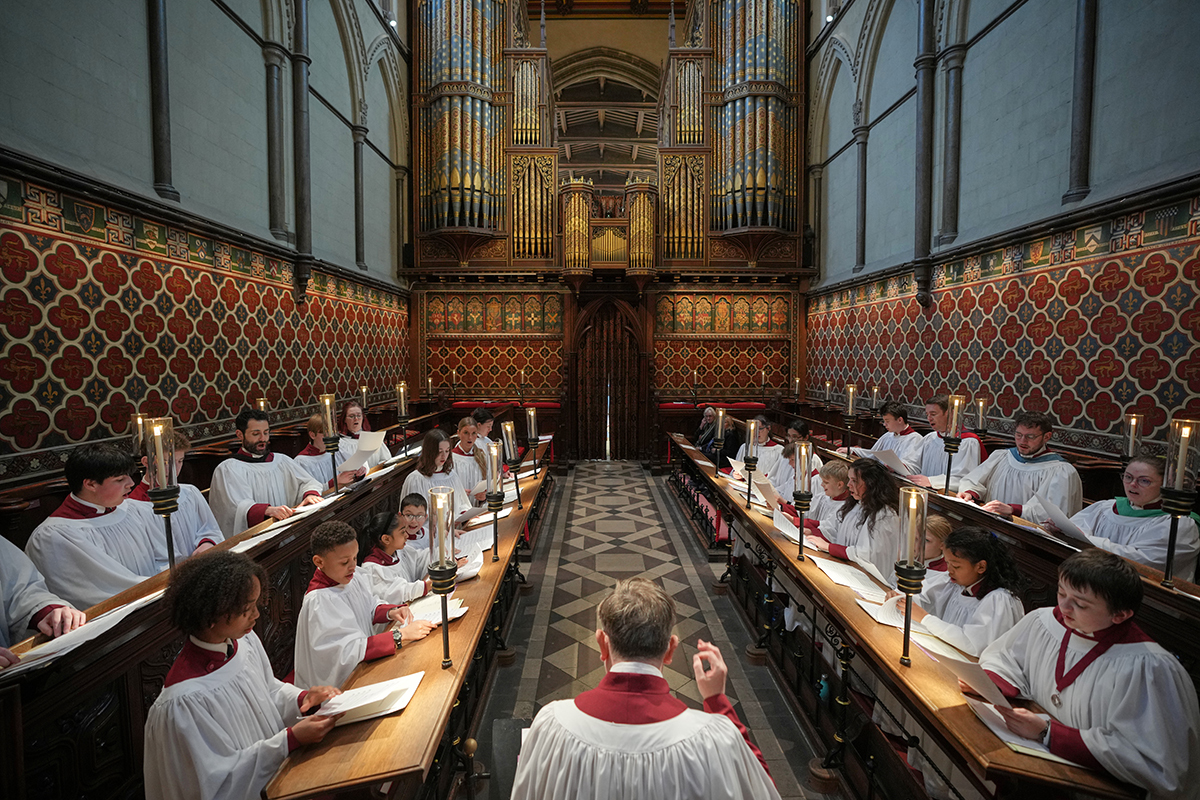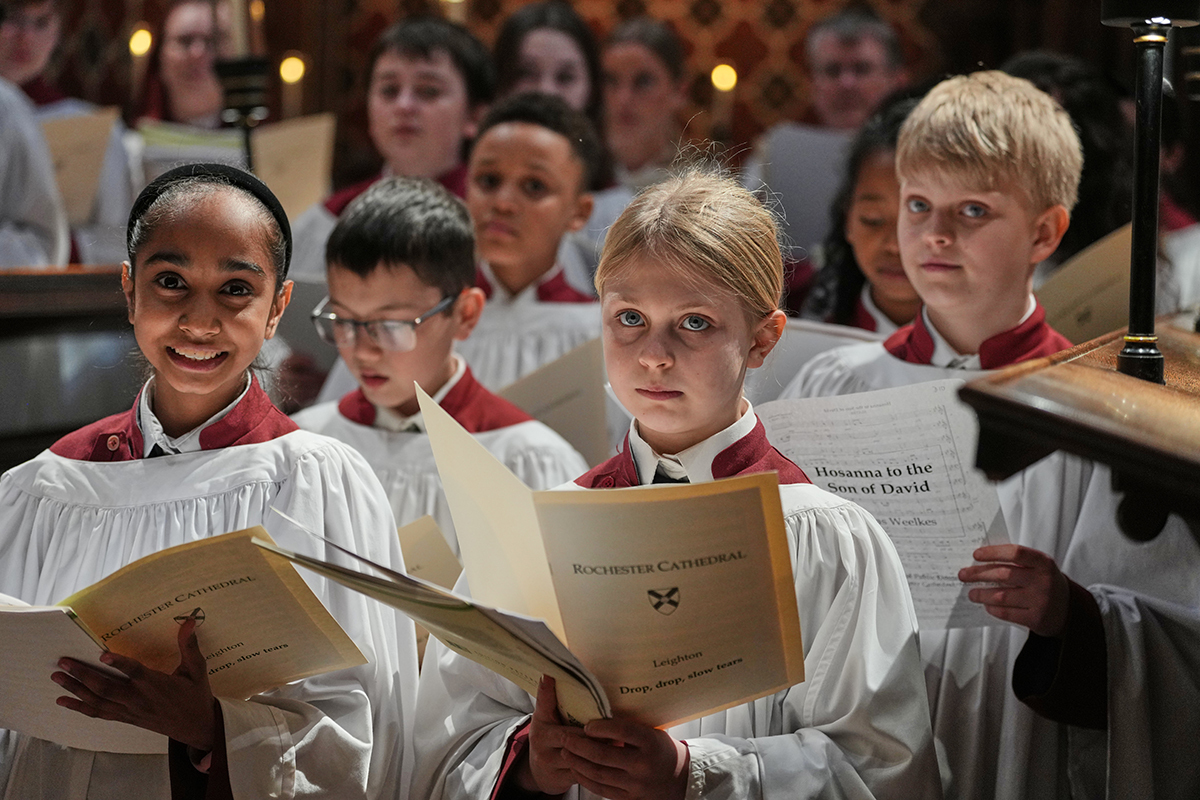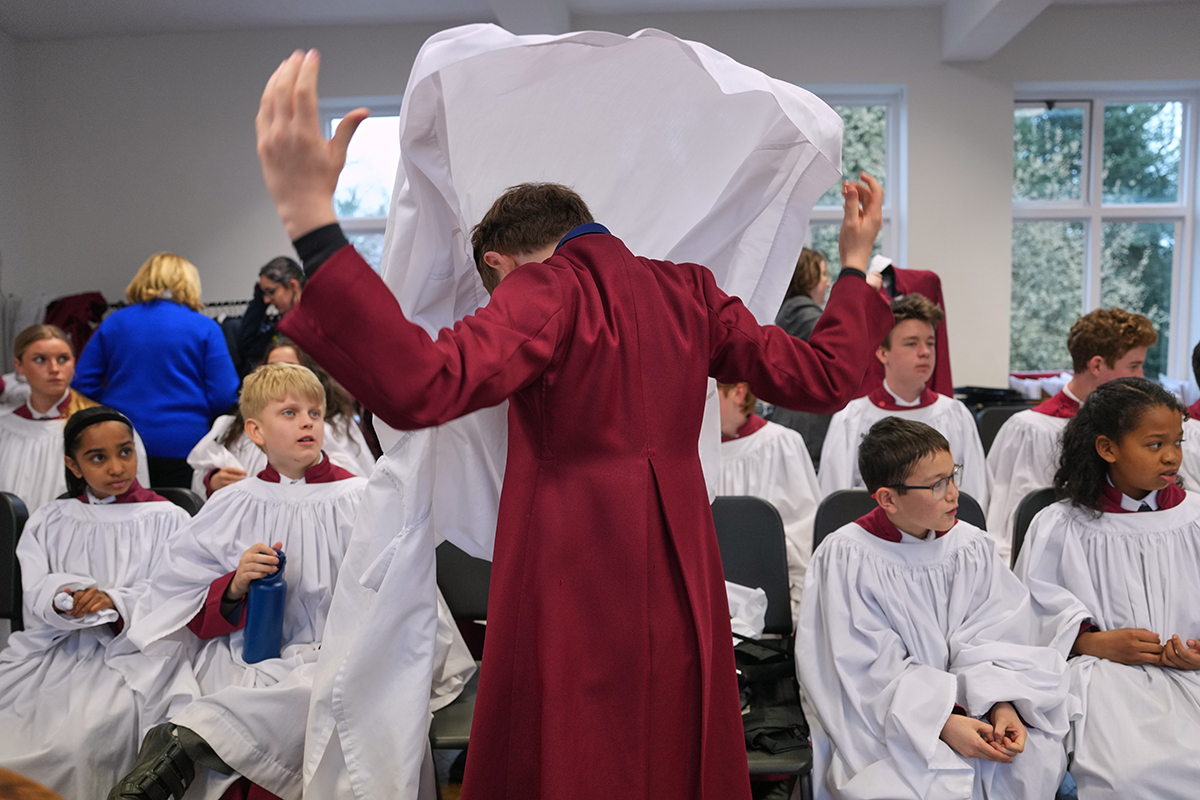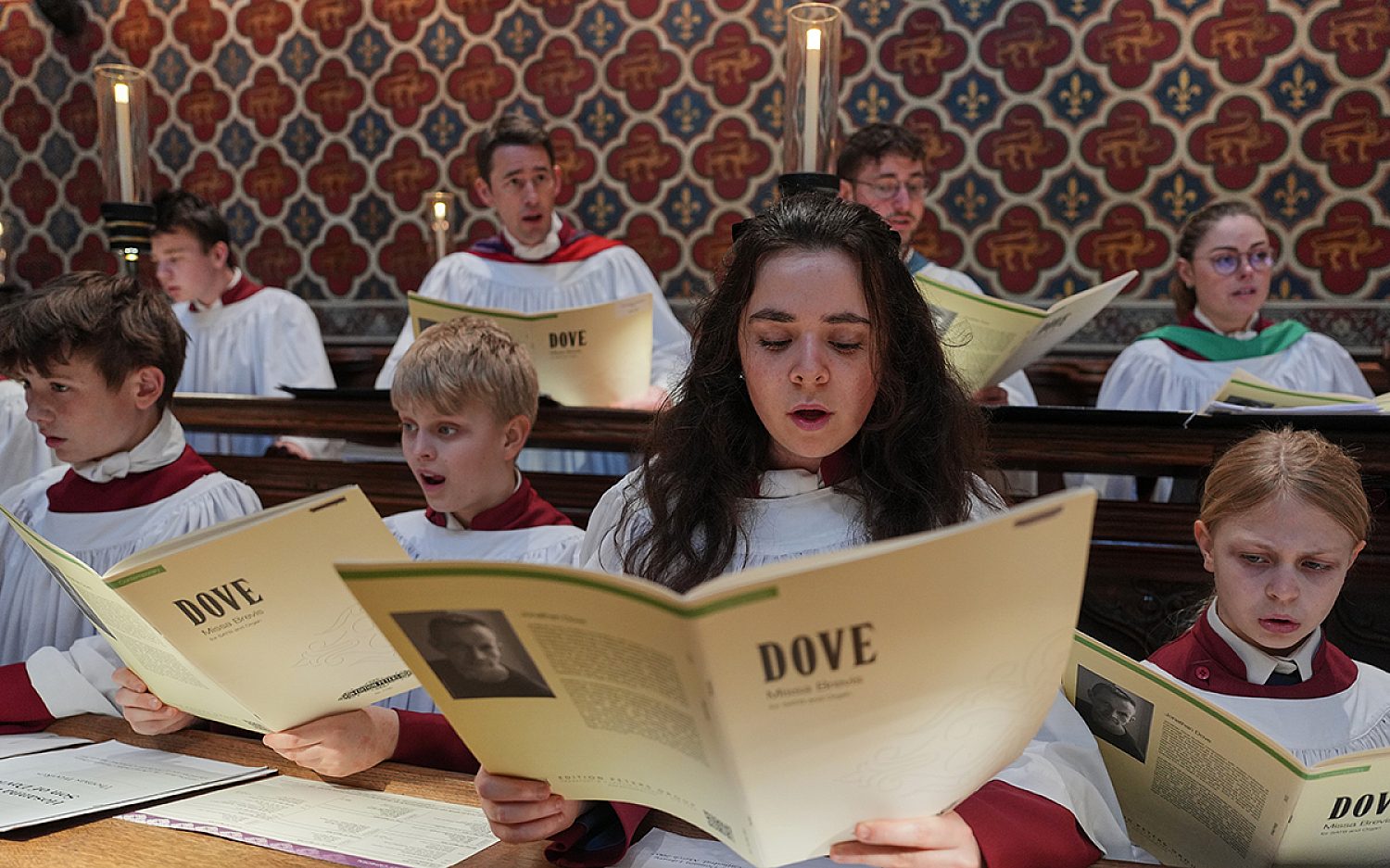
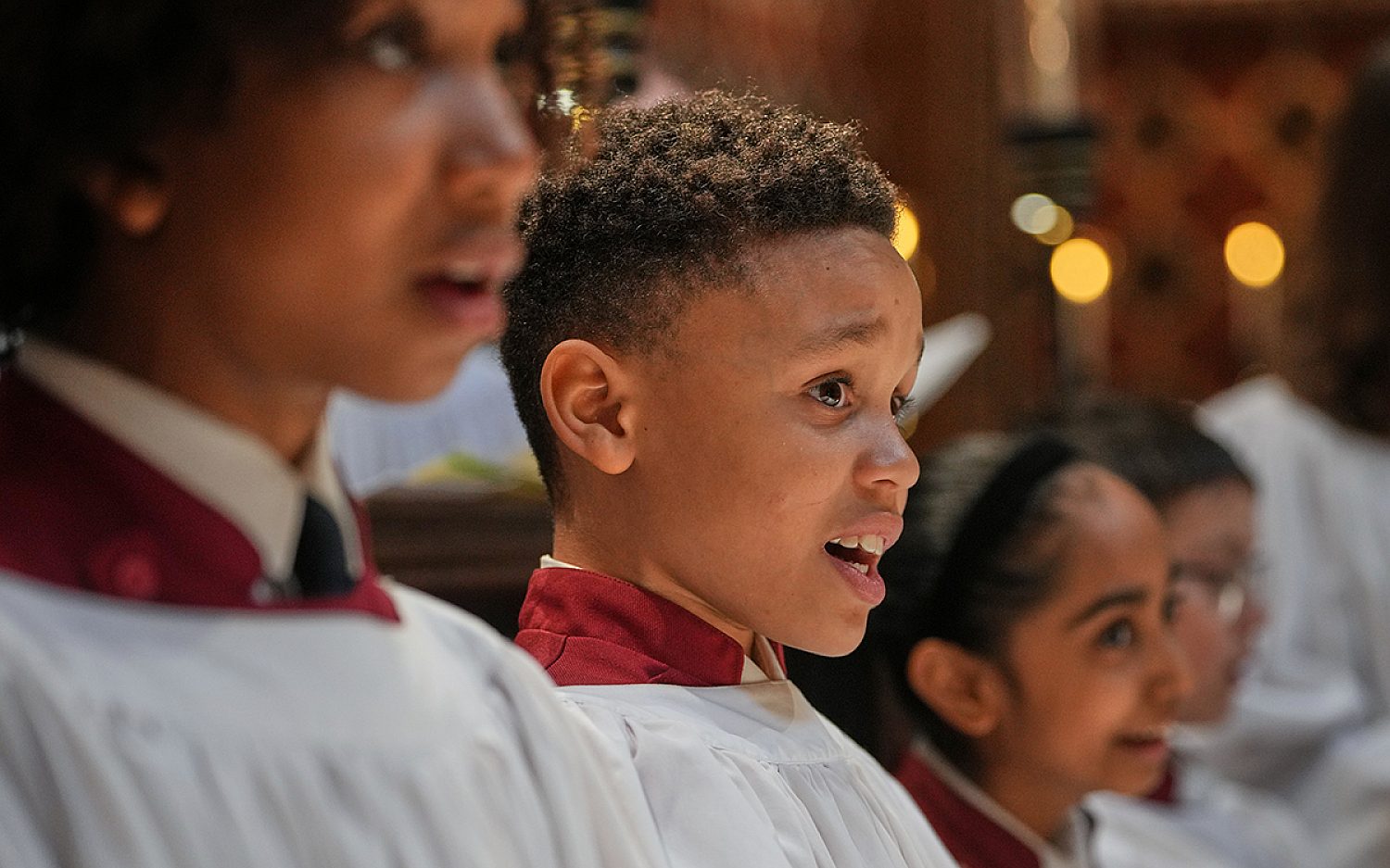
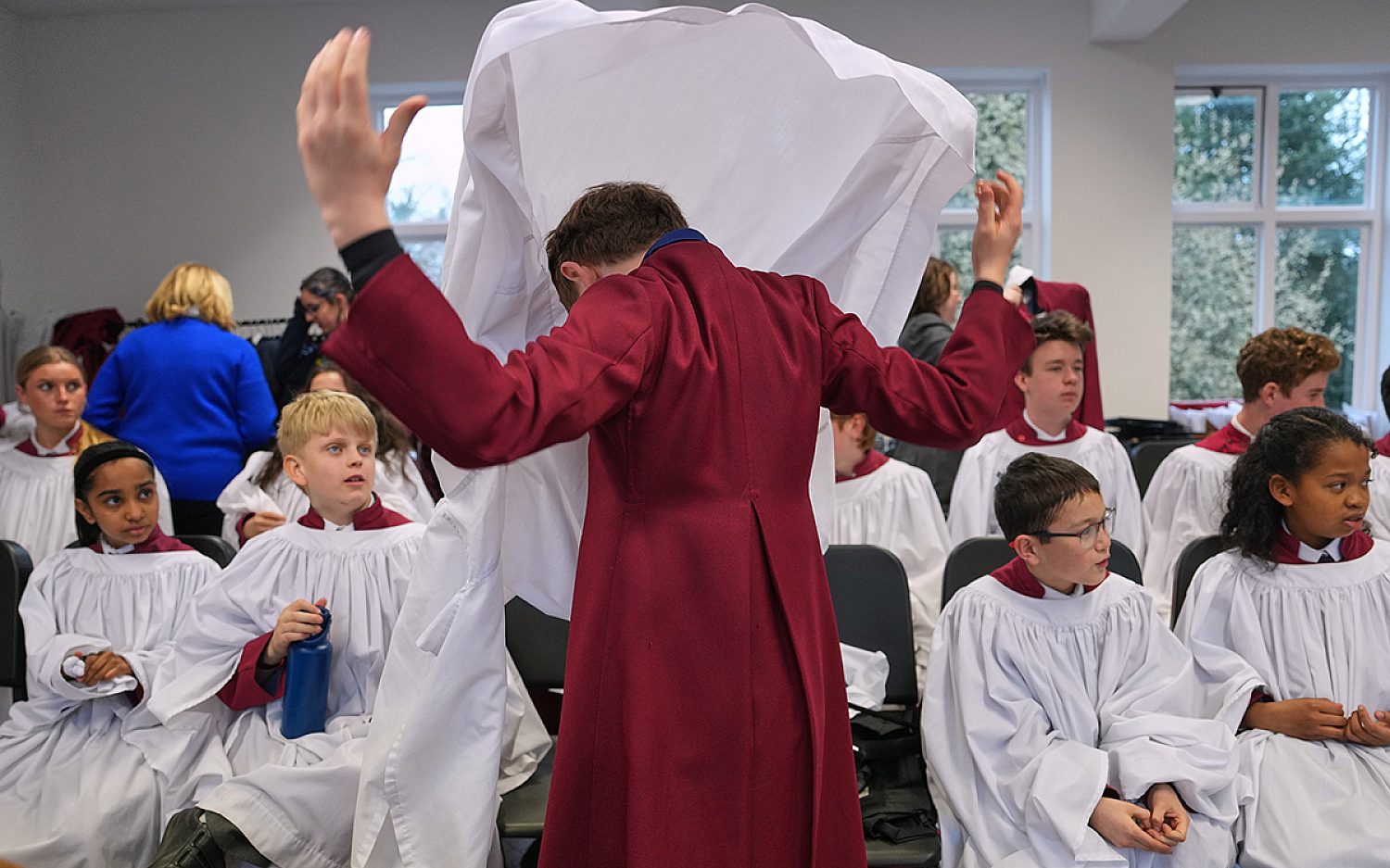

A dozen schoolchildren straggle into Rochester Cathedral in England and begin a transformation.
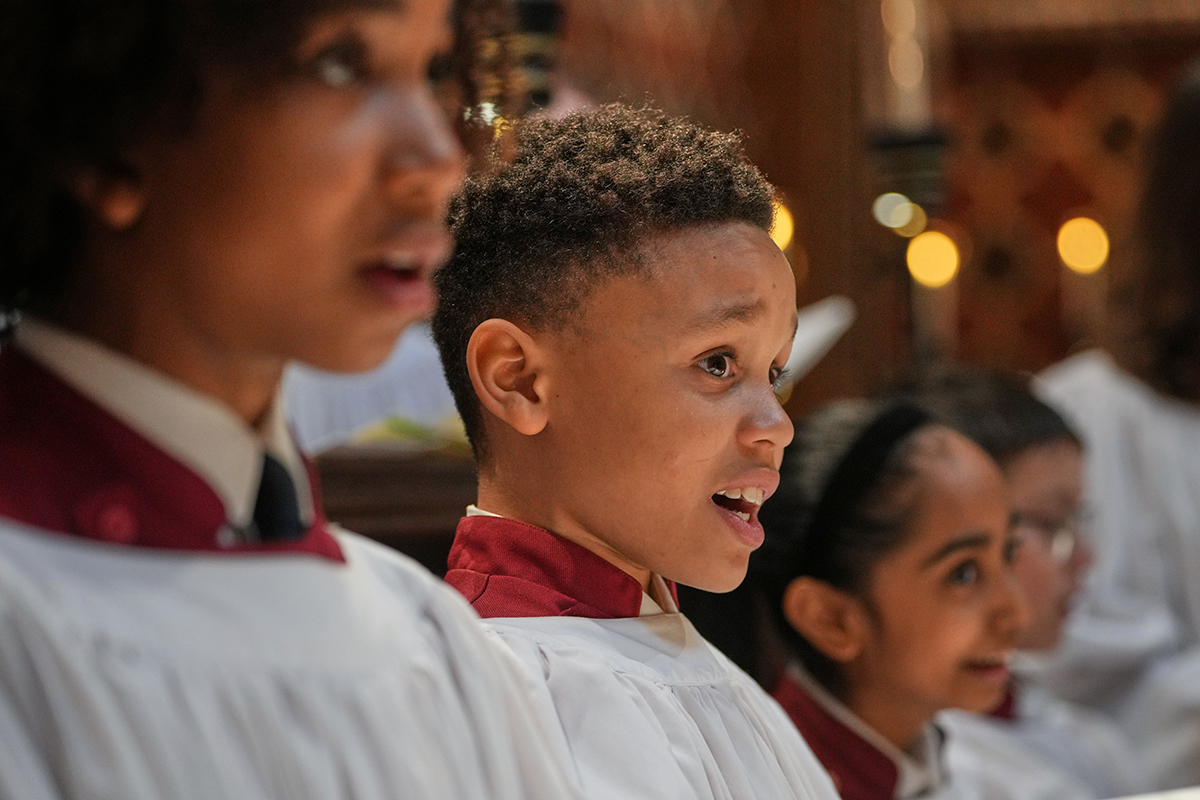
Off go jackets and backpacks. On go burgundy cassocks (long, close-fitting tunics) and white surplices (short, loose tunics with wide sleeves). Then the kids open their mouths and sing as one.
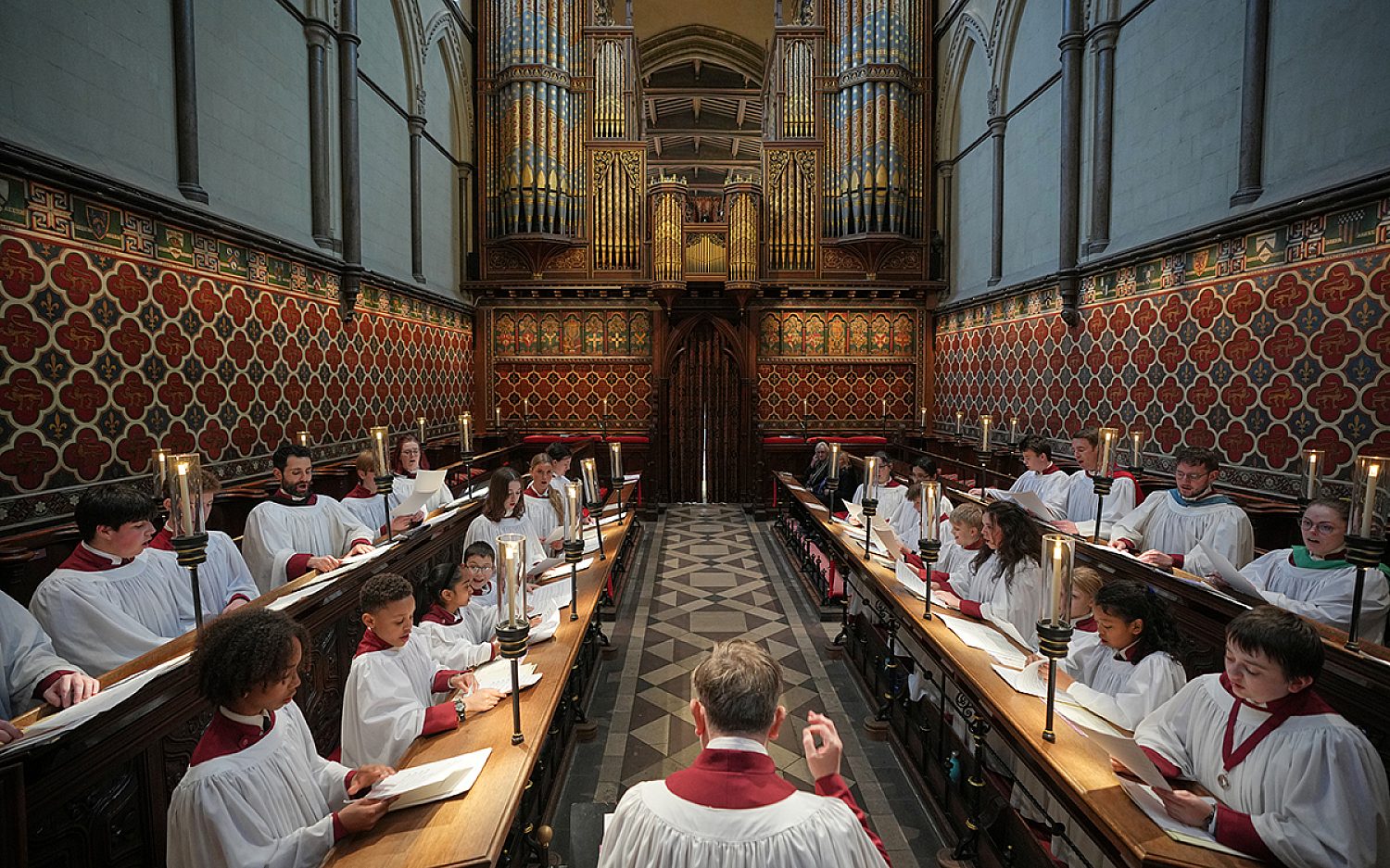
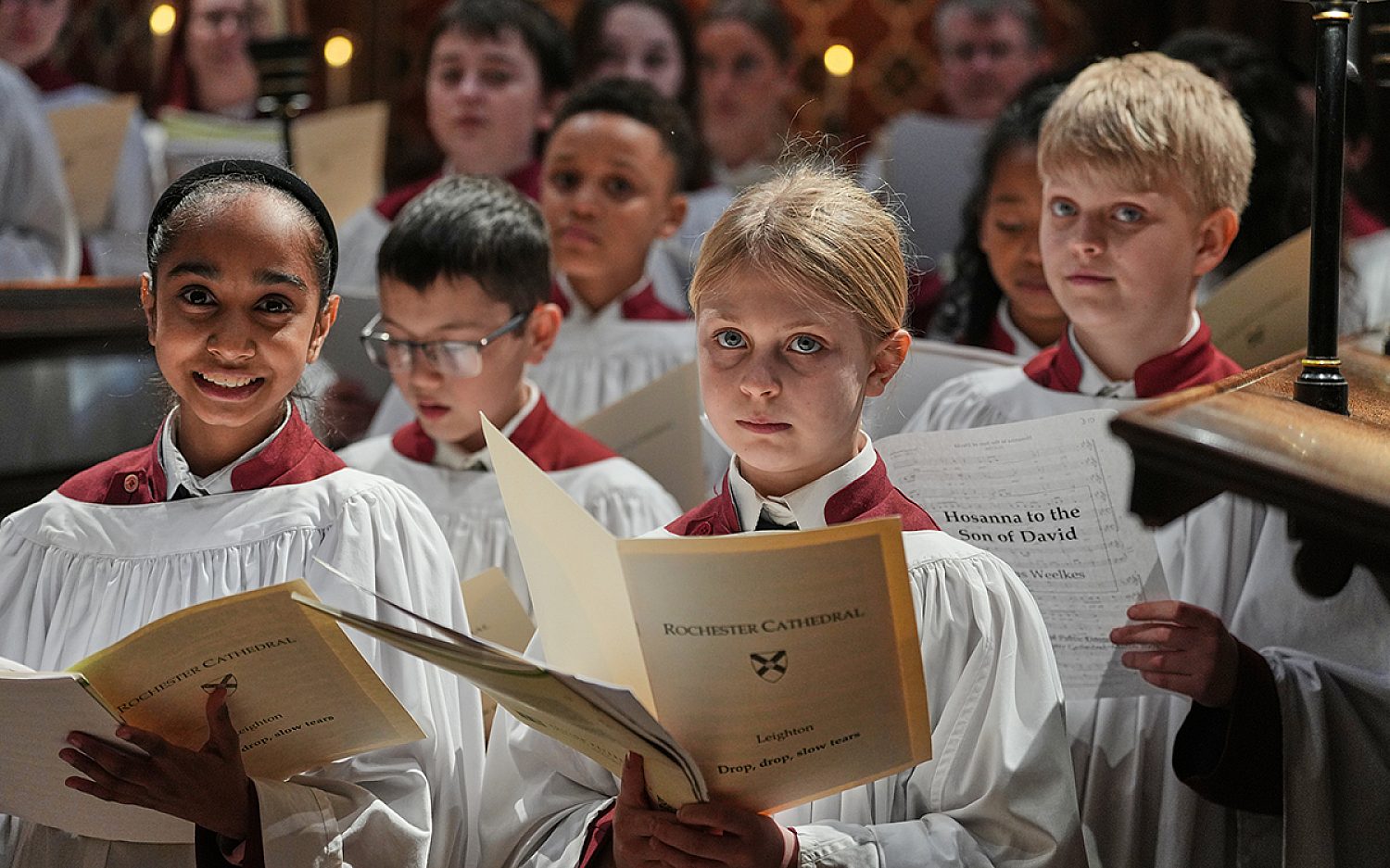
The youthful choir gives voice to a tradition of choral music in the Church of England that has survived for almost 500 years.
“All of our cathedrals are beautiful, sacred spaces where you can come and just sit and be,’’ says Adrian Bawtree, the choir’s music director. “You can be immersed, bathed, nourished, sent out back into the world.”
Choral Evensong is a big part of that tradition. The evening service includes hymns, psalms, and prayers originally laid out in 1549 by Archbishop Thomas Cranmer. Cranmer was the first Protestant archbishop of the Church of England. The choir performs most of the service. The congregation participates largely by listening.
A Tradition in Trouble
Today, declining church attendance and tight funding make it harder to raise up the next generation of choristers. But enthusiasts try to reverse the trends. They’re seeking recognition of English choral services as an important part of Great Britain’s culture. They want the historical choral art designated as a United Nations “intangible cultural heritage.”
Many think of English choristers only as performers in flowing robes and Elizabethan ruffs singing at royal weddings. But other choirs perform in much more humble settings.
And a fair number of those humbler choirs struggle, according to the Cathedral Music Trust. Last year, it gave 500,000 pounds (about $661,000) to 28 cathedrals and churches.
Rochester, for example, spends about $330,000 per year on music. That’s substantial for a smaller cathedral. But some invest even more.
The trust hopes recognition of the English choral tradition will bring attention and much-needed funding to choirs. It says the choirs are an important training ground for the musicians of tomorrow.
“It takes an awful lot of work, and it takes a lot of funding to actually make it happen,” trust CEO Jonathan Mayes says.
A Historical Contribution
Archbishop Cranmer compiled the Book of Common Prayer for the Church of England after it broke from the Roman Catholic Church during the Protestant Reformation. (Martin Luther began this movement in 1517.) The book helped make English, rather than Latin, the language used in services. (Beginning in the 1520s, William Tyndale was the first to mass-produce an English language Bible with the newly invented movable type printing press.)
The idea was to create worship services everyone could be part of.
The Evensong liturgy was included in the 1549 Book of Common Prayer. Initially, only boys sang. Today, many choirs take girls as well as boys. But in other respects it hasn’t changed much since that time.
A Gift for the Future
Rochester Cathedral’s Bawtree is one of those working to preserve the tradition as he oversees the youngest singers, aged nine to 13.
The first time Bawtree heard an organ and a choir, he was about nine years old.
“When I heard it, it was like big octopus arms came and grabbed me and said, ‘You’ve got to be part of this,’” he says. “I would like to share that with future generations.”
Why? This historic church tradition provides opportunity for people to soak in beauty and contemplate God’s glory in worship through music.