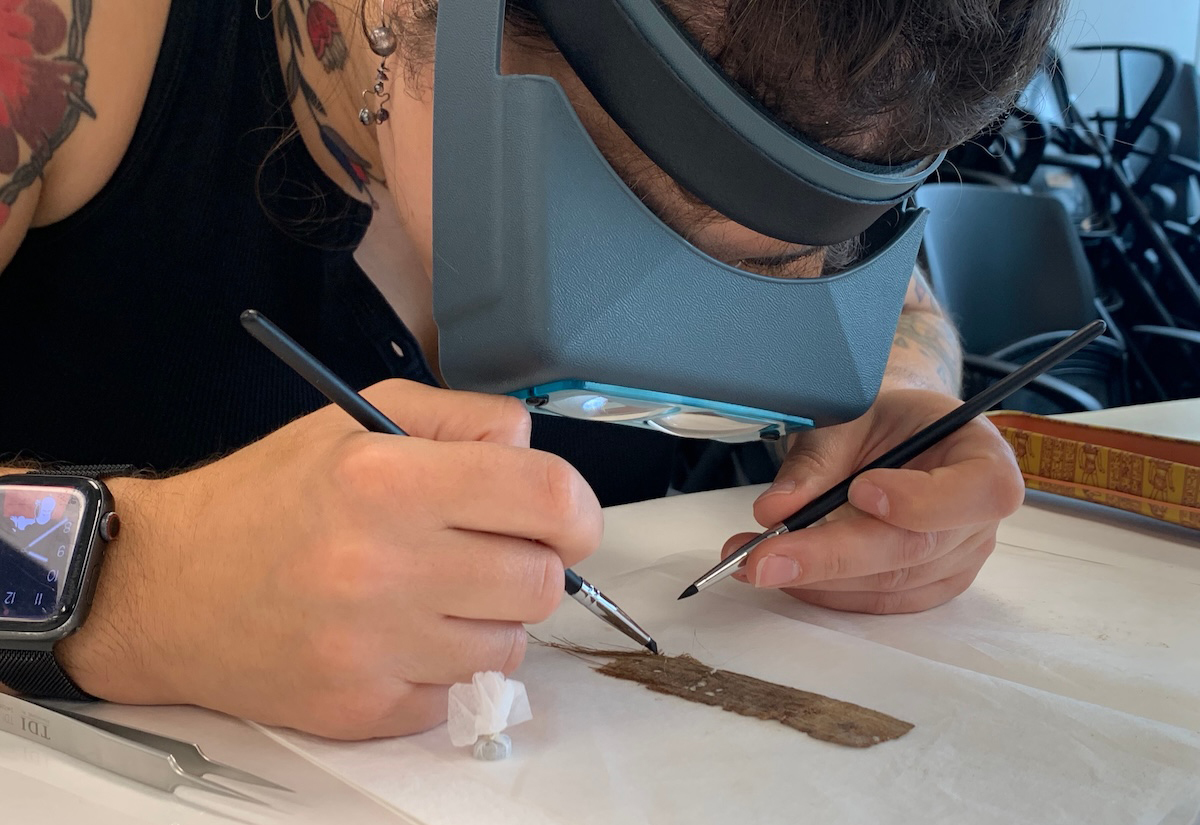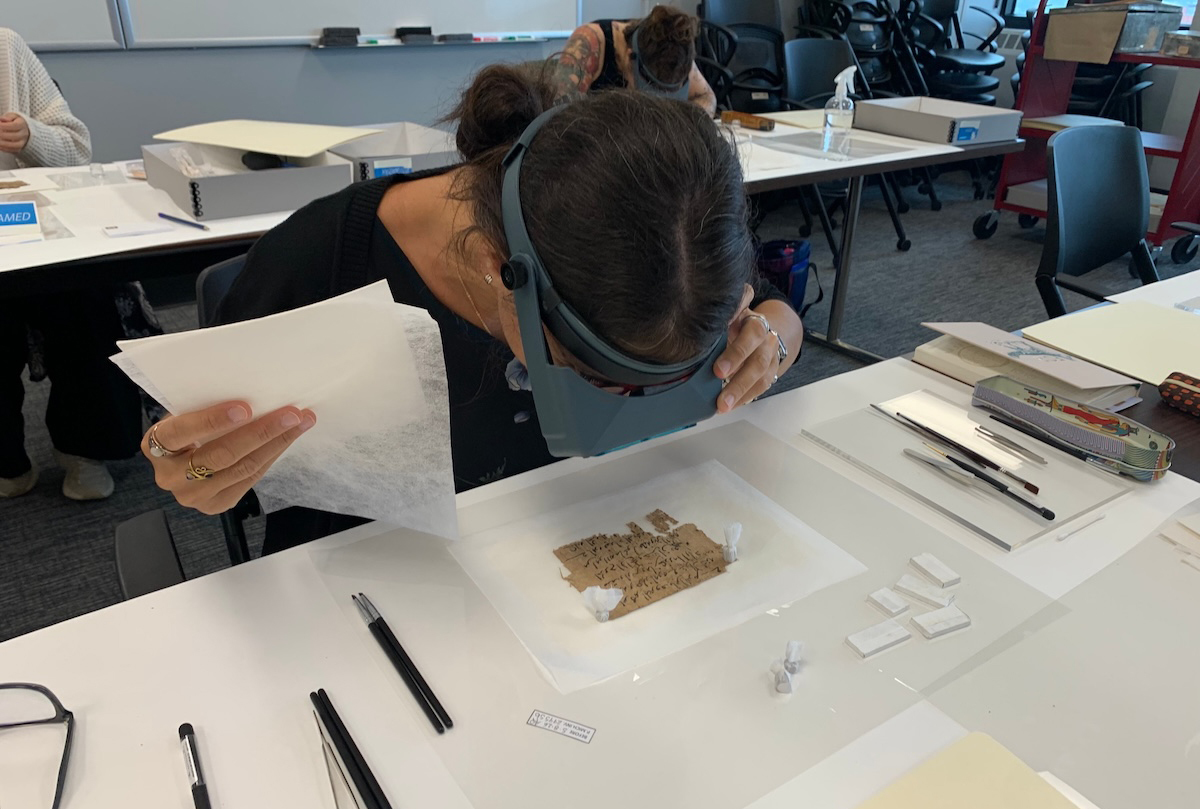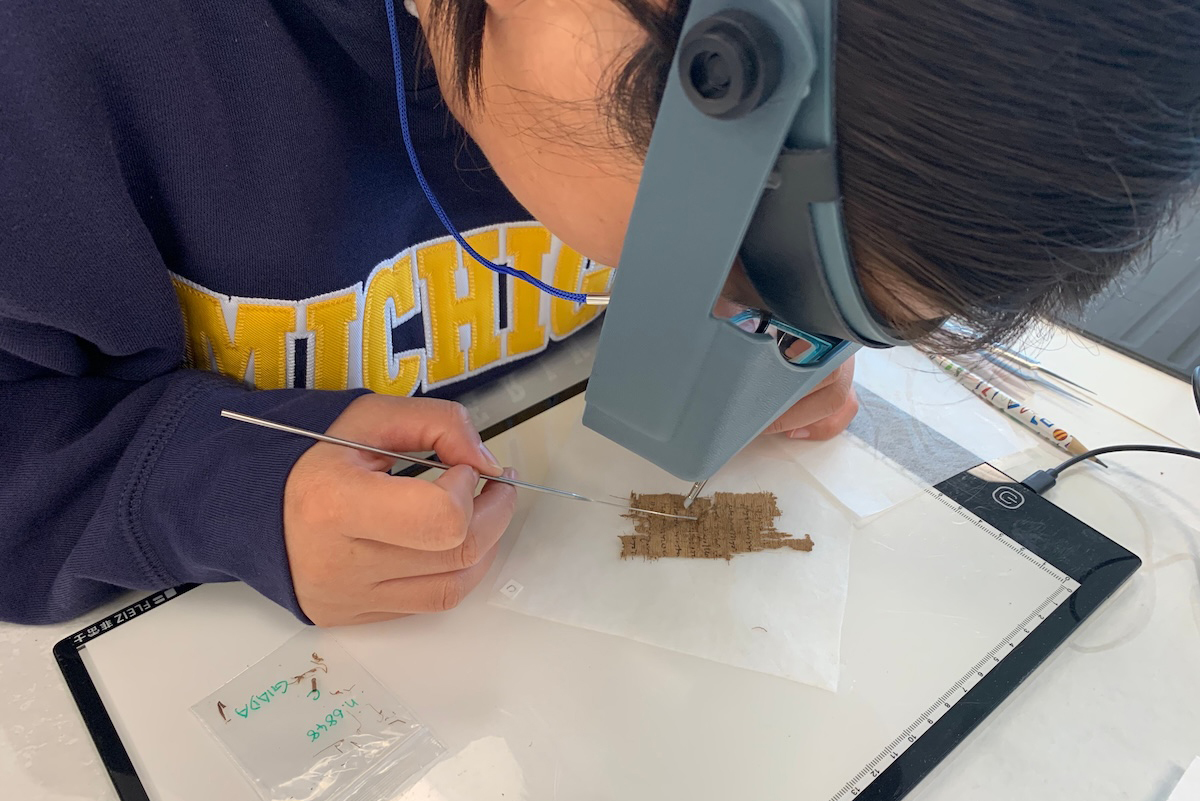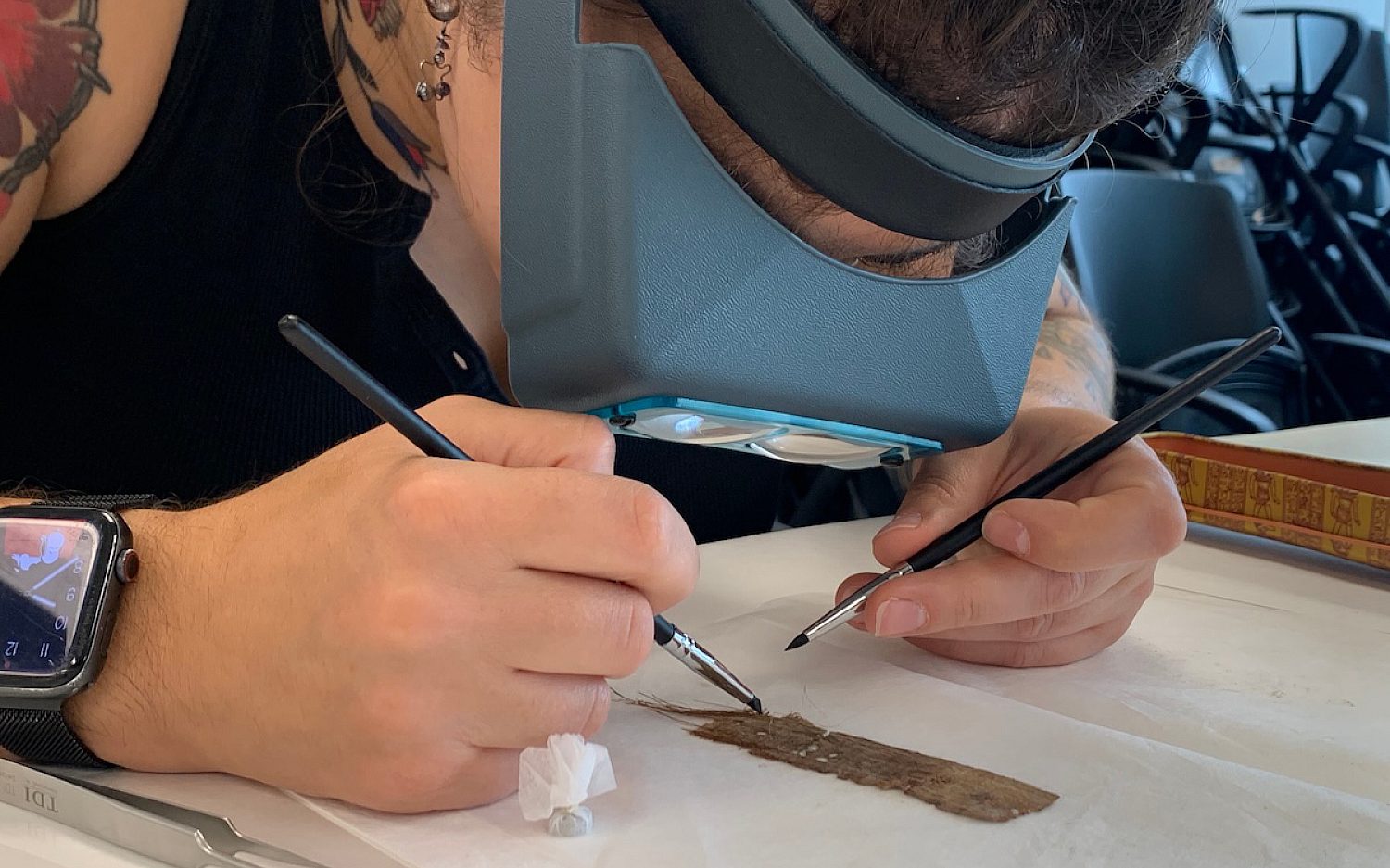
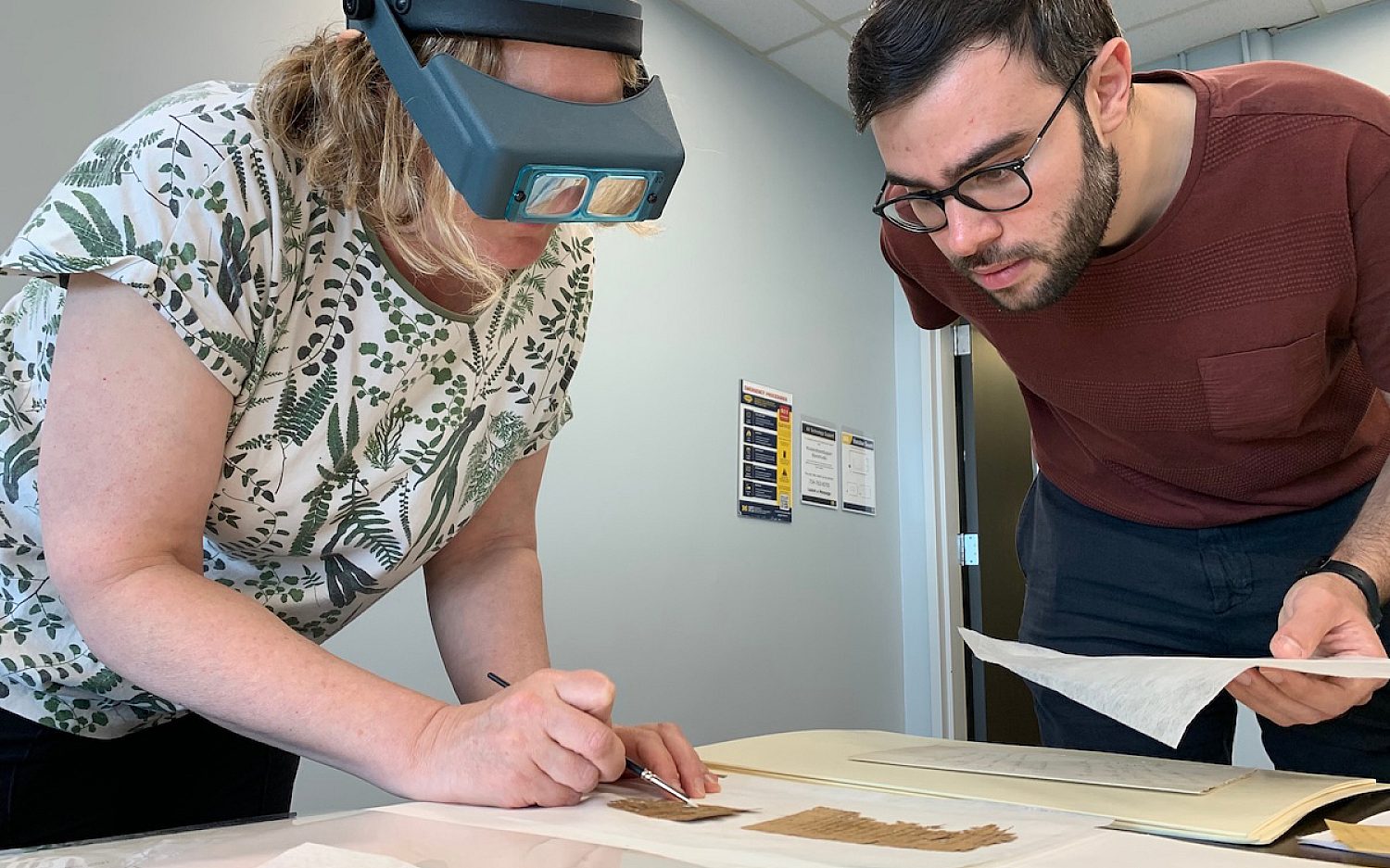
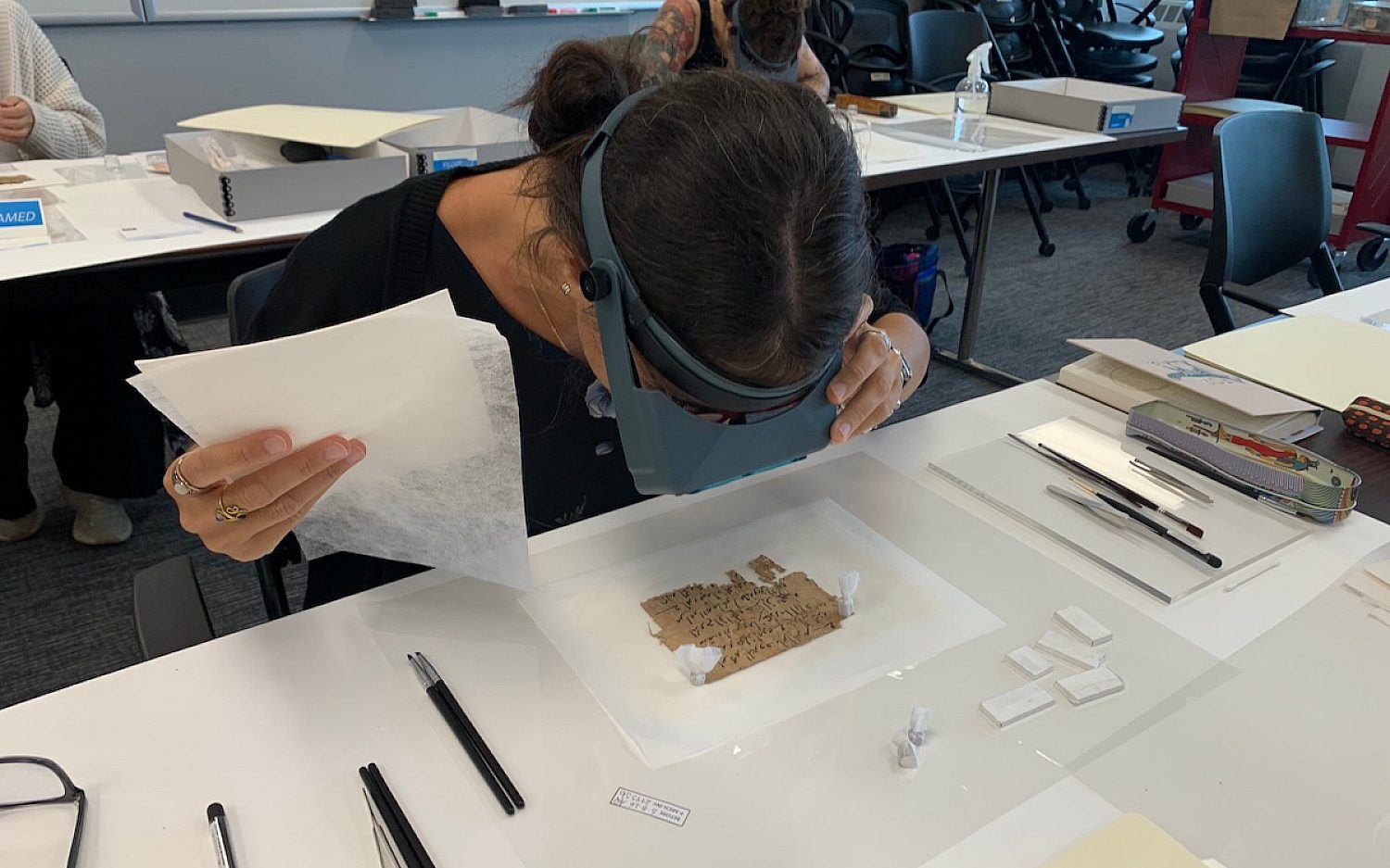
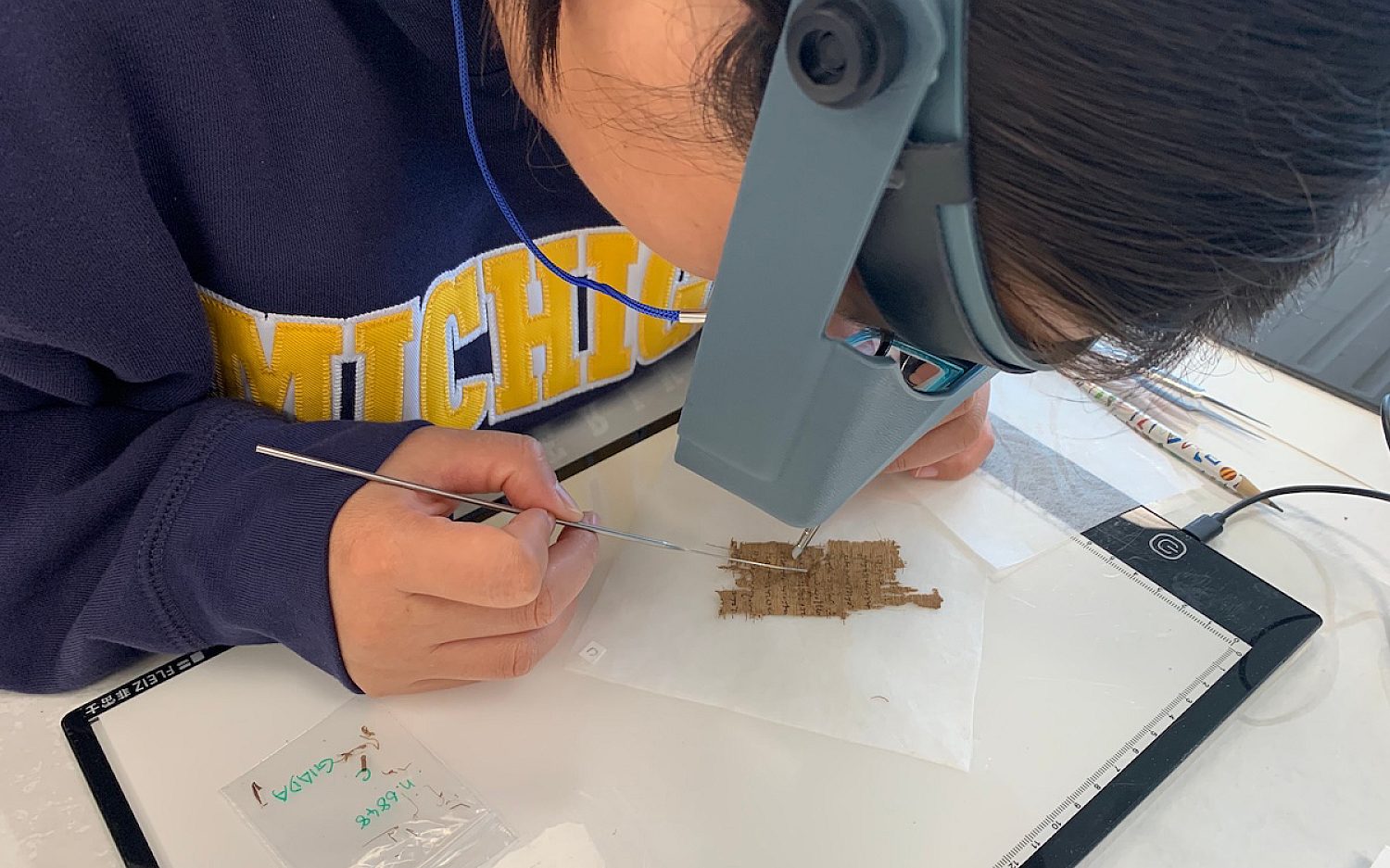

Shijin Jiang pulls a precision binocular headband magnifier over her eyes. She peers at an ancient text.
Using a pair of hand tools, Shijin inspects the sheet made from the papyrus plant. She’s very careful. After all, it likely hasn’t been handled in a century. No one has read it for thousands of years!
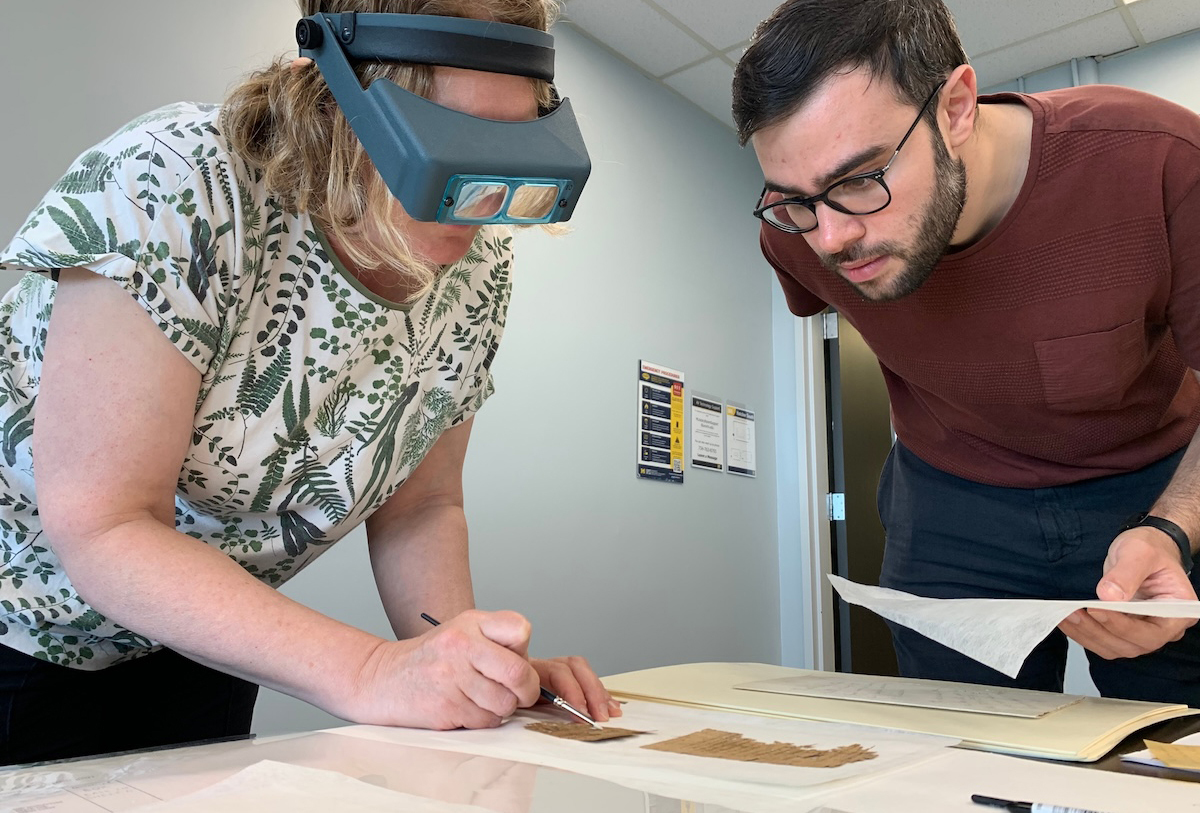
The 10-day Papyrus Conservation Summer Seminar at the University of Michigan is one of the few in the world that teaches how to conserve papyrus manuscripts.
“If you touch this papyrus, you can feel the history,” says Shijin.
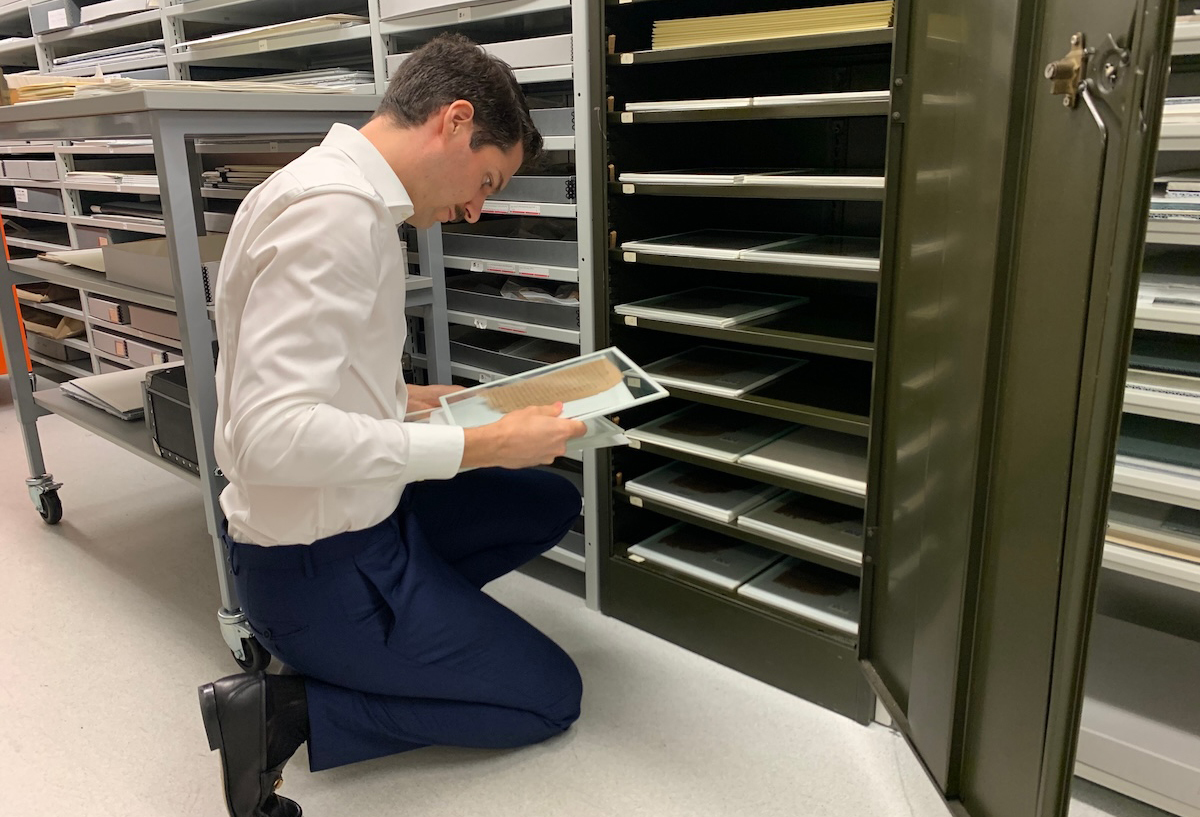
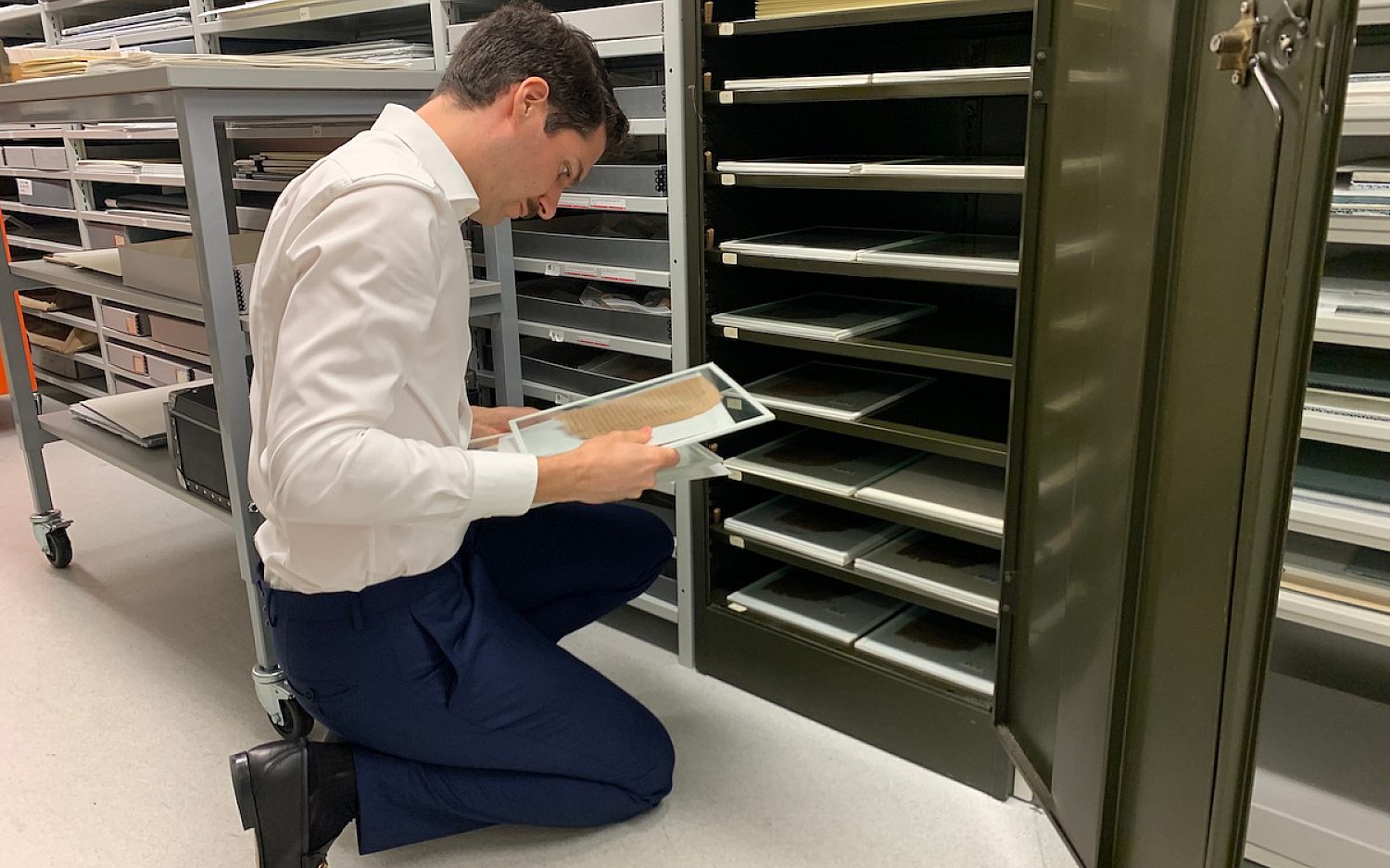
Michigan’s Papyrology Collection includes texts and documents from 1000 B.C. to A.D. 1000. There are portions of Homer’s epics, The Odyssey and The Iliad. It also holds the oldest-known copy of Paul’s letters to the early churches.
Marieka Kaye manages library preservation services at the University of Michigan Library. Kaye says she tries to make the work feel “comfortable and not scary.” That’s because “a lot of people just feel terrified working on these ancient things.”
Papyrus can crumble or break. Its ink can smear. So Kaye encourages students to carefully remove dirt, sand, salt, and debris. They use controlled moisture to soften folds and realign fibers. Then they dry the papyrus slowly under light weight to prevent curling.
“If we don’t train the next generations of conservators, this is a craft that is going to be lost,” says Giuliano Sidro, curator of Michigan’s Papyrology Collection.
Michigan has so many papyrus manuscripts that its researchers haven’t gone through them all.
“This is a place where you make discoveries, potentially every day, if you just go into the vault, pick out a box and open something up, and you start reading,” Sidro says.
Of course, to make sense of it, one needs to be able to decipher Arabic, ancient Greek or Latin, and even hieroglyphics.
A few of the seminar participants were able to read the papyri. Mauro Castiello, a papyrology doctoral student in Italy, can translate ancient Greek and Latin. Arzak Mohamed, a postdoctoral fellow in Australia, reads Arabic.
Mohamed had heard about the papyrus seminar for years. She always wanted to attend.
“By saving this information, we can transfer the knowledge to the next generation,” she says.
For whatever was written in former days was written for our instruction, that through endurance and through the encouragement of the scriptures we might have hope. — Romans 15:4
Why? Ancient stories and pieces of knowledge still survive today because someone wrote them down.