What time is it? Time for you to get a watch! Ok, it’s not that simple.
From the very beginning (Genesis 1), people marked the shift of dark and light, stars and tides, summer heat and winter cold. Even so, there’s still no universal way of measuring time.
Take daylight saving time. Many Americans loathe changing their clocks twice per year. The U.S. House of Representatives in July passed the Sunshine Protection Act calling for the shift to become permanent year-round. Its prospects for passage in the Senate aren’t high, and when the country tried it in the 1970s, it was wildly unpopular and short-lived. But the idea continues to come up.
Measurements of time are made up, but they matter. Calendars give structure to our lives. Today, the main calendar in use globally is the Gregorian calendar, with 12 months. But people still consult other calendars for religious or cultural events in places from Israel to Thailand.
Some historical calendars followed the Sun, the Moon, or a combination of both. What we call a seven-day week (patterned on the creation account in Genesis) had four, or 10, or another number of days in other systems.
The Industrial Revolution, which started in 18th-century England, shifted notions of time. Workers paid attention to the clock because they were due for specific shifts.
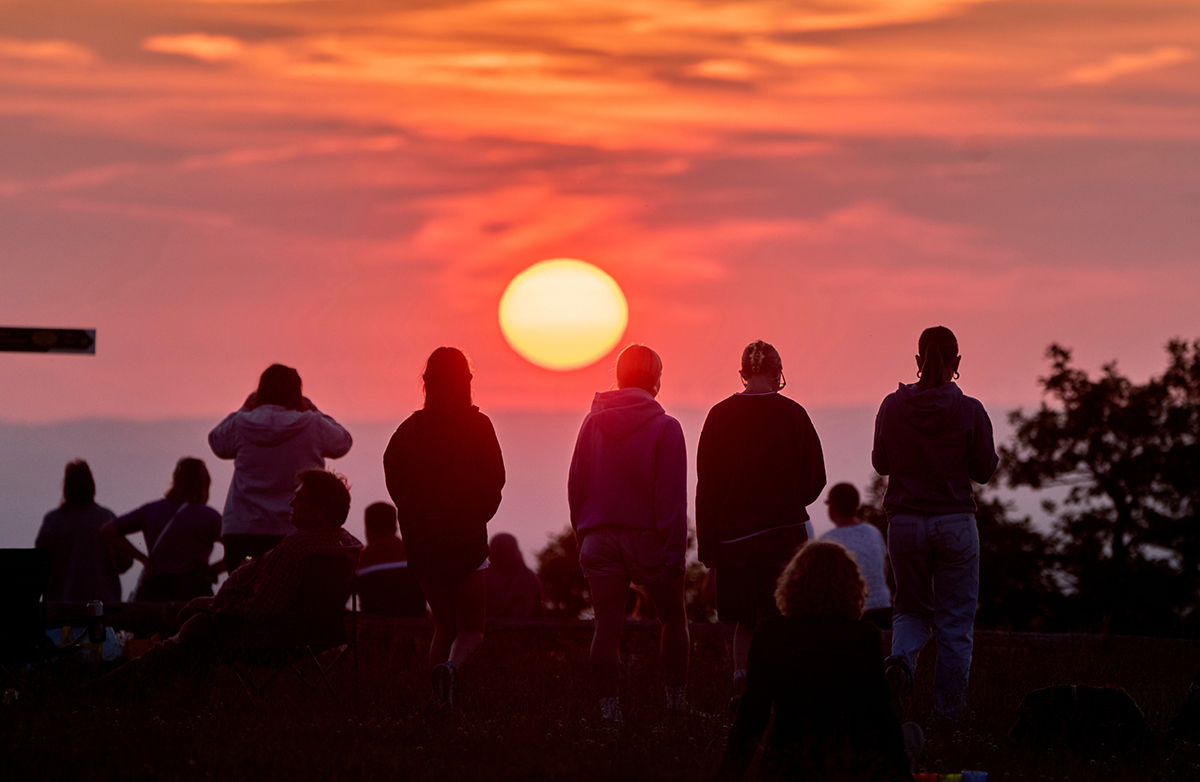
Contrast that to a preindustrial farmer, says Kevin Birth, a professor of anthropology. That farmer didn’t watch the clock. Instead, he observed natural cues such as sunrise and sunset.
In the United States, by the mid-1800s, there were more than 40 time zones based around cities.
“The American Railway Association got all the American railroads to agree that on November 18, 1883, they would declare a four-zone system in effect in America,” says history professor Michael O’Malley. “And they just announced it.”
And consider the Prime Meridian, the entirely made-up longitudinal line running from North Pole to South Pole. It divides Earth into eastern and western hemispheres and is used for global timekeeping and navigation.
It passes through Greenwich, England. Why? Simply because it was established in 1884 “when the British Empire was one of the dominant empires in the world,” says Birth.
China’s time zone spans more than 3,000 miles, meaning the entire country runs officially on Beijing time. The Communist Party instituted it as a form of national unity.
But the Sun rises in eastern China hours before it rises in western China. So, Birth says, the reality is that people adjust their own local times for daily life.
Why? When God created the world, He also created time. (Titus 1:2; Ephesians 1:4) We live within its limits.