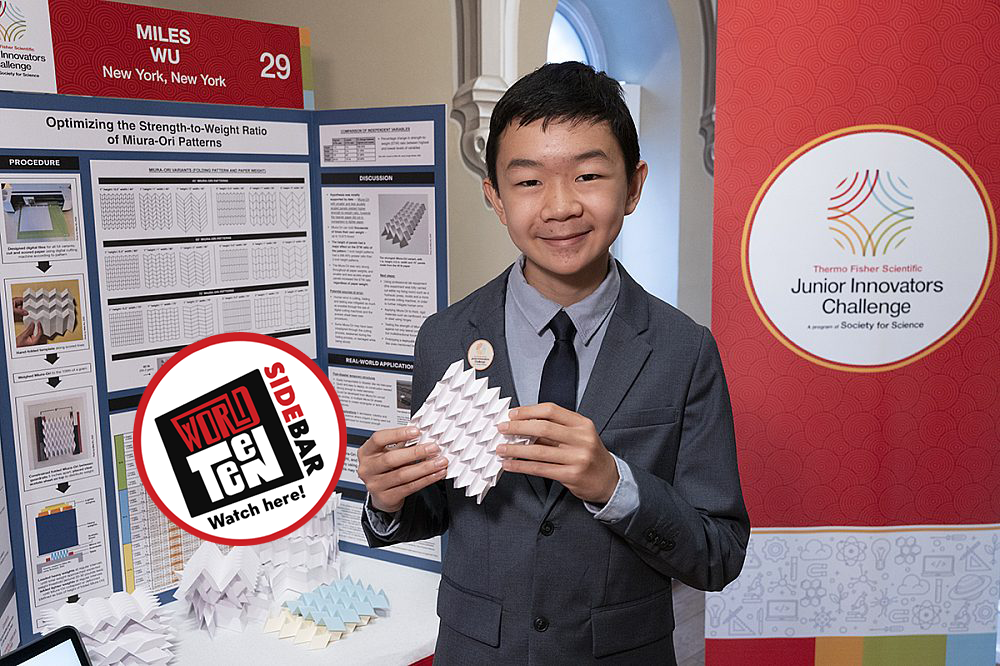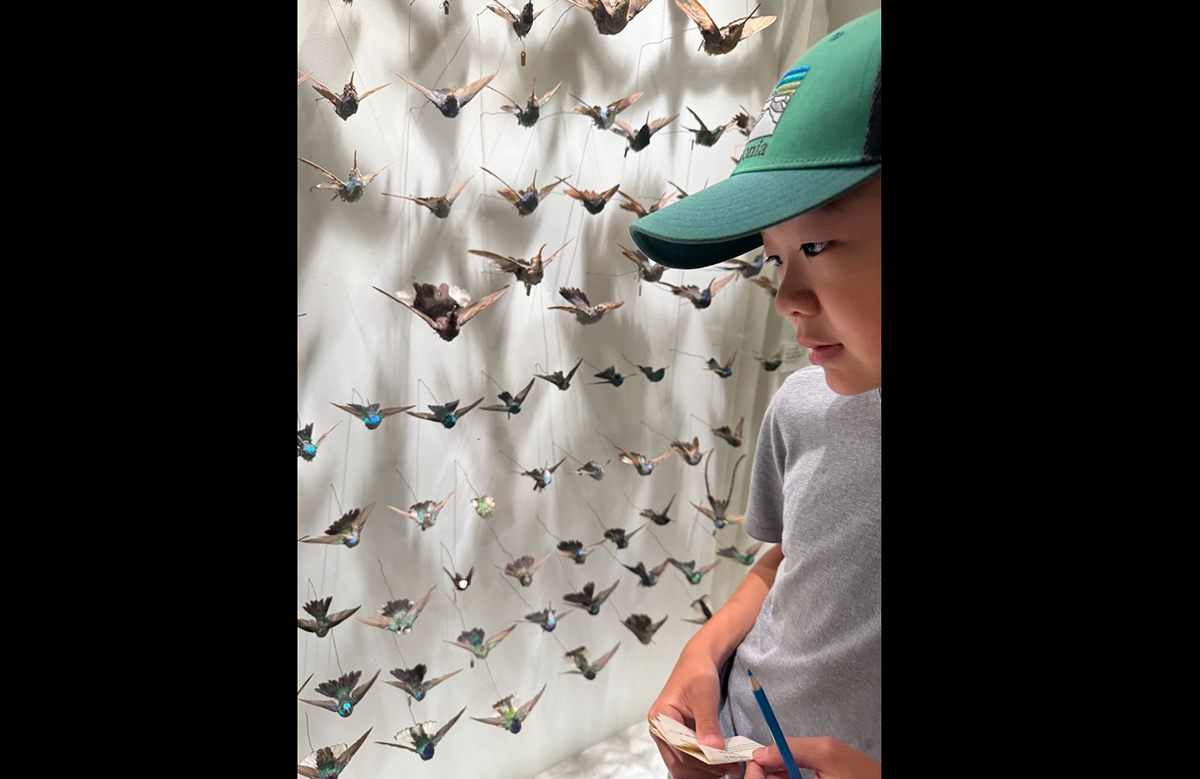

Miles Wu’s Instagram account features a menagerie: crabs, moose, frogs, snails, birds, and insects—all carefully crafted from paper using dozens of precise folds. Miles lists his interests broadly as “origami + science.” At just 14 years old, the teen is combining the two.
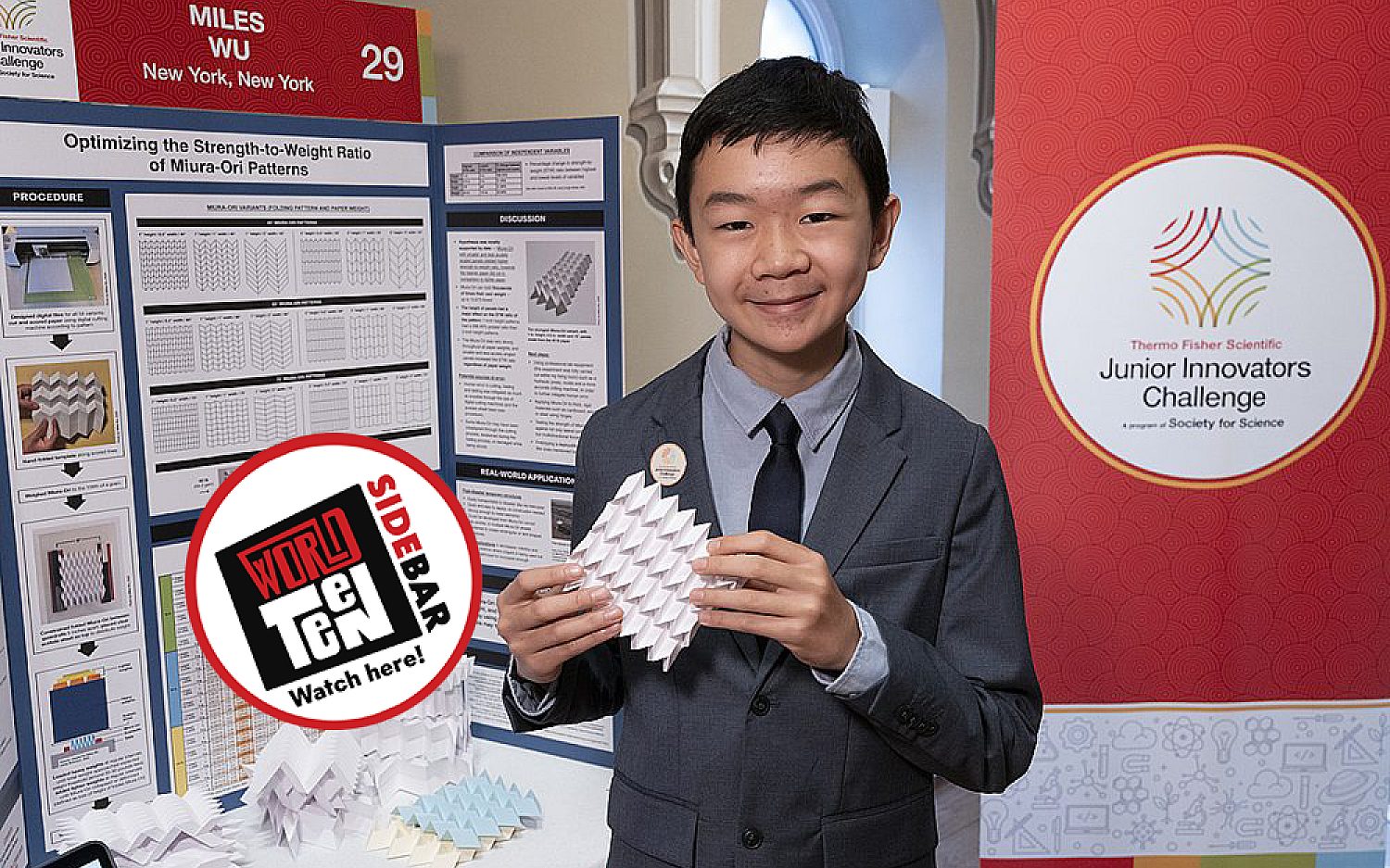
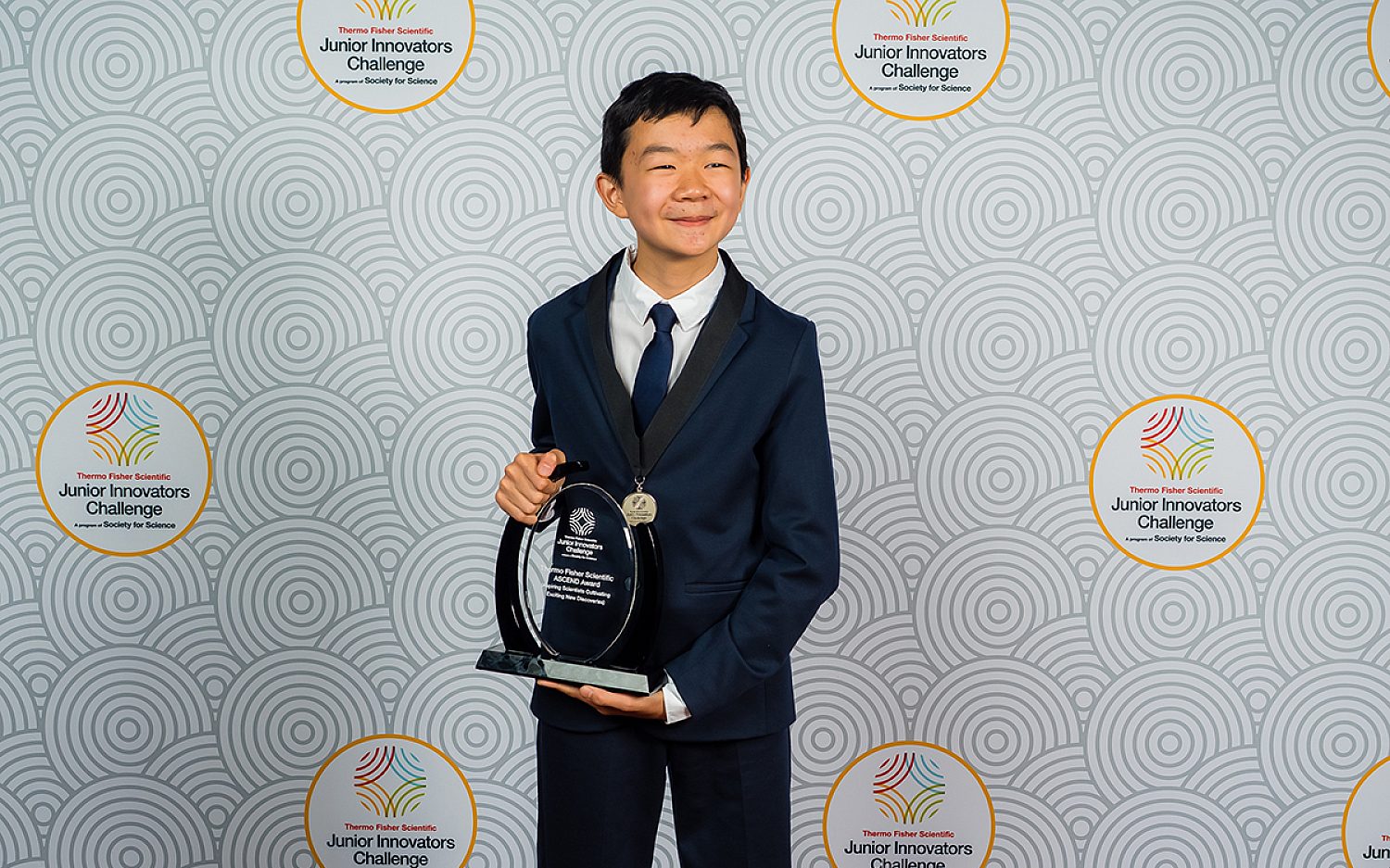
Last fall, Miles entered a STEM (science, technology, engineering, math) competition sponsored by the Society for Science. Miles took the grand prize at the Thermo Fisher Scientific Junior Innovators Challenge. He illustrated how origami might benefit engineering.
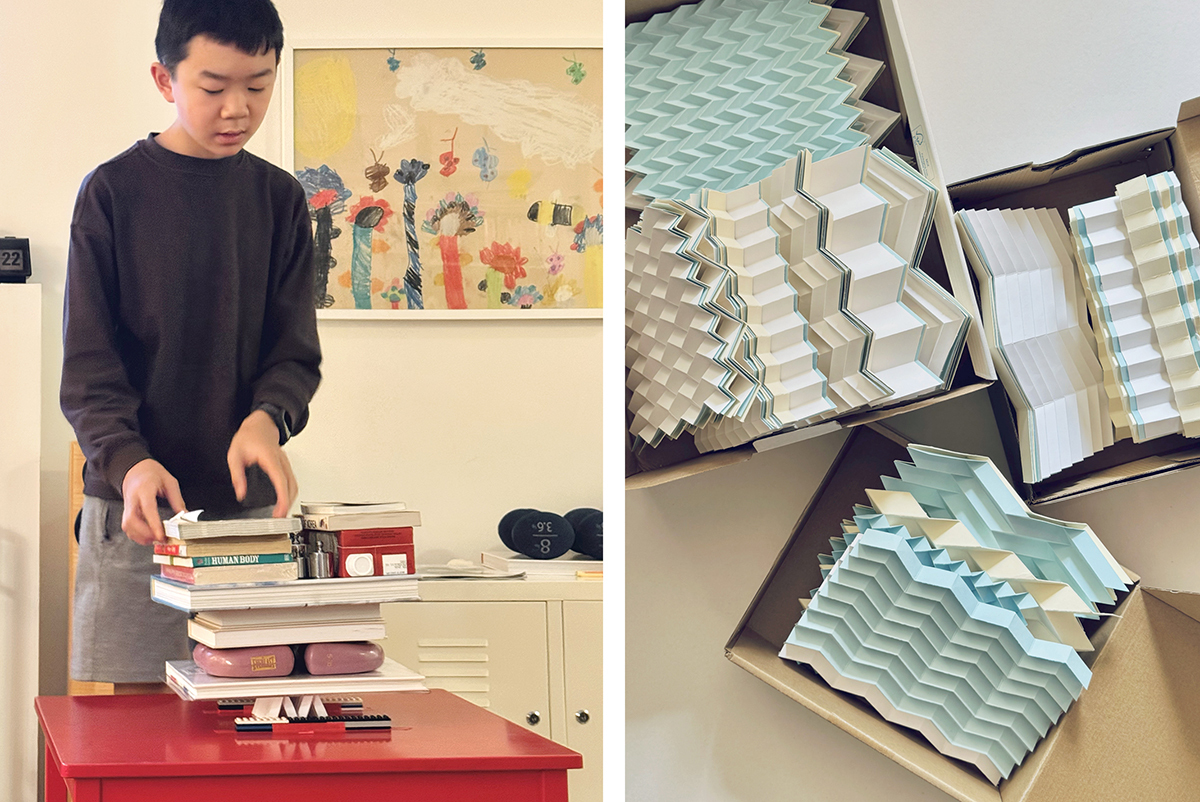
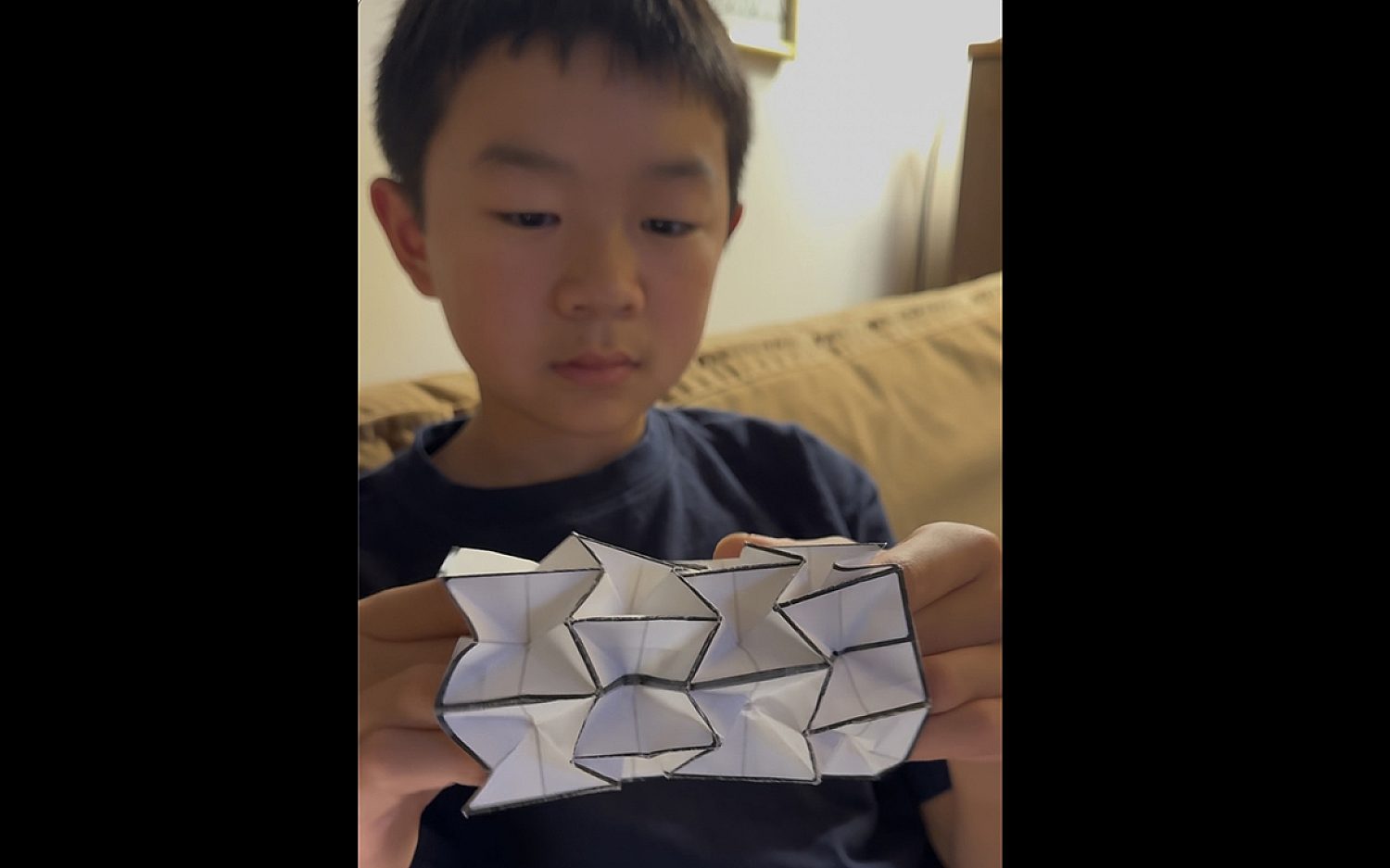
Miles’ project examined types of origami patterns. Specifically, he looked at Miura-ori, or simply Miura, folds.
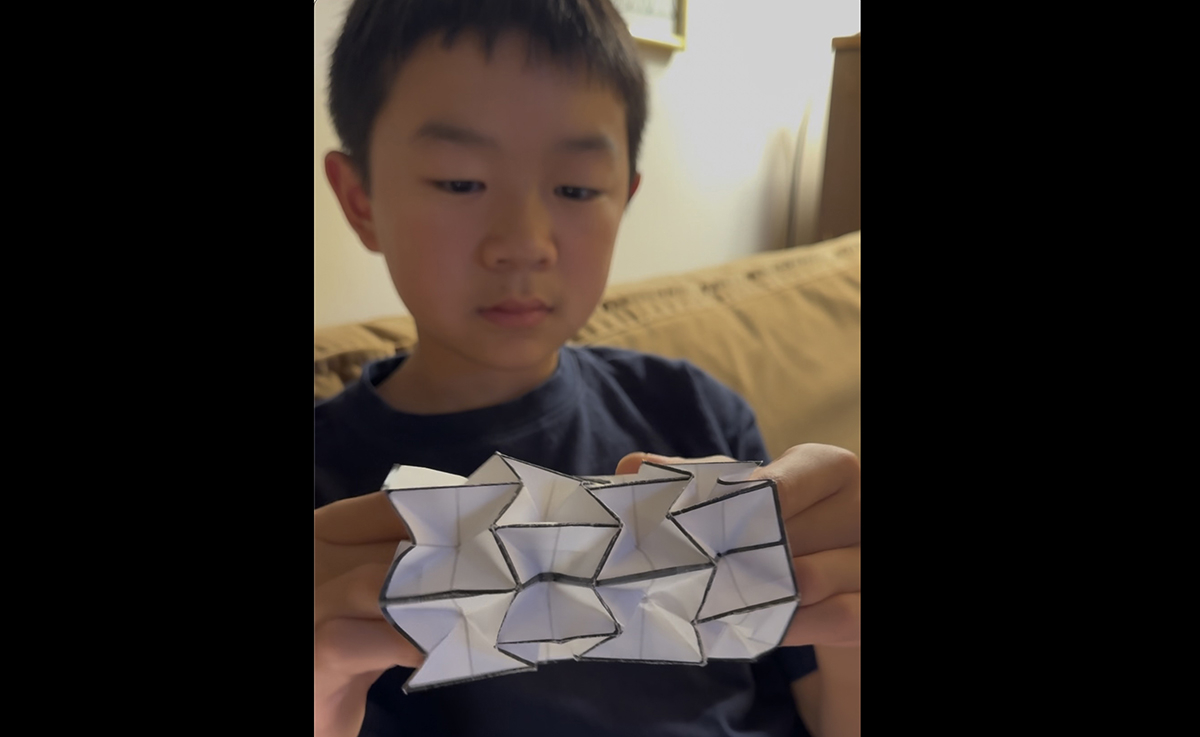
Japanese scientist Koryo Miura invented the Miura-ori origami technique. It allows a flat material (like paper) to be folded and unfolded easily while retaining a compact form.
Imagine folding a paper airplane. Now imagine pulling two corners outward and then simply pushing them to return the plane to its original shape. With most folds, that won’t happen. But with Miura-ori, it does! Some people refer to Miura as “shape-memory” origami.
Miura works through a process called tessellation, repeating a shape without gaps or overlap. God used tessellation in nature. Think pineapple rinds, honeycomb, fish scales. In Miura origami, tessellation involves repeating parallelograms.
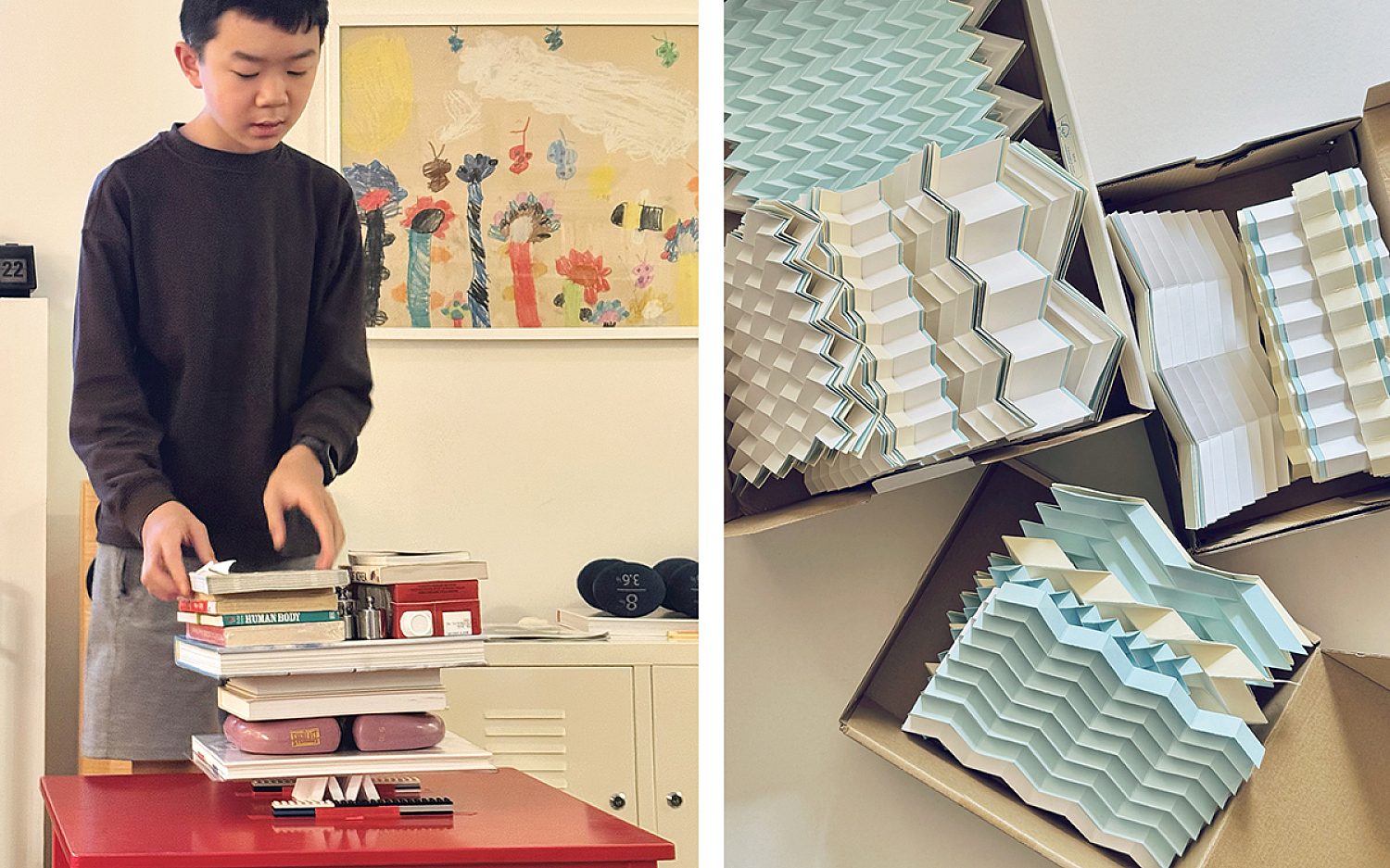
For his project, Miles tested as many as 54 types of Miura folds. He analyzed “the strength-to-weight ratio” of each to determine which folds allowed the origami object to hold the most weight.
Miles discovered that the angles of the folds and the size of the unfolded smooth parallelograms (or panels) made a difference.
Designs with steeper angles and smaller panels were stronger. Some designs supported up to 9,000 times their weight! Not only that but those designs also “remembered” their shapes better than those with larger panels and fewer sharp angles. And thinner paper thus folded also worked better than heavier stock.
How might Miles’ research be used? The teen hopes to design “strong, lightweight shelters” for use after natural disasters, according to the Society for Science website.
“What I learned was that Miura-ori are really strong, lightweight, and compactable,” Miles says in a Society for Science video. To him that “mean[s] they could offer a better alternative . . . in emergency situations.”
Miles and his work impressed judges and others. “Miles’ remarkable blend of scientific creativity, leadership, and collaboration highlights the type of talent Society for Science is proud to support,” says Maya Ajmera. She is President and CEO of the Society for Science and the Executive Publisher of Science News. “I look forward to seeing the innovative ideas he will contribute in the future.”
Why? God designed the elements of His creation with unique characteristics that operate under His scientific laws. He also gifts humans with the curiosity and creativity to unveil and harness those materials and laws for innovation and good.
Recommended Reading: For more about origami, read Simple Origami by Adeline Klam.
Want to learn how to make the Miura fold? Click the video button at the top of the story to follow along with our WORLDteen Sidebar!