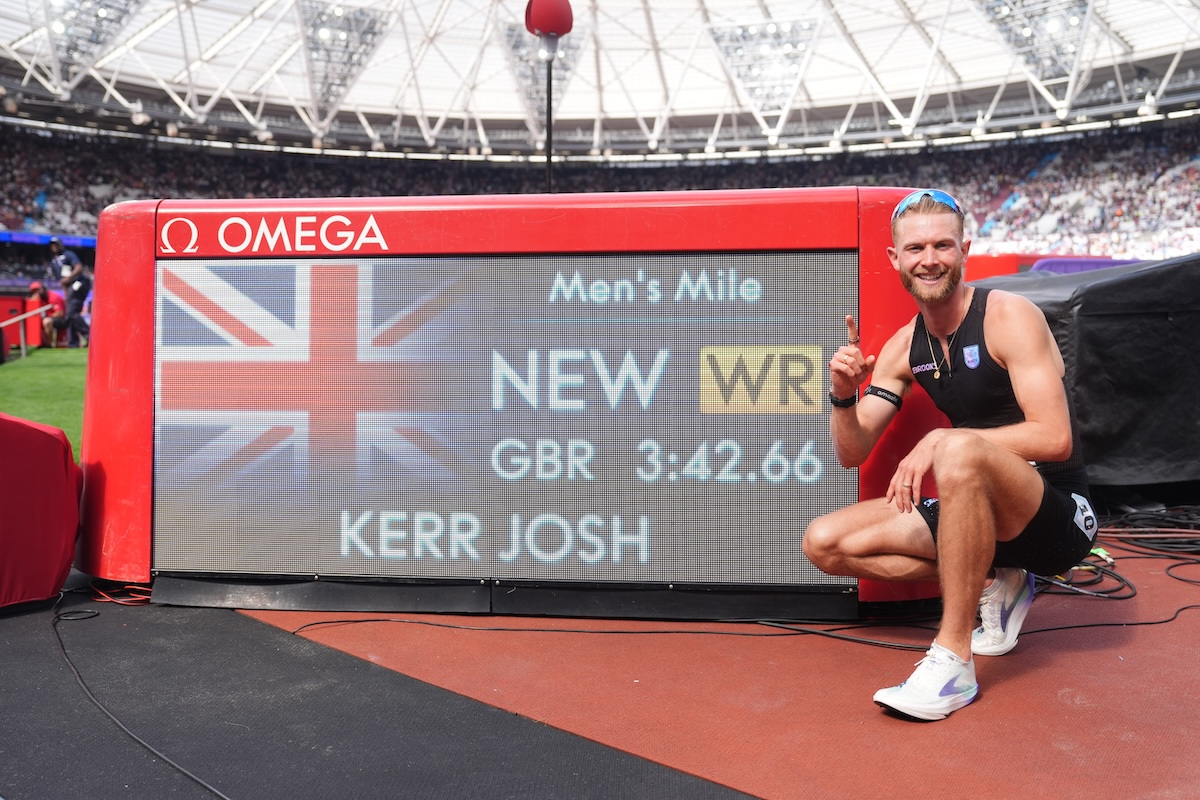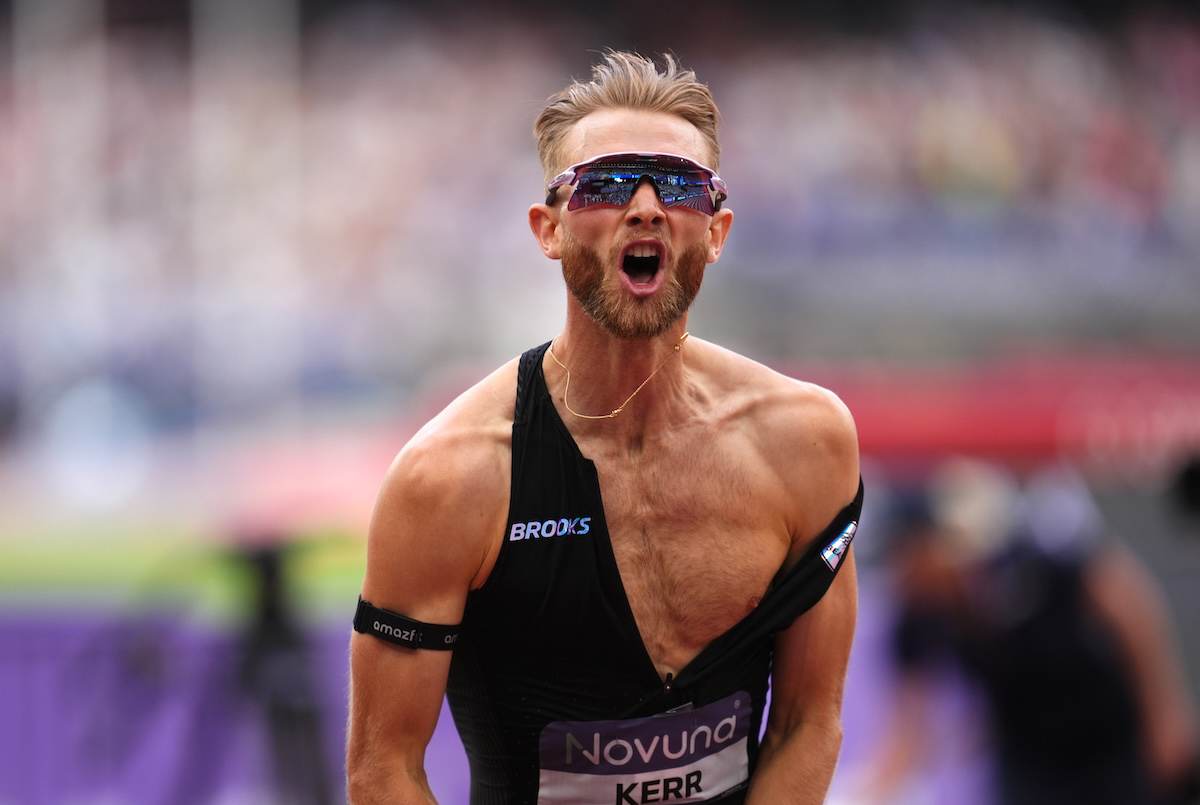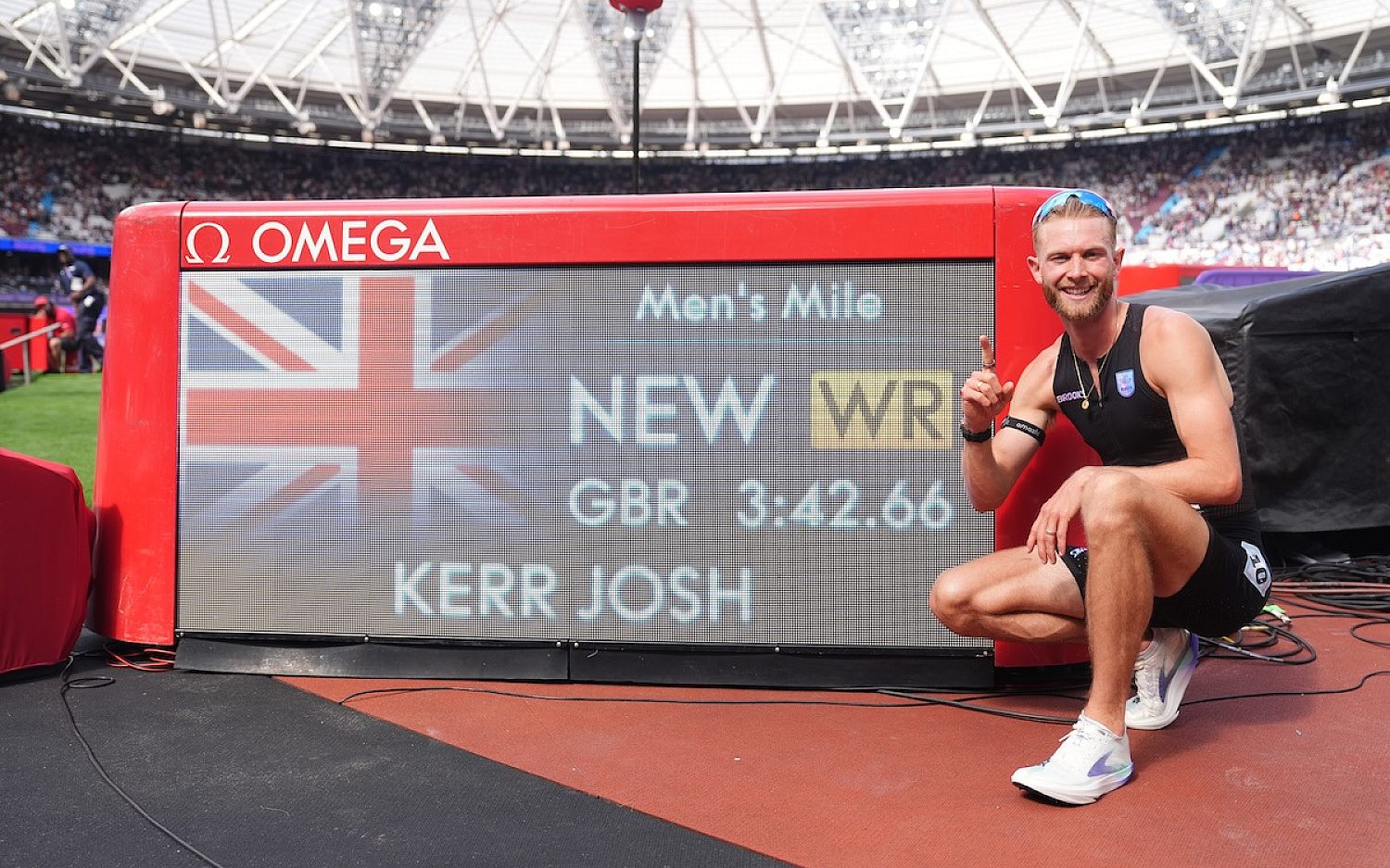
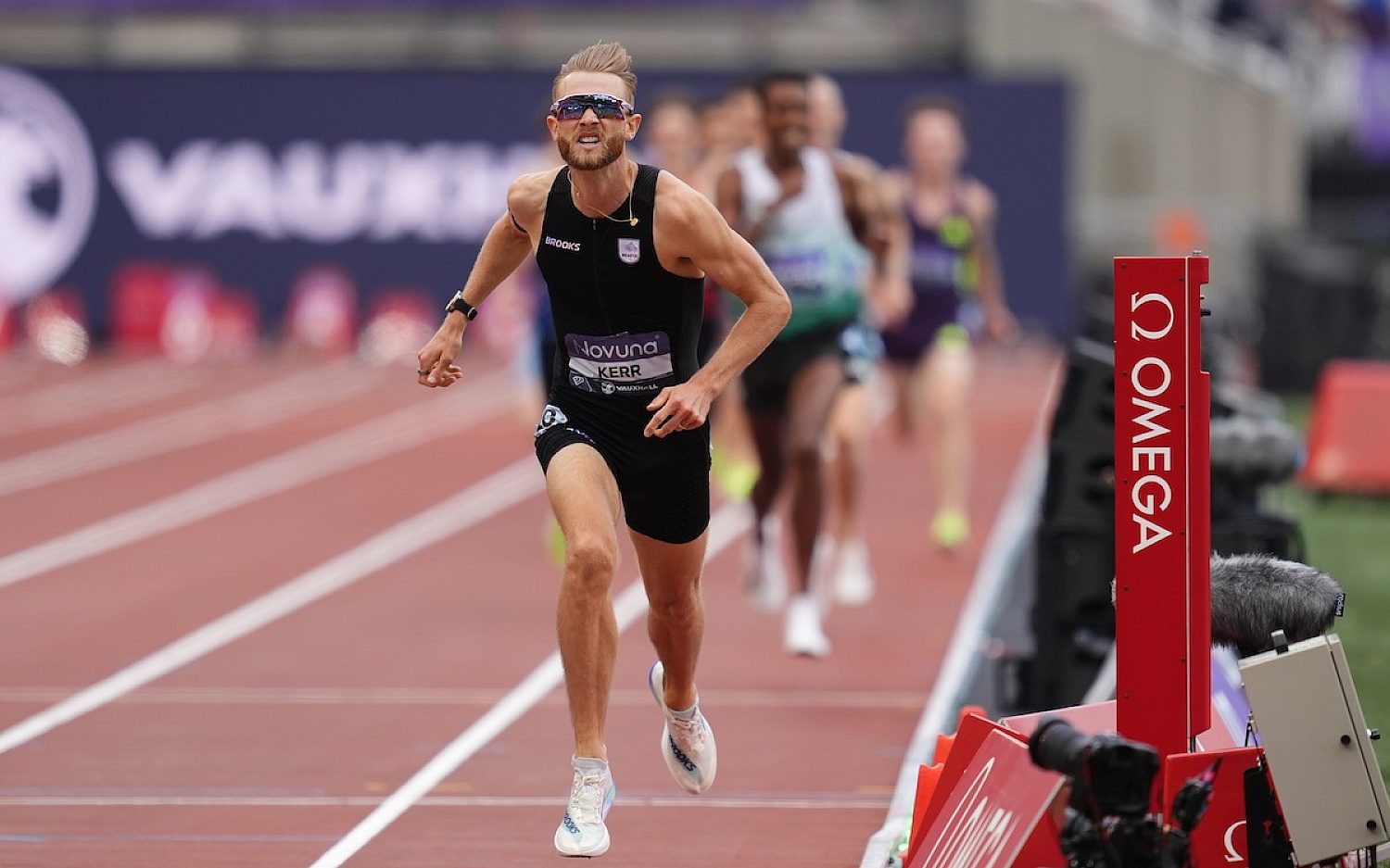

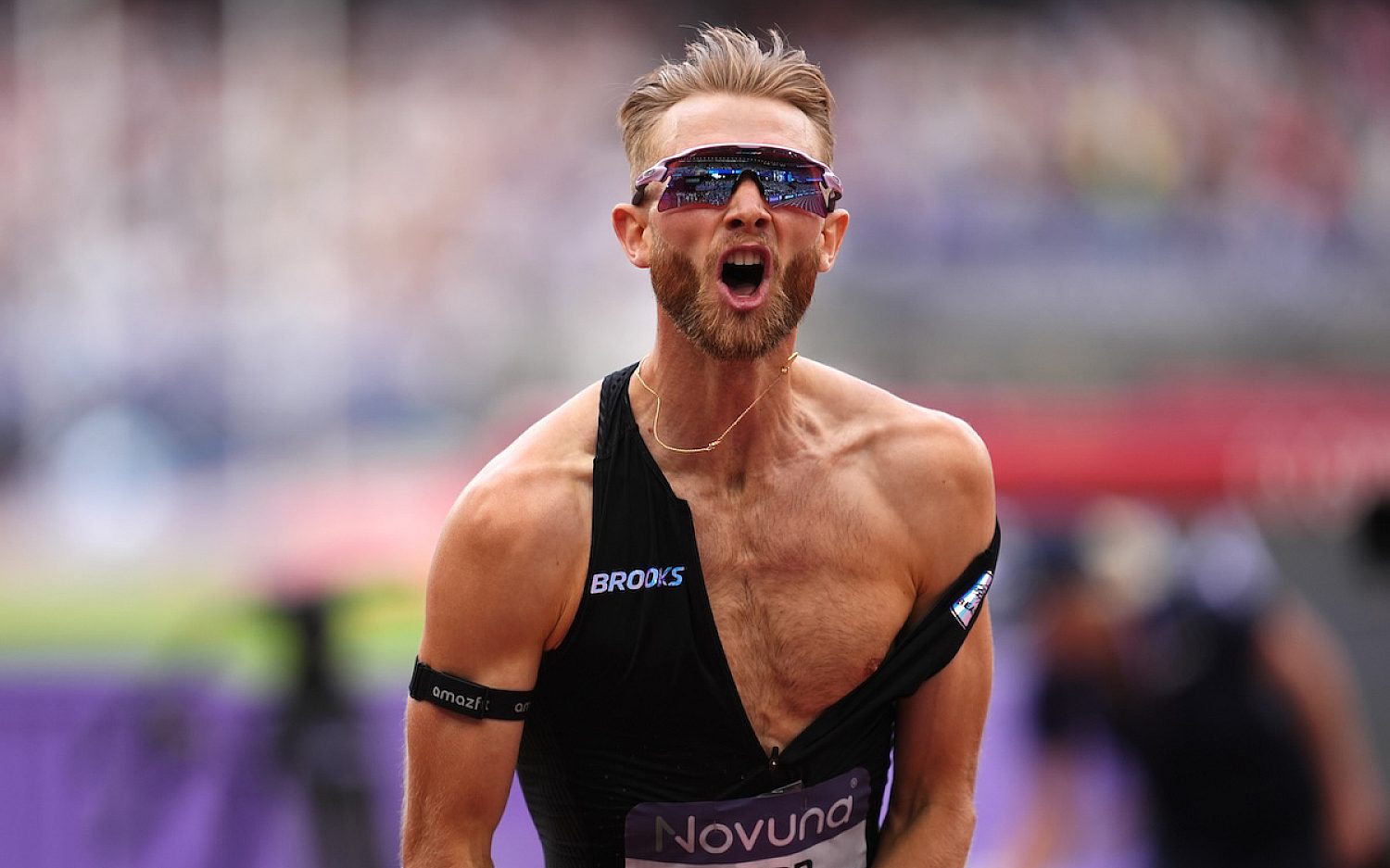

On July 18, Scotland’s Josh Kerr triumphantly pumped his fist in the air. London Stadium, packed with 60,000 people, erupted. The athlete smashed a world record that had held for 27 years. He ran a mile in three minutes, 42.66 seconds. That is the fastest on record.
Kerr has spent a decade training in middle-distance running. In the 1,500 meters, he won silver at the 2024 Paris Olympics. He took gold for the 3,000 meters indoors at the 2024 and 2026 World Championships.
A World Championship 1500-meter race in fall of 2025 ended with a calf injury. Kerr hobbled last to the finish line. Just weeks later, he pitched the idea of Project 222 to his sponsor, Brooks.
His goal: Run a mile in three minutes and 42 seconds (that adds up to 222 seconds). That time would break Moroccan Hicham El Guerrouj’s record of three minutes and 43.13 seconds. El Guerrouj earned the record in 1999.
Kerr’s personal best going into the July race was three minutes, 45.34 seconds. He had to be strategic to shave off several seconds.
The New York Times reports Brooks built bespoke (custom made) shoes for Kerr to go 55.5 seconds per 400 meters. That’s the speed Kerr needed to maintain to break the world record.
The shoes, aptly named Hyperion 222, are designed like a rocker to push Kerr forward. The New York Times explains they have a small amount of foam in the heels and much more in the mid-foot that tapers to the toes. Brooks also made Kerr an aerodynamically tested speed suit.
Kerr trained on a track in Albuquerque, New Mexico. It is 5,335 feet above sea level. Higher altitudes have less oxygen. When a runner trains at those heights, the body makes more red blood cells. More red blood cells can carry more oxygen to muscles. That can increase a runner’s endurance.
The determined Kerr tackled 70 miles each week, running as many 55-second laps as possible. Runners called pacers practiced alongside him. They helped Kerr maintain an ideal stride during the July race.
Kerr also kept a strict diet and sleep schedule. He built 222-second ice-bath recoveries into his training.
Kerr is the seventh British man to hold the mile record. Great Britain’s Roger Bannister broke the four-minute mile barrier for the first time in 1954.
“I feel very lucky to push this forward and bring it [the record] back to the UK,” Kerr says. “I feel like that’s where the mile belongs. Hopefully it can stay for a while.”
Why? Resilience, discipline, and teamwork contribute to always-more-impressive athletic world records. A bespoke shoe and suit design can also give an edge.
Recommended Reading: For more about runners, read The Courage to Run by Jim Ryun.